

For more than a decade, Apple has pursued a singular design ambition: a phone that looks like nothing more than a seamless sheet of glass. Each generation of the iPhone has moved closer to that goal, eliminating buttons, shrinking bezels, and hiding sensors behind increasingly sophisticated display technologies. Yet one obstacle has remained stubbornly unresolved—the front-facing camera.
Now, a seemingly unrelated announcement from LG Innotek may offer the strongest signal yet that Apple’s long-standing vision is finally achievable.
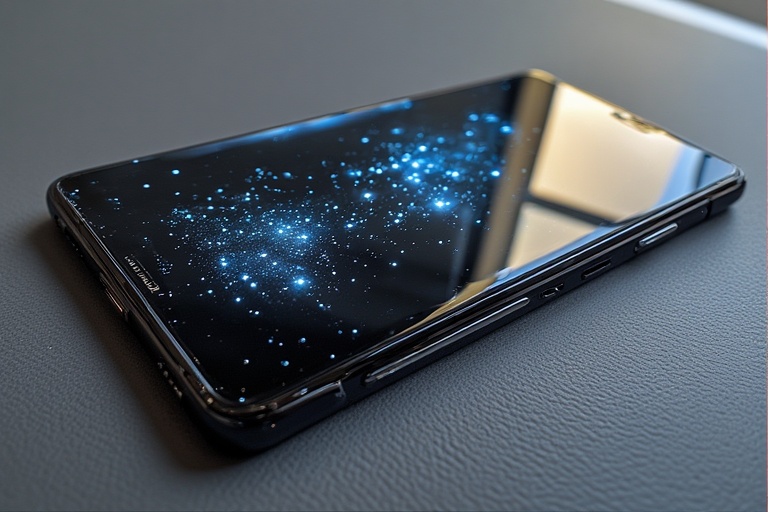
At CES 2026, LG Innotek will unveil a next-generation under-display camera system. Officially, this technology is designed for automotive applications rather than smartphones. Unofficially, however, its underlying capabilities align almost perfectly with what Apple would need to deliver a truly bezel-less iPhone, widely rumored to arrive as the iPhone 20.
Why Under-Display Cameras Have Always Been a Problem
The idea of placing a camera beneath a display is not new. Several smartphone manufacturers have attempted it, but the results have been underwhelming. The fundamental issue lies in physics. OLED displays, while thin, still obstruct light. When a camera sits behind them, image quality suffers dramatically.
In current-generation under-display cameras, image degradation can reach as high as 30 percent. This manifests as softness, poor contrast, inaccurate colors, and heavy noise—defects that are unacceptable for a company like Apple, which markets its cameras as professional-grade tools.
Apple has historically avoided half-measures. Rather than shipping a compromised solution, the company has opted to keep visible camera cutouts while waiting for technology to mature. LG Innotek’s latest development suggests that moment may finally be approaching.
LG Innotek’s Breakthrough: Restoring Over 99 Percent Image Quality
What makes LG Innotek’s new under-display camera different is not its resolution, which is modest at just 1.5 megapixels, but its image restoration pipeline. According to reports, the system is capable of retaining more than 99 percent of the image quality typically lost when light passes through an OLED panel.
This is achieved through advanced AI-based processing that operates in real time. Instead of passively capturing a degraded image, the camera actively reconstructs missing detail using algorithms designed for deblurring, denoising, and light correction.
In practical terms, this means that the display above the camera becomes nearly invisible to the sensor. For Apple, which already relies heavily on computational photography, this approach fits naturally within its existing camera philosophy.
Why the Camera Is Only 1.5 Megapixels—And Why That Matters
At first glance, a 1.5MP camera sounds woefully inadequate for a modern smartphone. However, the context in which LG Innotek developed this sensor is critical.
The camera is intended for automotive use, where reliability and longevity matter more than raw resolution. In vehicles, cameras are often used for driver monitoring, interior surveillance, and safety systems. These applications prioritize consistent performance under extreme temperatures and vibrations rather than high-resolution imagery.
By lowering the resolution, LG Innotek increases reliability and reduces failure rates—an essential requirement in automotive environments. Importantly, this choice appears voluntary rather than technical, implying that higher-resolution variants could be developed once reliability thresholds are met.
For Apple, this is encouraging. It suggests that LG Innotek has already solved the hardest problem—image quality through a display—and can later scale resolution upward for consumer devices.
Apple and LG Innotek: A Deepening Supply Chain Relationship
LG Innotek is not a newcomer to Apple’s ecosystem. The company has been a long-term supplier of camera modules, contributing components to multiple iPhone generations. This existing relationship lowers the barrier to collaboration on next-generation technologies.
Apple typically works closely with suppliers years in advance, shaping component roadmaps around future product needs. If LG Innotek’s under-display camera meets Apple’s internal standards, it could be customized specifically for the iPhone 20’s front-facing camera system.
This kind of co-development is characteristic of Apple’s most transformative hardware shifts, including the transition to OLED displays and Apple Silicon.
The Road to a Fully Bezel-Less iPhone
Apple’s journey toward a bezel-less design has been incremental. The removal of the home button gave way to Face ID. The notch evolved into the Dynamic Island. Now, leaks suggest that the iPhone 18 series may introduce under-display Face ID, leaving only a small punch-hole camera.
This gradual approach reflects Apple’s unwillingness to compromise user experience for aesthetics. Each step removes another visible element from the front of the device while maintaining—or improving—functionality.
The iPhone 20, expected around 2027, represents the logical endpoint of this progression. A phone with no visible sensors, no bezels, and no cutouts would mark the most dramatic visual change since the original iPhone.
Why Apple Needs More Than Hardware to Succeed
Even with advanced hardware, under-display cameras rely heavily on software to meet Apple’s standards. This is where Apple holds a decisive advantage.
Apple’s camera systems are already deeply intertwined with machine learning. Features like Deep Fusion, Smart HDR, and computational portrait modes demonstrate Apple’s ability to extract high-quality images from imperfect data.
An AI-restored under-display camera would benefit enormously from Apple’s in-house neural processing, particularly as Apple continues to invest in on-device AI to reduce reliance on cloud processing.
Automotive Technology as a Preview of Smartphone Innovation
It may seem unusual that a technology destined for smartphones is first appearing in cars, but this pattern is becoming increasingly common. Automotive applications demand extreme reliability, forcing suppliers to solve problems at a higher standard than consumer electronics often require.
Once those challenges are addressed, scaling down for smartphones becomes easier. In this sense, LG Innotek’s automotive under-display camera may serve as a proving ground for future iPhones.
Apple has followed a similar trajectory before, borrowing advancements from industrial, medical, and automotive fields to elevate consumer devices.
How This Impacts Apple’s Competitive Position
A truly bezel-less iPhone would not merely be an aesthetic achievement. It would reinforce Apple’s reputation as a company that delivers refined, mature solutions rather than experimental features.
Competitors have already shipped under-display cameras, but none have achieved image quality comparable to traditional sensors. If Apple enters the space with a near-invisible camera that performs on par with existing iPhones, it would reset expectations across the industry.
This would also align perfectly with Apple’s 20th anniversary narrative, positioning the iPhone 20 as both a technological milestone and a symbolic return to Apple’s design roots.
Challenges Still Ahead
Despite the promise, several hurdles remain. Scaling resolution, ensuring color accuracy, managing thermal constraints, and integrating Face ID components under the display are all non-trivial challenges.
Apple also faces manufacturing risks. Under-display components must maintain extremely tight tolerances, and yield rates could affect production timelines.
However, with nearly two years before the iPhone 20’s expected launch, Apple has sufficient time to refine, test, and perfect the technology.
The Bigger Picture: Apple’s Long-Term Design Philosophy
Apple’s pursuit of a bezel-less device reflects a broader design philosophy centered on invisibility. The best technology, in Apple’s view, disappears into the background, allowing content and interaction to take center stage.
LG Innotek’s under-display camera represents one of the final pieces needed to realize that philosophy fully. If successful, it will mark the culmination of years of incremental progress.
FAQs
1. What is an under-display camera?
A camera placed beneath the screen, invisible during normal use.
2. Why do under-display cameras reduce image quality?
Because OLED panels block and scatter incoming light.
3. How is LG Innotek solving this problem?
With AI-based real-time image restoration algorithms.
4. Why is the camera only 1.5 megapixels?
Lower resolution improves reliability for automotive use.
5. Can this camera be used in smartphones?
Yes, the technology can be adapted and scaled.
6. Is LG Innotek an Apple supplier?
Yes, it already supplies camera components to Apple.
7. Will the iPhone 18 use this camera?
Likely not; early steps may include punch-hole designs.
8. When is a fully bezel-less iPhone expected?
Around 2027 with the iPhone 20.
9. Does Apple already use AI in cameras?
Extensively, through computational photography features.
10. What makes this technology significant?
It removes the final visible obstacle to a full-screen iPhone.