

For centuries, literature has been inseparable from the human hand. Stories carried the emotional weight of lived experience, shaped by memory, imagination, trauma, love, and loss. Authorship implied a person—someone who had endured the world and returned with language shaped by that endurance.
Yet today, a new question sits uneasily at the intersection of technology and culture: What if readers genuinely enjoy fiction written by artificial intelligence?
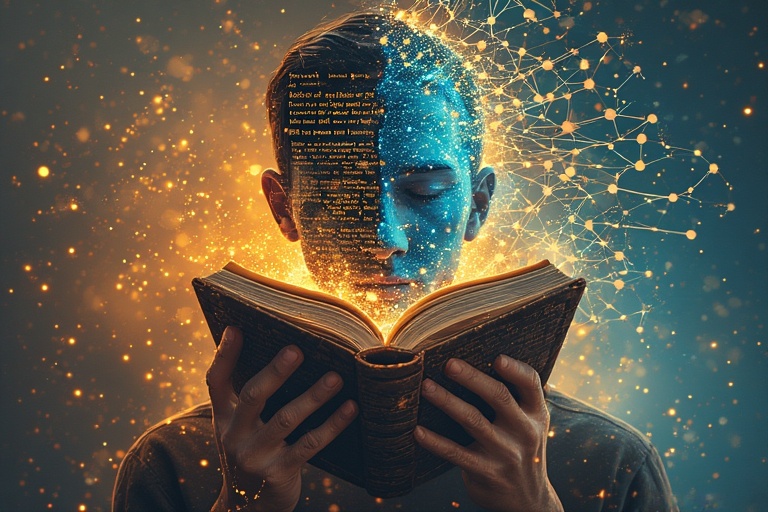
This is no longer a hypothetical reserved for experimental art labs or Silicon Valley think pieces. AI-generated text has advanced to the point where it can produce short stories, novels, poems, and essays that many readers find coherent, emotionally resonant, and—sometimes—moving. The discomfort surrounding this development does not stem solely from fear of job displacement. It strikes deeper, touching long-held beliefs about creativity, originality, and the purpose of literature itself.
History suggests that whenever technology alters how stories are produced or consumed, literature adapts—often painfully, sometimes reluctantly, but always irrevocably.
Literature Has Survived Every Technological Shock Before
The idea that technology could fundamentally threaten literature is not new. When the printing press emerged, critics feared that mass-produced books would cheapen intellectual life. When the novel became popular, it was dismissed as frivolous entertainment. Radio, cinema, television, and the internet all provoked anxieties that reading itself would decline into irrelevance.
Each time, literature did not disappear. Instead, it transformed.
The printing press democratized access to stories. Paperbacks expanded readership beyond elites. Digital publishing removed gatekeepers. Audiobooks and e-readers changed how stories were consumed without erasing their cultural value.
AI may represent the next, and most unsettling, transformation—not because it changes distribution, but because it intervenes directly in creation.
The Psychological Contract Between Reader and Writer
At the core of literature lies an unspoken agreement. Readers assume that behind the words is a consciousness—a mind that intended meaning, felt emotion, and made choices. Even in fiction, authenticity is assumed to arise from human perception.
AI complicates this contract.
A machine does not experience heartbreak, grief, joy, or longing. It does not remember childhood or fear death. And yet, it can simulate language associated with all of these experiences. When readers respond emotionally to AI-generated fiction, the response is real—even if the source is not.
This forces an uncomfortable realization: much of what we experience as “depth” in writing may reside not in the author, but in the reader.
How AI Learns to Write Without Living
Generative AI models are trained on massive collections of human-written text. They learn patterns, narrative arcs, emotional cues, and stylistic conventions. They do not understand meaning in a human sense, but they excel at predicting what kind of language should follow another.
From a technical perspective, AI writing is not imitation of a single author—it is a statistical synthesis of cultural memory. Every metaphor, sentence rhythm, and narrative turn emerges from accumulated human expression.
This raises a provocative idea: AI-generated fiction may function less like an author and more like a mirror of collective literary history.
Why Some Readers Already Accept AI-Written Stories
Many readers consume fiction without knowing—or caring—who wrote it. Pseudonyms, ghostwriters, writing collectives, and franchise fiction have blurred authorship for decades.
In digital spaces, serialized fiction, fan fiction, and algorithmically recommended stories dominate attention. Emotional engagement often precedes curiosity about authorship.
For these readers, enjoyment is the metric that matters most.
If a story is compelling, immersive, and emotionally satisfying, the origin of its words may feel secondary. This does not mean readers reject human writers—it means that the experience of reading can become detached from the identity of the creator.
The Economic Reality: Publishing Will Not Ignore AI
Publishing is not only a cultural institution; it is an industry shaped by economics. AI promises speed, scale, and cost reduction. For content platforms, genre fiction, translations, and serialized storytelling, AI presents irresistible efficiencies.
This does not mean literary fiction will vanish. Historically, when mass production accelerates, human-crafted work often becomes more valued—not less. Handwritten letters gained emotional weight after email. Vinyl records resurged in the age of streaming.
AI-generated fiction may flood the market, but it may also elevate human authorship into a more deliberate, curated, and artisanal space.
Creativity vs. Originality: Redefining the Terms
One of the strongest objections to AI fiction is the claim that it cannot be “original.” Yet originality has always been more complicated than we admit. Writers borrow structures, tropes, themes, and language from their predecessors.
AI exposes this uncomfortable truth by making intertextuality visible.
The difference is intent. Humans write to communicate something felt or believed. AI writes to fulfill probability. But from the reader’s perspective, meaning emerges during interpretation, not creation.
This suggests a future where creativity may be judged less by origin and more by impact.
Emotional Authenticity in a Synthetic Voice
Perhaps the most troubling possibility is that readers may find genuine emotional resonance in AI-written stories. This challenges the idea that emotion in art must originate from lived experience.
But readers have always felt deeply about fictional characters who never existed. Emotional truth in literature has never required factual truth.
AI’s success in emotional storytelling forces a philosophical question: Does art require a suffering creator, or only a receptive audience?
Authors, Identity, and the Fear of Replacement
For writers, the rise of AI is existential. Writing is not merely a job; it is often tied to identity, purpose, and self-expression. The idea that a machine could replicate aspects of that craft feels deeply threatening.
Yet history suggests that tools rarely replace artists outright. Photography did not eliminate painting. Synthesizers did not end music composition. Instead, they reshaped creative boundaries.
Writers may increasingly collaborate with AI—using it as a drafting partner, editor, or ideation engine—while preserving authorship through intention and final control.
The Ethical Line: Disclosure and Trust
If readers come to enjoy AI-generated fiction, transparency becomes essential. Trust in literature relies on honesty. Readers deserve to know whether a work is human-written, AI-assisted, or fully machine-generated.
The future of publishing will likely involve labeling standards, ethical guidelines, and new norms around disclosure.
The danger is not AI itself, but deception—when readers believe they are engaging with a human voice and are unknowingly not.
A Future Where Literature Expands, Not Contracts
The most likely future is not one where AI replaces human storytelling, but one where literature expands into multiple layers.
There will be AI-generated stories optimized for entertainment, personalization, and speed. There will also be deeply human works that emphasize voice, vulnerability, and lived experience.
Readers will choose—not unlike how audiences today choose between blockbuster films and independent cinema.
The presence of AI may ultimately sharpen our understanding of what we value most in human creativity.
Conclusion: Literature Has Always Adapted—and It Will Again
If readers come to enjoy AI-generated fiction, it will not signal the death of literature. It will signal another transformation in a long history of adaptation.
The question is not whether AI can write stories. It already can.
The real question is whether humans will redefine creativity, authorship, and meaning in response—and whether literature, as it has always done, will survive by evolving rather than resisting.
FAQs
1. Can AI truly write fiction?
AI can generate structured, coherent narratives using learned language patterns.
2. Do readers know when fiction is AI-generated?
Often they do not, unless it is clearly disclosed.
3. Is AI-written fiction original?
It recombines existing language patterns rather than creating from lived experience.
4. Will AI replace human authors?
More likely it will coexist and reshape creative workflows.
5. Why do readers respond emotionally to AI stories?
Because emotional meaning arises in the reader, not the writer.
6. Is AI fiction ethically acceptable?
Yes, if transparency and proper disclosure are maintained.
7. How will publishing change?
AI will accelerate content production while redefining literary value.
8. Does AI threaten literary culture?
It challenges traditions but may also expand creative diversity.
9. Can AI create literary masterpieces?
It can approximate style, but intentional depth remains debated.
10. What role will humans play in future storytelling?
Humans will define meaning, intention, and cultural context.