

Artificial intelligence has moved from a futuristic novelty to an everyday companion at unprecedented speed. Millions of people now rely on AI chatbots to summarize documents, generate ideas, analyze data, draft emails, and even structure essays. What once required deliberate thinking now takes seconds, delivered through carefully phrased prompts.
But as generative AI becomes more deeply woven into daily workflows, a critical question is emerging from the scientific and academic communities: are these tools quietly reshaping how our brains think, learn, and solve problems?
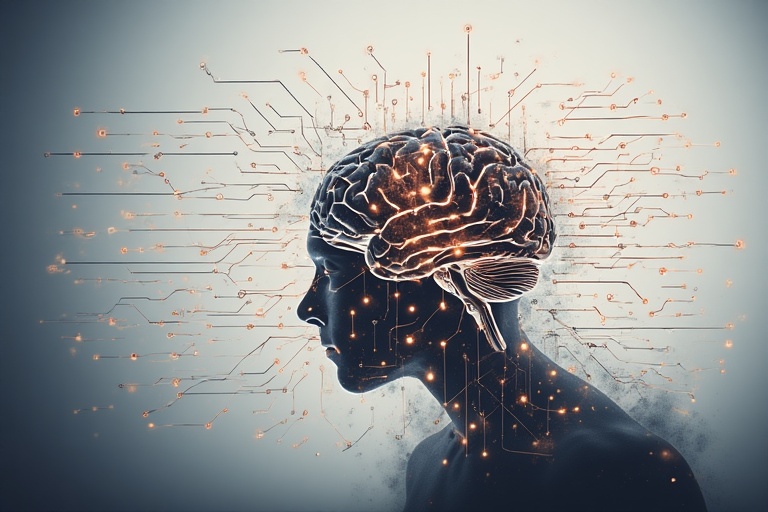
Recent studies from institutions including MIT, Carnegie Mellon University, Oxford University Press, and Harvard Medical School suggest that the cognitive consequences of AI reliance may be more complex—and potentially more concerning—than early adopters assumed. While AI undeniably boosts productivity and accessibility, mounting evidence indicates that excessive dependence may weaken critical thinking, memory retention, and independent reasoning.
This is not a simple story of technological harm or benefit. Instead, it is a nuanced exploration of how human cognition adapts when intelligence is outsourced.
The MIT Brain Study That Sparked the Debate
Earlier this year, researchers at the Massachusetts Institute of Technology conducted a controlled experiment that captured global attention. Using electroencephalography, or EEG, scientists monitored brain activity in participants tasked with writing essays under different conditions.
Some participants completed the task independently, relying solely on their own reasoning. Others were allowed to use ChatGPT to assist with idea generation, structure, grammar, and summarization.
The results were striking. Participants who relied on AI assistance showed noticeably reduced activation in neural networks associated with deep cognitive processing, memory integration, and analytical reasoning. In simple terms, their brains were working less during the task.
Even more telling was what happened afterward. Those same participants struggled to quote or recall their own essays, suggesting weaker mental ownership of the material. The researchers concluded that the findings raised “a pressing matter of exploring a possible decrease in learning skills” linked to AI reliance.
While the study sample was limited—54 participants from MIT and nearby universities—it offered a rare physiological glimpse into how generative AI may alter cognitive engagement.
Outsourcing Thought in the Age of Intelligence on Demand
The appeal of AI tools is obvious. They remove friction. They accelerate results. They reduce mental strain.
But friction, effort, and struggle are not flaws in human thinking—they are essential components of learning. Cognitive science has long established that deeper engagement strengthens memory, understanding, and problem-solving skills.
When AI summarizes a complex concept instantly, the user receives an answer without traveling the mental path that leads to understanding. Over time, this pattern may rewire habits of thought, encouraging shallow processing instead of deep comprehension.
This concern is not theoretical. It echoes earlier debates about calculators, spell-checkers, and GPS navigation. Yet generative AI differs in scale and scope. Unlike calculators, it does not just compute—it reasons, explains, and creates.
That difference matters.
Workplace AI and the Decline of Critical Engagement
Concerns extend far beyond classrooms. A joint study by Carnegie Mellon University and Microsoft examined how AI tools affect white-collar workers who use generative AI at least weekly.
The researchers analyzed hundreds of AI-assisted workplace tasks, ranging from data analysis to rule-checking and strategic evaluation. They found a consistent pattern: higher confidence in AI outputs correlated with lower levels of independent critical thinking.
Workers who trusted AI more tended to question results less, verify information less frequently, and engage less deeply with the task itself. The researchers warned that while generative AI improves efficiency, it can “inhibit critical engagement with work” and increase long-term dependence.
In industries where judgment errors carry real-world consequences, such as finance, healthcare, and engineering, this trend raises serious concerns.
Education at the Front Line of Cognitive Change
Nowhere is the debate more intense than in education. A large survey conducted by Oxford University Press found that six in ten schoolchildren believe AI has negatively impacted their academic skills.
At first glance, this appears alarming. But the full picture is more complex. The same research found that nine in ten students reported AI helped them develop at least one useful skill, including creativity, revision strategies, or problem-solving.
This duality underscores the central challenge: AI can enhance learning when used as a tool, but undermine it when used as a substitute.
Dr Alexandra Tomescu, a generative AI specialist at OUP, emphasizes nuance. According to her, many students feel AI makes work “too easy,” reducing effort and engagement, even while improving outcomes.
The implication is profound. Students may produce better-looking work while learning less—a tradeoff that undermines education’s core purpose.
Cognitive Atrophy: Lessons From Medicine
Warnings about overreliance on AI are not new. In medicine, similar patterns have already emerged.
Radiologists using AI-assisted imaging tools have shown mixed results. A Harvard Medical School study found that while AI improved diagnostic accuracy for some clinicians, it degraded performance for others.
Researchers suspect a phenomenon known as cognitive atrophy, where skills weaken when they are no longer regularly exercised. When AI consistently flags abnormalities, clinicians may lose sharpness in detecting subtle cues independently.
The parallels with education and knowledge work are clear. When AI becomes the default thinker, human reasoning risks becoming passive.
The Illusion of Better Performance
One of the most troubling aspects of AI-assisted work is that outputs often improve even as understanding declines.
Students submit polished essays. Employees deliver faster reports. Presentations look sharper.
Yet beneath the surface, comprehension may be thinner. As Professor Wayne Holmes of University College London puts it, “Their outputs are better, but actually their learning is worse.”
This disconnect creates a dangerous illusion of competence. Individuals appear more capable while becoming less resilient thinkers.
OpenAI’s Perspective: AI as Tutor, Not Replacement
AI developers are acutely aware of these concerns. OpenAI, whose ChatGPT platform exceeds 800 million weekly active users, has publicly acknowledged the risks of misuse.
Jayna Devani, who leads international education initiatives at OpenAI, stresses that AI should function as a tutor rather than a shortcut. Features like “study mode” are designed to guide users through problems step by step instead of delivering instant answers.
Used responsibly, AI can simulate the presence of a tutor during moments when human help is unavailable. For students studying late at night or professionals working independently, this guidance can be transformative.
But this model requires intentional design—and disciplined usage.
Why AI Is Not Just Another Calculator
Some argue that fears around AI mirror past anxieties about calculators or search engines. But this comparison falls short.
Calculators automate arithmetic. AI automates reasoning.
It does not just compute; it explains, evaluates, and synthesizes. It influences how people frame questions, interpret information, and construct narratives.
Professor Holmes cautions that AI’s cognitive footprint is far broader than earlier tools. Without understanding how AI systems generate outputs or how their training data shapes responses, users risk accepting results uncritically.
The Need for AI Literacy, Not AI Avoidance
The solution is not banning AI, nor is it blind adoption. What experts increasingly advocate is AI literacy.
Users must understand how AI works, where it fails, and when it should be challenged. Verification should be habitual. Reflection should be deliberate.
Education systems must teach students how to think with AI without surrendering their thinking to it.
This requires policy, research, and curriculum reform—not just technology rollout.
Conclusion: Intelligence Augmented or Intelligence Eroded?
The rise of generative AI represents one of the most profound shifts in human cognition since the invention of writing. Like all transformative tools, it carries both promise and peril.
Used wisely, AI can amplify learning, expand creativity, and democratize knowledge. Used carelessly, it risks dulling the very skills that define human intelligence.
The evidence so far does not suggest an inevitable cognitive decline—but it does warn of one.
The future of thinking will not be decided by algorithms alone. It will be shaped by how consciously, critically, and responsibly humans choose to use them.
FAQs
1. Does AI reduce brain activity?
Studies suggest reduced cognitive engagement during AI-assisted tasks.
2. Is AI harmful to learning?
It can be if used as a replacement rather than a learning aid.
3. Are students learning less with AI?
Some report better outputs but weaker understanding.
4. What is cognitive atrophy?
The decline of skills due to underuse, observed in AI-assisted professions.
5. Can AI improve education?
Yes, when used as a guided tutor.
6. Are workers affected similarly?
Research shows reduced critical engagement in AI-assisted work.
7. Is this effect permanent?
There is no evidence yet, but habits may form.
8. Should AI be banned in schools?
Most experts advocate guidance, not bans.
9. How can users protect their thinking skills?
By verifying outputs and engaging actively with AI responses.
10. Is AI just like calculators?
No—AI influences reasoning, not just calculation.