

When Apple unveiled the iPhone Air, it was meant to signal a bold new chapter in the evolution of the iPhone. The company hadn’t attempted such a dramatic rethinking of its flagship smartphone’s physical design in nearly a decade. Thinner, lighter, and visually striking, the iPhone Air represented Apple’s belief that industrial design could once again become the defining reason people upgrade their phones.
Early data now suggests that bet has not paid off—at least not in the way Apple may have hoped.
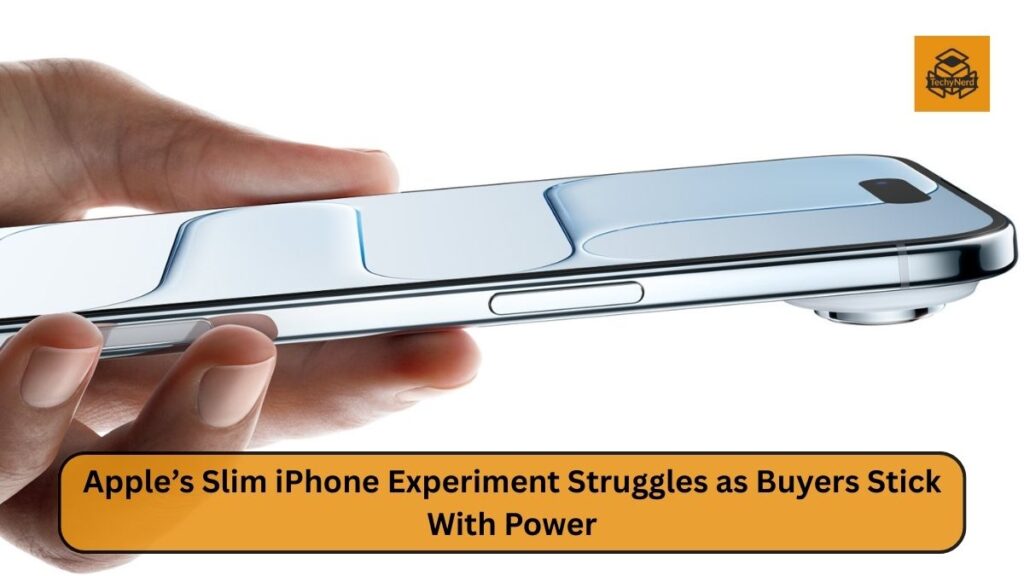
Market research from Consumer Intelligence Research Partners (CIRP) indicates that the iPhone Air has struggled to gain traction among US buyers, significantly underperforming compared to the rest of the iPhone 17 lineup. While Apple does not publicly disclose sales by individual model, the survey data paints a clear picture: consumers overwhelmingly favored the standard iPhone 17 and the Pro models, leaving the Air as a niche choice.
A Radical Redesign in a Mature Market
The smartphone market of 2026 is vastly different from the one Apple dominated in the 2010s. Today’s buyers are more pragmatic, upgrade cycles are longer, and hardware innovation feels incremental rather than revolutionary.
Against this backdrop, Apple introduced the iPhone Air as a design-first product. It was thinner than any previous iPhone, visually elegant, and unmistakably different when held in hand. Yet thinness alone appears insufficient to motivate mainstream consumers.
According to CIRP’s survey, only 6% of US iPhone buyers chose the iPhone Air during its first full quarter on sale. In contrast, the iPhone 17 Pro Max accounted for 27% of purchases, followed closely by the iPhone 17 Pro at 25% and the base iPhone 17 at 22%.
This disparity suggests that while Apple succeeded in creating something new, it may have misjudged what most buyers currently value.
Why Thinness Isn’t a Compelling Upgrade Driver
Industry analysts point to a simple explanation for the Air’s sluggish adoption: consumers no longer see phone thickness as a problem that needs solving.
Modern smartphones are already slim enough for pockets, purses, and everyday use. For most buyers, marginal gains in thinness do not outweigh practical considerations such as battery life, camera performance, durability, and overall value.
Survey respondents who purchased the iPhone Air largely did so because they needed to replace an older device—not because they specifically wanted a thinner phone. That distinction is critical. It indicates that thinness is not a proactive desire driving purchasing behavior, but rather a passive attribute accepted once other needs are met.
Feature Trade-Offs Hurt the Air’s Appeal
Another challenge for the iPhone Air is its position within Apple’s own lineup. The device does not clearly outperform other models in any category except thinness.
The iPhone 17 Pro Max offers the largest display, best battery life, and the most advanced camera system. The iPhone 17 Pro delivers many of those premium features at a lower price and in a smaller form factor. Even the base iPhone 17 provides better battery endurance and an additional camera compared to the Air.
While the Air features a powerful chip and a relatively large display, these advantages are overshadowed by compromises elsewhere. For buyers comparing models side by side, the Air often feels like a product defined more by what it lacks than by what it excels at.
Apple’s Ongoing Search for a Fourth iPhone Identity
Apple’s difficulty in positioning the iPhone Air is part of a broader pattern. Over the past several years, the company has repeatedly attempted—and abandoned—alternative iPhone variants.
The iPhone Mini was praised by critics but ignored by buyers. The iPhone Plus failed to carve out a strong identity between the base and Pro models. Now, the iPhone Air joins that list of experiments that struggled to resonate with mass-market consumers.
The core trio—standard, Pro, and Pro Max—already covers a wide range of price points and feature preferences. Any additional model must offer a clearly compelling reason to exist. So far, thinness alone has not proven sufficient.
Reports of Production Cuts and Delayed Successors
Industry reports have reinforced the survey data. Sources indicate Apple reduced iPhone Air production shortly after launch and delayed plans for a second-generation model. Manufacturing capacity was reportedly shifted back toward higher-demand iPhone 17 variants.
If accurate, these moves suggest Apple quickly recognized the Air’s limited appeal and adjusted accordingly. However, they do not necessarily mean the concept has failed entirely.
The iPhone Air’s Strategic Role Goes Beyond Sales
Several analysts argue that the iPhone Air was never intended to be a blockbuster. Instead, it may serve as a technological stepping stone.
One of the Air’s most significant engineering changes is the relocation of its processing components into the camera module. This frees up internal space, allowing Apple to maintain respectable battery life despite the thinner body. Such internal restructuring could be crucial for future devices—particularly foldable iPhones, which require extreme space efficiency.
If Apple releases a foldable iPhone in the coming years, many of the Air’s design lessons may quietly underpin that product.
Innovation as Brand Signaling
There is also a branding dimension to consider. Apple thrives not only on sales figures, but on perception. Experimental devices like the iPhone Air reinforce Apple’s image as a design leader—even if most consumers ultimately choose safer options.
For some buyers, simply knowing Apple can produce such a device enhances the brand’s prestige. This “halo effect” may not translate directly into Air sales, but it can strengthen loyalty across the entire lineup.
What the iPhone Air Reveals About Consumer Priorities
The Air’s lukewarm reception highlights a broader truth about today’s smartphone market: innovation must solve real problems.
Consumers appear more interested in longevity, battery endurance, camera improvements, and AI-driven features than in aesthetic refinements. Thinness, once a major selling point, has become a “nice-to-have” rather than a must-have.
This reality poses a challenge for Apple as it plans the next decade of iPhone evolution.
Looking Ahead: Foldables, AI, and the Next iPhone Era
Apple’s future likely lies in form factors and capabilities that fundamentally change how smartphones are used. Foldable displays, deeper AI integration, and ecosystem-driven experiences may offer stronger upgrade incentives than design tweaks alone.
The iPhone Air may be remembered not as a commercial success, but as a transitional device—one that tested the boundaries of hardware engineering and informed what comes next.
In a mature market, not every experiment needs to win. Some only need to teach.
FAQs
1. What is the iPhone Air?
A slimmer, lighter iPhone introduced alongside the iPhone 17 lineup.
2. How popular is the iPhone Air?
Survey data suggests it accounts for only about 6% of recent iPhone purchases.
3. Why aren’t consumers buying it?
Most buyers prioritize battery life, cameras, and features over thinness.
4. Did Apple expect low sales?
Some analysts believe it was never intended to be a mass-market hit.
5. Is Apple discontinuing the iPhone Air?
Reports suggest production cuts and a delayed second-generation model.
6. Does the Air have technical innovations?
Yes, including internal component placement changes.
7. Could this affect future iPhones?
Yes, especially foldable or ultra-compact designs.
8. How does it compare to the iPhone 17 Pro?
The Pro offers better cameras, battery life, and overall value.
9. Is thinness still important in smartphones?
Less than it was a decade ago, according to current buyer behavior.
10. What’s next for Apple’s iPhone lineup?
Likely deeper AI features, foldables, and ecosystem-driven upgrades.