

The automotive retail industry has historically been resistant to change. While vehicles themselves have undergone rapid technological transformation, the process of buying a car has remained surprisingly traditional. Dealership showrooms, commission-driven sales staff, and scripted conversations continue to define the customer experience.
However, a new wave of artificial intelligence solutions is beginning to challenge this status quo. Among them is the Pikar Genie, an AI-powered kiosk developed by South Korean company Epikar. Designed to assist or potentially replace human salespeople, this technology represents a significant shift in how cars may be sold in the future.
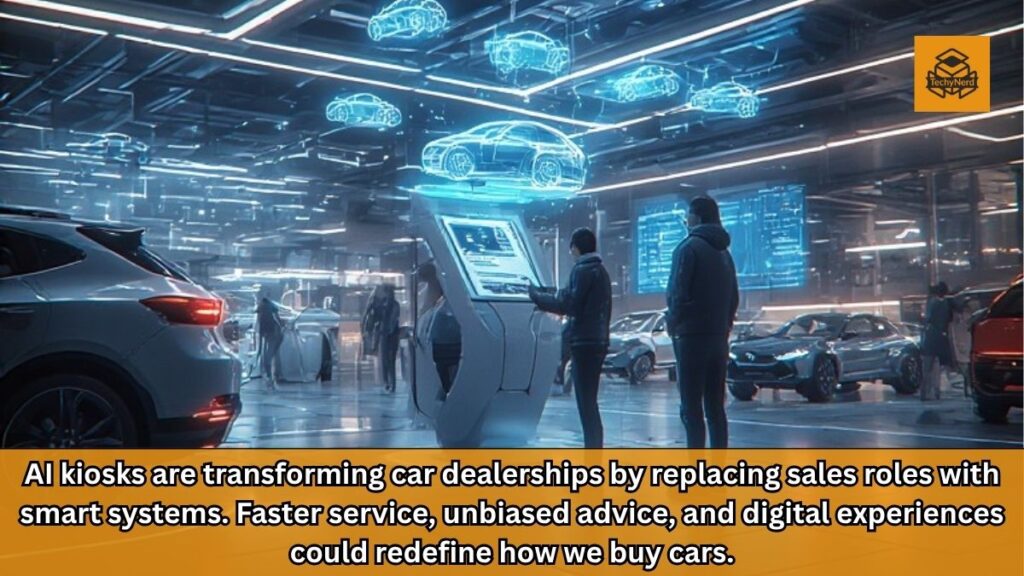
The concept may seem disruptive, but when examined through the lens of efficiency, transparency, and evolving consumer expectations, it becomes clear why AI-driven sales assistants are gaining attention.
The Traditional Dealership Model: Strengths and Limitations
Car dealerships have long relied on human salespeople to guide customers through the purchasing process. This model offers certain advantages, including personalized interaction and the ability to address complex questions in real time.
However, it also has notable drawbacks. Salespeople often operate under commission-based structures, which can influence their recommendations. This dynamic can create a perception of bias, where customers feel pressured to make decisions that may not align with their needs.
Additionally, the traditional sales process can be time-consuming and inefficient. Customers frequently encounter scripted interactions, repetitive explanations, and limited transparency regarding pricing and inventory. These issues contribute to a buying experience that many find frustrating.
The persistence of these challenges has created an opportunity for technological innovation to redefine the dealership experience.
Introducing Pikar Genie: A New Approach to Customer Interaction
Pikar Genie is designed to function as an intelligent interface between customers and dealership inventory. Positioned as a kiosk within the showroom, it allows users to interact with an AI system that can answer questions, provide product details, and guide them through the selection process.
Unlike traditional salespeople, the system operates without commission-based incentives. This theoretically enables it to provide unbiased information, focusing solely on the customer’s preferences and requirements.
The AI can access extensive databases of vehicle specifications, pricing, and availability in real time. This capability allows it to deliver accurate and up-to-date information instantly, reducing the delays often associated with human-mediated inquiries.
While the system does not currently handle final transactions or paperwork, it covers a significant portion of the customer journey, from initial exploration to decision-making.
Early Adoption and Industry Experimentation
Epikar’s technology is already being tested in select markets, particularly in South Korea. Automotive brands such as Renault, BMW, and Volvo have integrated elements of Epikar’s software into their dealership operations.
Initial results suggest that AI-assisted showrooms can operate with fewer human staff while maintaining efficiency. For example, some dealerships have reduced the number of salespeople required on the floor, relying on AI systems to handle routine interactions.
This hybrid approach allows human staff to focus on complex tasks and final negotiations, while the AI manages initial engagement and information delivery. It represents a transitional phase in which technology complements rather than fully replaces human roles.
Expanding to Global Markets: Opportunities and Challenges
Epikar’s ambitions extend beyond its domestic market, with plans to introduce Pikar Genie in regions such as the United States. However, the transition to AI-driven sales models is not without challenges.
Cultural expectations play a significant role in shaping customer preferences. In some markets, buyers value personal interaction and may be hesitant to rely solely on automated systems. Trust remains a critical factor in high-value transactions like car purchases.
Regulatory complexities also pose challenges. The process of buying a car involves multiple layers of documentation, including financing, insurance, and registration. Automating these प्रक्रियाएँ requires integration with various systems and compliance with legal frameworks.
Despite these obstacles, the potential benefits of AI-driven sales are compelling enough to drive continued experimentation and investment.
The Consumer Perspective: Convenience vs. Human Touch
From a consumer standpoint, the appeal of AI-assisted sales lies in convenience and efficiency. Customers can obtain information quickly, explore options at their own pace, and avoid the pressure often associated with traditional sales interactions.
For many, the ability to interact with a system that provides straightforward answers without upselling tactics is a significant advantage. It aligns with broader trends in digital commerce, where transparency and user control are increasingly valued.
However, not all consumers are ready to embrace this shift. Some may prefer the reassurance of human interaction, particularly when making significant financial decisions. The challenge for AI systems is to replicate or complement the trust-building aspects of human communication.
The Dealership Perspective: Efficiency and Cost Reduction
For dealership owners and managers, the adoption of AI technology offers clear economic advantages. AI systems can operate continuously without breaks, handle multiple العملاء simultaneously, and reduce the need for large sales teams.
The elimination of commission-based structures can also lead to more predictable cost management. Additionally, AI systems can provide valuable insights into customer behavior, enabling data-driven decision-making.
These factors make AI an attractive proposition for dealerships seeking to improve efficiency and competitiveness in a rapidly evolving market.
AI and the Future of Automotive Retail
The introduction of AI-driven sales assistants is part of a broader تحول in automotive retail. As consumers become more accustomed to digital experiences, the demand for seamless and efficient purchasing processes is increasing.
Online car sales platforms have already demonstrated the viability of digital-first approaches. AI-powered kiosks represent an extension of this trend into physical showrooms, creating a hybrid model that combines the benefits of both worlds.
In the long term, it is possible that fully automated dealerships could emerge, where AI systems handle the entire sales प्रक्रिया from start to finish. While this scenario may still be years away, the groundwork is being laid today.
Ethical and Workforce Considerations
The potential replacement of human salespeople raises important ethical and सामाजिक questions. Job displacement is a concern, particularly in industries where automation is accelerating.
However, it is important to recognize that technological परिवर्तन often leads to the creation of new roles and opportunities. In the case of automotive retail, employees may transition to positions that focus on customer experience, technical support, or system management.
Balancing innovation with सामाजिक responsibility will be crucial as AI continues to reshape the workforce.
Conclusion: A Logical Evolution, Not a Sudden Revolution
The emergence of AI-powered sales assistants like Pikar Genie represents a logical evolution in the automotive industry. While the idea of replacing human salespeople may seem radical, it addresses longstanding inefficiencies and aligns with changing consumer expectations.
The transition is unlikely to happen overnight. Instead, it will unfold تدريجيًا, with hybrid models bridging the gap between traditional and fully automated systems.
Ultimately, the success of this تحول will depend on its ability to enhance the customer experience while maintaining trust and transparency. If these conditions are met, AI could redefine car buying in ways that benefit both consumers and businesses.
FAQs
1. What is Pikar Genie?
It is an AI-powered kiosk designed to assist customers in car dealerships.
2. Can AI replace car salespeople completely?
Not yet, but it can handle many tasks like answering questions and guiding choices.
3. Which companies are using this technology?
Brands like Renault, BMW, and Volvo are testing related solutions.
4. What are the benefits of AI in car sales?
Faster service, unbiased recommendations, and improved efficiency.
5. Will customers trust AI for car purchases?
Trust will depend on user experience and transparency.
6. Does AI handle car financing and paperwork?
Currently, it does not fully manage these प्रक्रियाएँ.
7. Is this technology available globally?
It is being tested in select regions with plans for expansion.
8. How does AI improve dealership efficiency?
It reduces staffing needs and provides instant information access.
9. Will AI reduce car prices?
It may lower operational costs, which could influence pricing.
10. What is the future of AI in automotive retail?
A hybrid model combining AI and human interaction is most likely.