

The mid-range smartphone segment has traditionally been defined by compromise. Consumers expect decent performance, acceptable cameras, and reasonable battery life—but rarely do they expect premium design or flagship-grade materials. That paradigm, however, is beginning to shift.
With the introduction of the Samsung Galaxy A57, Samsung appears to be challenging long-standing assumptions about what a sub-$600 smartphone can deliver. Rather than focusing solely on performance metrics or camera innovations, the Galaxy A57 distinguishes itself through an often-overlooked dimension: physical design and material quality.
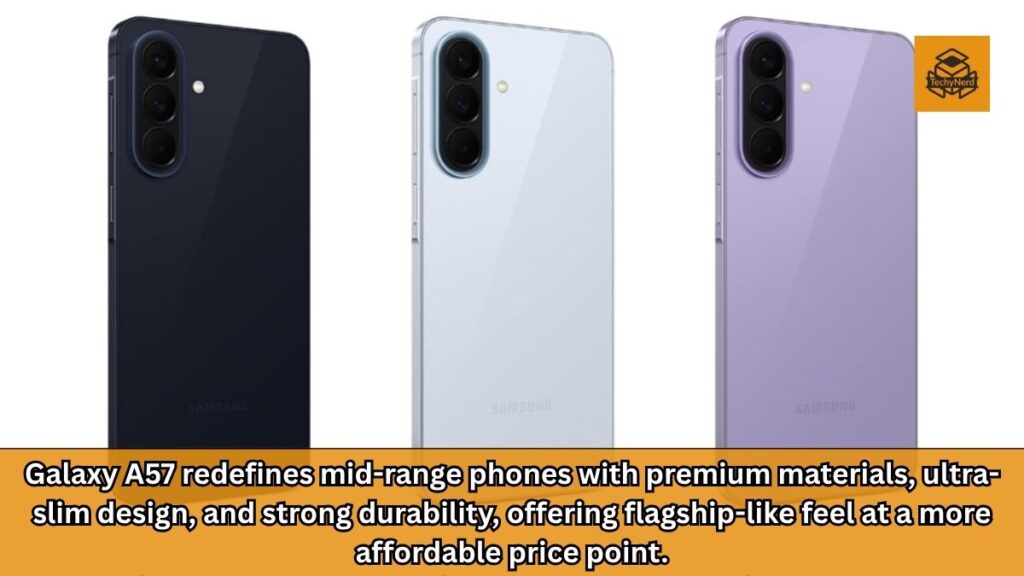
This approach signals a broader evolution in the smartphone industry, where user experience is no longer defined solely by specifications but increasingly by how a device feels, ages, and integrates into daily life.
Rethinking Value: Beyond Performance Specifications
In the competitive landscape of mid-range smartphones, devices like the OnePlus 15R and Google Pixel 10a have carved out strong positions by emphasizing performance and software experience. Meanwhile, the Nothing Phone 4a Pro appeals to users seeking distinctive design.
The Galaxy A57, however, takes a different route. It does not attempt to outperform its competitors in raw processing power or offer the earliest access to software updates. Instead, it focuses on delivering a refined, premium tactile experience that is typically reserved for flagship devices.
This strategic choice reflects a deeper understanding of consumer behavior. For many users, the physical interaction with a smartphone—how it feels in the hand, how it withstands wear, and how it maintains its appearance over time—is just as important as its internal capabilities.
Premium Materials in an Unexpected Segment
One of the most striking aspects of the Galaxy A57 is its use of high-end materials. Unlike many mid-range devices that rely on plastic construction to reduce costs, the A57 incorporates an aluminum frame paired with glass panels on both the front and back.
The inclusion of Corning Gorilla Glass Victus+ on both sides of the device is particularly noteworthy. Traditionally reserved for flagship models such as the Samsung Galaxy S22 Ultra, this material offers enhanced resistance to scratches and impacts.
This decision represents a significant departure from industry norms. In most mid-range smartphones, protective glass is limited to the display, while the back panel is often left vulnerable or constructed from less durable materials. By extending protection to the rear, Samsung addresses a critical yet frequently overlooked aspect of device longevity.
Durability Meets Aesthetic Excellence
The use of Gorilla Glass Victus+ is not merely a technical upgrade; it also contributes to the device’s visual appeal. The glass back provides a polished, reflective finish that enhances the perception of quality.
At the same time, it offers practical benefits. Glass is less prone to micro-scratches compared to plastic, helping the device maintain its appearance over extended periods of use. This durability is particularly valuable in real-world scenarios, where smartphones are subjected to constant handling and environmental exposure.
While no material can completely eliminate the risk of damage from significant drops, the added resilience of Victus+ provides users with a greater sense of confidence. It reduces the need for protective cases, allowing the design of the device to be appreciated in its original form.
The Case-Free Experience: A Rare Confidence
For many smartphone users, applying a case is an immediate and unavoidable step after purchase. This practice, while practical, often diminishes the design and ergonomics of the device.
The Galaxy A57 challenges this norm by offering a level of durability that encourages case-free usage. The combination of robust materials and thoughtful engineering creates a device that feels secure even without additional protection.
This shift has broader implications. It suggests that manufacturers can prioritize both durability and aesthetics without forcing users to choose between the two. In doing so, Samsung is redefining expectations for mid-range devices.
Engineering Elegance: The Ultra-Slim Form Factor
Beyond materials, the Galaxy A57 excels in its physical design. With a thickness of just 6.9mm, it stands out as one of the slimmest devices in its category.
This slim profile is not merely a design flourish; it significantly enhances the user experience. A thinner device is easier to handle, more comfortable to carry, and visually more appealing.
When compared to flagship models like the Samsung Galaxy S26 Ultra, the A57 holds its own in terms of elegance. In fact, its slimness rivals or even surpasses that of more expensive devices, demonstrating that premium design is not exclusively tied to high price points.
Ergonomics and Everyday Usability
The in-hand feel of a smartphone is a critical yet often underappreciated factor in user satisfaction. The Galaxy A57’s lightweight construction and balanced proportions contribute to a comfortable and intuitive experience.
This ergonomic advantage becomes particularly evident during prolonged use. Whether browsing, typing, or consuming media, the device remains easy to handle without causing fatigue.
Such considerations highlight the importance of human-centered design in modern technology. By focusing on how users interact with the device, Samsung enhances the overall experience beyond what specifications alone can achieve.
Longevity as a Core Design Philosophy
A key aspect of the Galaxy A57’s design is its emphasis on longevity. The choice of materials, combined with the device’s structural integrity, suggests a deliberate effort to extend its usable lifespan.
This approach aligns with broader trends in the technology industry, where sustainability and long-term value are becoming increasingly important. Consumers are seeking devices that can withstand years of use without significant degradation in performance or appearance.
By addressing these concerns, the Galaxy A57 positions itself as a practical investment rather than a disposable gadget.
Competitive Positioning in a Crowded Market
The mid-range smartphone market is highly competitive, with numerous brands offering compelling विकल्प. In this environment, differentiation is crucial.
The Galaxy A57 achieves this by focusing on an area that is often neglected by competitors. While others prioritize performance benchmarks or camera features, Samsung emphasizes design quality and durability.
This strategy not only sets the device apart but also appeals to a specific segment of users who value craftsmanship and longevity over raw specifications.
The Broader Industry Implications
The introduction of the Galaxy A57 may have far-reaching implications for the smartphone industry. If consumers respond positively to its design-focused approach, it could encourage other manufacturers to adopt similar strategies.
This shift could lead to a redefinition of the mid-range category, where premium materials and thoughtful design become standard rather than exceptional.
Such a تحول would benefit consumers by raising the overall quality of devices उपलब्ध at accessible price points.
Conclusion: A New Standard for Mid-Range Smartphones
The Samsung Galaxy A57 represents a significant خطوة forward in the evolution of mid-range smartphones. By prioritizing design, materials, and user experience, it challenges conventional notions of value in this segment.
Rather than competing solely on specifications, it delivers a holistic experience that combines aesthetics, durability, and practicality. This approach not only enhances user satisfaction but also sets a new benchmark for the industry.
As the lines between mid-range and flagship devices continue to blur, the Galaxy A57 stands as a compelling example of how thoughtful engineering can redefine expectations.
FAQs
1. What makes the Galaxy A57 unique?
Its premium design and materials set it apart from other mid-range phones.
2. Does it use Gorilla Glass?
Yes, it features Gorilla Glass Victus+ on both front and back.
3. Is the Galaxy A57 durable?
It offers strong scratch resistance and improved durability.
4. How thin is the Galaxy A57?
It measures approximately 6.9mm in thickness.
5. Can it be used without a case?
Yes, its durable build allows more confidence in case-free usage.
6. How does it compare to flagship phones?
It rivals flagship devices in design and build quality.
7. Is it better than OnePlus 15R?
It depends on priorities—design vs performance.
8. What materials are used?
Aluminum frame with glass front and back.
9. Is it worth the price?
Yes, for users prioritizing premium feel and durability.
10. Who should buy the Galaxy A57?
Users seeking a stylish, durable, mid-range smartphone.