

Wireless networking has long been defined by a single dominant metric: speed. Each generation of Wi-Fi has been marketed with higher throughput numbers, promising faster downloads, smoother streaming, and better connectivity. However, as wireless technology matures, the industry is beginning to recognize a fundamental truth—speed alone does not guarantee a better user experience.
The transition from Wi-Fi 7 to Wi-Fi 8 marks a pivotal shift in priorities. While Wi-Fi 7 pushed the boundaries of raw throughput, Wi-Fi 8 is designed to ensure that those speeds are delivered consistently, even in complex real-world environments.
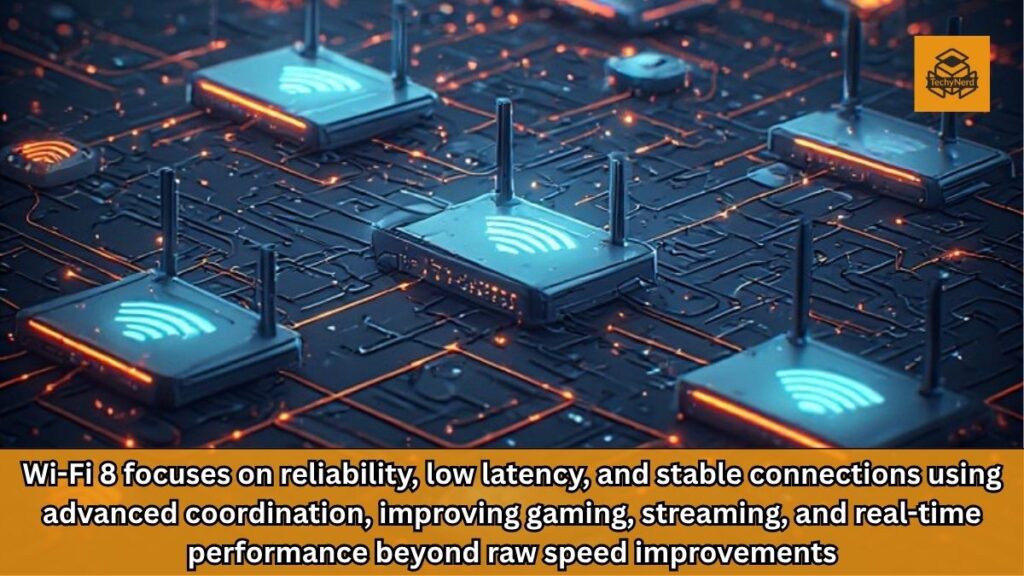
This evolution reflects a broader transformation in networking philosophy, where reliability, latency stability, and intelligent coordination take precedence over peak performance metrics.
Understanding the Limitations of Speed-Centric Networking
The emphasis on speed in previous Wi-Fi generations addressed a critical need during the early stages of digital transformation. As applications such as high-definition video streaming and cloud computing emerged, higher bandwidth became essential.
However, modern use cases have exposed the limitations of this approach. Applications like online gaming, video conferencing, and augmented reality are highly sensitive to latency and jitter rather than raw speed. A connection that delivers 1 Gbps with frequent interruptions is far less valuable than one that provides a stable 100 Mbps with minimal latency variation.
Wi-Fi 7, while capable of extraordinary speeds, often struggles to maintain consistent performance in crowded environments. Interference from neighboring networks, physical obstructions, and device mobility can all degrade the user experience.
Wi-Fi 8 aims to address these challenges by focusing on the quality and reliability of the connection rather than its maximum theoretical capacity.
The Core Vision: Bridging Wireless and Wired Performance
The defining goal of Wi-Fi 8 is to bridge the gap between wireless flexibility and wired reliability. Traditionally, Ethernet connections have been the gold standard for stability and low latency, particularly in scenarios such as competitive gaming and enterprise networking.
Wi-Fi 8 introduces a framework known as Ultra High Reliability (UHR), which is designed to replicate the consistency of wired connections in a wireless environment. This represents a significant departure from previous standards, where reliability improvements were incremental rather than foundational.
By prioritizing UHR, Wi-Fi 8 seeks to deliver predictable performance, reducing the variability that has long been a hallmark of wireless networks.
Multi-AP Coordination: Transforming Network Behavior
One of the most significant innovations in Wi-Fi 8 is Multi-Access Point Coordination. In traditional networks, routers operate independently, competing for access to shared radio frequencies. This lack of coordination often leads to signal collisions, interference, and reduced efficiency.
Wi-Fi 8 changes this dynamic by enabling routers and mesh nodes to communicate with each other. Through coordinated behavior, these devices can optimize resource allocation, minimize interference, and improve overall network performance.
This approach introduces a level of intelligence previously absent from wireless networking. Instead of acting as isolated entities, routers become part of a collaborative system, working together to deliver a seamless user experience.
Coordinated Beamforming and Spatial Reuse
Within the Multi-AP framework, technologies such as Coordinated Beamforming and Coordinated Spatial Reuse play a crucial role. Beamforming allows routers to direct signals toward specific devices, improving signal strength and reducing interference.
Coordinated Spatial Reuse takes this concept further by enabling multiple devices to transmit simultaneously without causing interference. By dynamically adjusting transmission power levels, routers can share the same frequency space more efficiently.
These innovations significantly enhance network capacity and reliability, particularly in densely populated environments where multiple networks coexist.
Enhanced Long Range and Distributed Resource Units
Range has always been a critical factor in wireless networking. Signal degradation due to distance and physical barriers can severely impact performance. Wi-Fi 8 addresses this challenge through Enhanced Long Range technology and Distributed Resource Units.
Enhanced Long Range improves signal stability at the edges of coverage areas, ensuring that devices maintain connectivity even in challenging conditions. Distributed Resource Units, on the other hand, allow data to be transmitted across non-contiguous frequency blocks, increasing flexibility and efficiency.
Together, these technologies enable Wi-Fi 8 to deliver more consistent performance across a wider range of scenarios, from large homes to enterprise environments.
Unequal Modulation: Adapting to Real-World Conditions
Another key innovation in Wi-Fi 8 is Unequal Modulation. In previous standards, all antennas on a device typically operated at the same modulation level. This meant that if one antenna experienced interference, it could limit the performance of the entire system.
Wi-Fi 8 introduces the ability for different antennas to operate at different modulation levels simultaneously. This allows unaffected antennas to maintain high performance even when others are compromised.
This adaptive approach reflects a broader trend in networking toward resilience and flexibility, enabling systems to maintain performance despite adverse conditions.
Implications for Gaming and Real-Time Applications
The benefits of Wi-Fi 8 are particularly evident in gaming and other real-time applications. For gamers, the primary concern is not bandwidth but latency and jitter. Sudden spikes in latency can disrupt gameplay, leading to a poor user experience.
Wi-Fi 8’s focus on reliability and coordination directly addresses these issues. By reducing interference and stabilizing latency, the new standard aims to deliver a more consistent gaming experience.
Similarly, applications such as video conferencing and virtual reality stand to benefit significantly. These use cases require continuous, low-latency connections, making them ideal candidates for Wi-Fi 8’s capabilities.
The Role of Industry Leaders in Wi-Fi 8 Development
The development of Wi-Fi 8 is being driven by a consortium of leading technology companies. Qualcomm has introduced its FastConnect 8800 platform, focusing on extended range and energy efficiency. Broadcom has pioneered early Wi-Fi 8 silicon solutions, particularly for mesh networking.
Meanwhile, MediaTek is exploring AI-driven networking enhancements, integrating machine learning into connectivity management. Other major contributors, including Intel, Huawei, and Samsung, are активно involved in research and standardization efforts.
This collaborative approach ensures that Wi-Fi 8 benefits from a diverse range of expertise and perspectives.
AI-Assisted Networking: Hype or Reality?
The integration of artificial intelligence into Wi-Fi 8 has generated significant interest. Some vendors are promoting AI-assisted networking as a key feature, claiming that it can optimize channel selection, manage interference, and improve performance.
While these capabilities are promising, it is important to note that AI is not a core component of the Wi-Fi 8 standard. Instead, it represents an additional layer of functionality that may vary between implementations.
Nevertheless, AI has the potential to enhance network management by enabling real-time decision-making and adaptive optimization. As these technologies mature, they could become a standard feature in future networking solutions.
Technical Challenges and Trade-Offs
Despite its advantages, Wi-Fi 8 introduces several technical challenges. The increased complexity of coordinated networks requires more sophisticated hardware and software, potentially leading to higher costs.
Power consumption is another concern. Advanced features such as Multi-AP Coordination and AI-assisted networking require additional processing power, which can impact battery life in mobile devices.
Additionally, the need for continuous communication between network nodes introduces overhead, which must be carefully managed to avoid reducing overall efficiency.
These challenges highlight the importance of careful implementation and optimization in realizing the full potential of Wi-Fi 8.
Timeline and Adoption
The development of Wi-Fi 8 is progressing steadily, with early drafts already finalized. While official ratification is expected in 2028, initial devices may begin appearing as early as 2026 or 2027.
This timeline reflects a common pattern in technology adoption, where products are released based on draft standards and later updated through firmware to achieve full compliance.
For consumers, this means that early adoption may involve some uncertainty, but it also offers the opportunity to experience the benefits of next-generation connectivity ahead of widespread deployment.
Conclusion: A New Definition of Wireless Performance
Wi-Fi 8 represents a fundamental shift in the evolution of wireless networking. By prioritizing reliability, latency stability, and intelligent coordination, it addresses the limitations of speed-centric approaches.
As digital experiences become increasingly dependent on real-time connectivity, the importance of consistent performance will only grow. Wi-Fi 8 is poised to meet this demand, redefining what users can expect from wireless networks.
The transition to this new paradigm will not happen overnight, but its impact will be profound. In the years ahead, the distinction between wired and wireless connectivity may become increasingly irrelevant, marking a new era in the history of networking.
FAQs
1. What is Wi-Fi 8?
It is the next wireless standard focusing on reliability and low latency.
2. How is Wi-Fi 8 different from Wi-Fi 7?
Wi-Fi 7 focuses on speed, while Wi-Fi 8 focuses on consistency.
3. What is Ultra High Reliability (UHR)?
A framework to ensure stable and predictable connections.
4. Will Wi-Fi 8 be faster than Wi-Fi 7?
Not significantly, but it will be more reliable.
5. When will Wi-Fi 8 devices launch?
Expected between 2026 and 2027.
6. Is Wi-Fi 8 good for gaming?
Yes, it reduces latency and jitter.
7. What is Multi-AP Coordination?
Routers work together to avoid interference.
8. Does Wi-Fi 8 use AI?
Some devices may include AI, but it’s optional.
9. Will I need new hardware?
Yes, Wi-Fi 8 requires compatible devices.
10. Should I upgrade immediately?
Not necessary unless you need improved reliability.