

The global technology landscape is increasingly shaped not just by innovation, but by regulation and geopolitical strategy. In a significant development, the Federal Communications Commission is proposing stricter rules for certifying electronic devices sold in the United States. While framed as a move to ensure security and fairness, the implications extend far beyond compliance.
At the center of this policy shift are Chinese smartphone manufacturers and the broader ecosystem that supports them. The move reflects a continuation of efforts initiated under Donald Trump, aimed at reducing reliance on foreign—particularly Chinese—technology infrastructure.
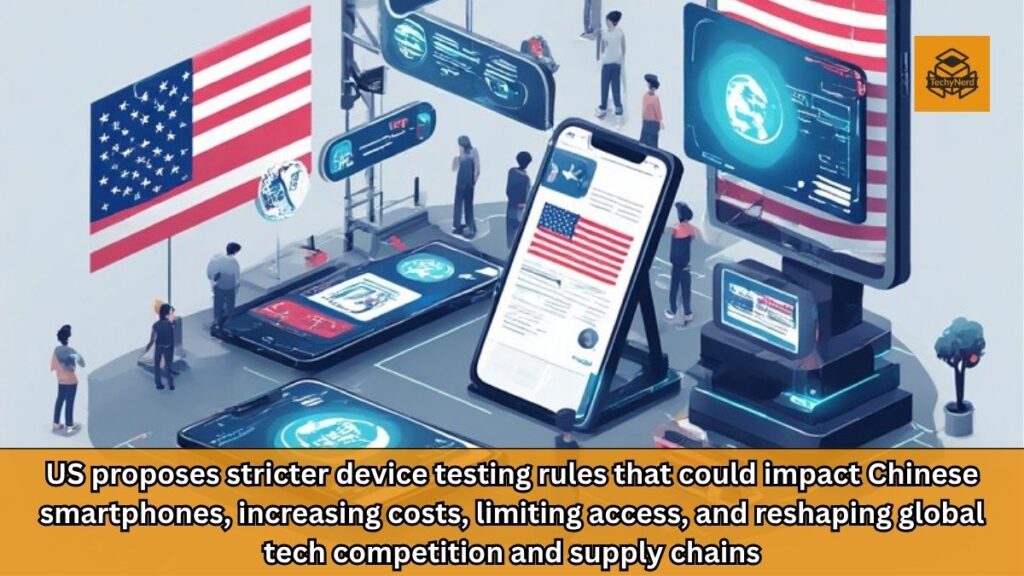
This development signals a new phase in the ongoing technological decoupling between the United States and China, with potential consequences for manufacturers, consumers, and global supply chains.
Understanding the FCC’s Proposed Policy Shift
The proposed rule centers on a fundamental aspect of the electronics industry: certification. Before devices such as smartphones, laptops, and routers can be sold in the U.S., they must undergo testing to ensure compliance with regulatory standards.
Traditionally, much of this testing has been conducted in international laboratories, including those in China. According to the FCC, approximately 75% of devices sold in the U.S. are certified by labs located in countries that do not offer reciprocal recognition of American testing facilities.
The new proposal seeks to address this imbalance by potentially disqualifying certifications from such foreign labs. While the policy does not explicitly target any specific country, its practical impact is expected to fall heavily on Chinese testing infrastructure.
The Concept of “Bad Labs” and Regulatory Trust
A key element of the FCC’s narrative is the concept of “bad labs.” These are testing facilities that the agency believes may not meet the required standards of integrity, security, or independence.
The concern is not merely technical but also geopolitical. Laboratories operating under the influence of foreign governments could, in theory, compromise the integrity of the certification process. This raises questions about the reliability of devices entering the U.S. market.
By tightening control over certification, the FCC aims to establish a more secure and trustworthy ecosystem. However, this approach also introduces new complexities for manufacturers that rely on established international testing networks.
Impact on Chinese Smartphone Manufacturers
Chinese smartphone brands have become major players in the global market, offering competitive products across a wide range of price segments. Companies such as OnePlus have built strong reputations for delivering high-performance devices at relatively affordable prices.
The proposed FCC rules could disrupt this model by increasing the cost and complexity of entering the U.S. market. Manufacturers may be required to shift their testing processes to U.S.-based facilities, which could involve logistical challenges and additional expenses.
For smaller or emerging brands, these barriers could be particularly significant, potentially limiting their ability to compete in one of the world’s most lucrative markets.
Broader Implications for the Electronics Industry
The impact of the FCC’s proposal is not limited to smartphones. The policy applies to a wide range of electronic devices, including computers, cameras, and networking equipment.
This broad scope reflects a comprehensive approach to technology regulation, encompassing multiple sectors of the electronics industry. It also highlights the interconnected nature of global supply chains, where components and processes often span multiple देशों.
Changes in certification requirements could ripple through these supply chains, affecting manufacturers, suppliers, and distributors. Companies may need to reevaluate their operations to ensure compliance with new regulations.
The Role of Reciprocity in Global Trade
At the heart of the FCC’s argument is the principle of reciprocity. The agency contends that U.S.-based labs should receive the same recognition in foreign markets as their international counterparts do in the United States.
This principle is a cornerstone of international trade, promoting fairness and mutual benefit. However, achieving reciprocity in practice can be challenging, particularly in the context of differing regulatory frameworks and political considerations.
The FCC’s proposal can be seen as an attempt to enforce this principle through unilateral action. Whether this approach will lead to greater cooperation or increased tension remains to be seen.
Recent Actions and Escalating Measures
The proposed policy is part of a broader سلسلة of اقدامات by the FCC aimed at tightening control over foreign technology. In recent months, the agency has taken steps to revoke the recognition of certain foreign labs and restrict the sale of specific الأجهزة.
These actions reflect a growing emphasis on national security in technology policy. By scrutinizing the origins and certification of devices, regulators aim to mitigate potential risks associated with foreign التكنولوجيا.
The cumulative effect of these measures is a more restrictive environment for international कंपनियां seeking access to the U.S. market.
Consumer Impact: Costs, Choices, and Competition
While the policy is primarily focused on security and fairness, it also has implications for consumers. Increased regulatory requirements could lead to higher costs for manufacturers, which may be passed on to consumers in the form of higher prices.
Additionally, reduced competition could limit the range of options available in the market. Chinese brands have played a significant role in driving innovation and affordability in the smartphone industry. Restricting their access could alter the competitive dynamics.
However, proponents of the policy argue that the benefits of enhanced security and reliability outweigh these potential drawbacks.
Strategic Context: Technology and National Security
The FCC’s proposal must be understood within the broader context of U.S. national security strategy. Technology has become a critical حوزه of competition between major powers, with implications for economic strength, military capability, and global influence.
By tightening control over the certification process, the U.S. government aims to reduce potential vulnerabilities and assert greater नियंत्रण over its technology ecosystem.
This approach aligns with broader efforts to secure supply chains, protect intellectual property, and maintain technological leadership.
Industry Response and Future Outlook
The response from industry stakeholders is likely to be mixed. While some कंपनियां may support measures that enhance trust and सुरक्षा, others may be concerned about the increased complexity and cost.
Manufacturers may need to adapt by establishing new partnerships, investing in domestic testing capabilities, or reconfiguring their supply chains. These adjustments could take time and resources, particularly for companies heavily reliant on existing international networks.
Looking ahead, the outcome of the FCC’s vote will be a निर्णायक moment. If the proposal is approved, it could set a precedent for similar اقدامات in other sectors and regions.
Conclusion: A Turning Point in Global Tech Regulation
The FCC’s proposed rules represent more than a regulatory update; they mark a turning point in the relationship between technology and geopolitics. By redefining the شروط for market access, the United States is reshaping the competitive landscape of the electronics industry.
For Chinese smartphone manufacturers, the challenge is not just technical but strategic. Navigating this new environment will require adaptability, innovation, and a deep understanding of evolving regulatory frameworks.
As the global tech ecosystem continues to evolve, the balance between openness and security will remain a central tension. The decisions made today will shape the آینده of technology for years to come.
FAQs
1. What is the FCC proposing?
Stricter rules for certifying electronic devices in the U.S.
2. Does this target Chinese smartphones?
Indirectly, as many are tested in Chinese labs.
3. What are “bad labs”?
Labs considered insecure or unreliable by regulators.
4. Will devices be banned immediately?
No, the policy is still under consideration.
5. How will this affect manufacturers?
Higher costs and stricter compliance requirements.
6. What devices are impacted?
Smartphones, computers, cameras, and more.
7. Why is reciprocity important?
It ensures fair treatment of U.S. labs abroad.
8. Will consumers be affected?
Possibly through higher prices and fewer choices.
9. Is this about national security?
Yes, it’s a major factor behind the policy.
10. When will the decision be made?
The FCC is expected to vote soon.