

Every professional journey begins somewhere humble. In creative industries, those beginnings have traditionally been messy, repetitive, and often underpaid—but essential. Writing short instructional articles, editing low-budget videos, designing basic logos, or assisting senior creatives with routine tasks has long served as the informal apprenticeship of modern artistry. These roles were never glamorous, but they taught fundamentals: clarity, discipline, audience awareness, and resilience.
Artificial intelligence is now erasing those first rungs.
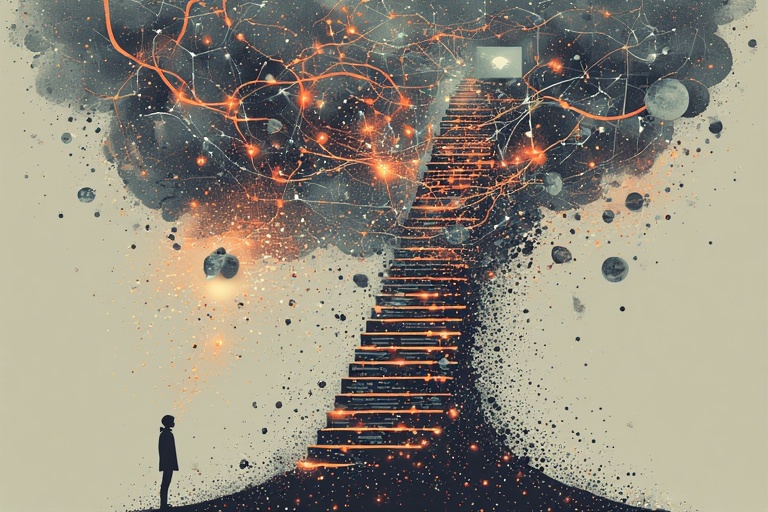
What once required a human learning through repetition can now be generated instantly by machines trained on oceans of existing work. The result is not merely efficiency—it is a structural break in how creative careers are formed. For aspiring artists, writers, designers, and filmmakers, the ladder still exists in theory, but its base is rapidly dissolving.
Automation Isn’t Just Replacing Jobs—It’s Replacing Pathways
The tech industry often frames AI as a tool that “frees humans from boring work.” From a productivity standpoint, that argument is compelling. From a workforce-development perspective, it is dangerously incomplete.
The so-called “grunt work” has always been how people learn. Entry-level writing assignments teach structure and tone. Junior design tasks build visual literacy. Assisting on small productions teaches storytelling under constraints. These roles are not just labor—they are training mechanisms embedded in the economy.
AI systems now perform many of these tasks faster, cheaper, and at scale. Blog posts, ad copy, basic illustrations, logo concepts, music beds, video edits, and even screenplay outlines can be generated in seconds. As companies adopt these tools, the demand for junior creatives shrinks, not because creativity is less valuable, but because learning is no longer billable.
The Illusion of Democratization
AI is often marketed as a democratizing force. Anyone can now “be creative,” the argument goes. Anyone can write, design, or produce with the help of intelligent systems.
This is only partially true.
What AI democratizes is output, not mastery. It allows people to produce artifacts that resemble professional work without understanding the underlying craft. This creates an illusion of equal footing while quietly concentrating real creative authority among those who already possess experience, taste, and decision-making power.
In practice, AI lowers the cost of content while raising the bar for meaningful human contribution. Beginners are no longer valued for what they can produce; they are expected to arrive already formed.
Why Companies No Longer Want Beginners
From a corporate perspective, the shift is rational. Training new talent is expensive, slow, and uncertain. AI tools offer predictable results without onboarding costs, sick days, or creative disagreements.
Job listings increasingly reflect this reality. Instead of hiring junior writers or designers, companies seek “AI content strategists,” “prompt engineers,” or “AI quality reviewers.” These roles don’t create—they supervise. They require judgment, not growth. And judgment is something beginners, by definition, do not yet have.
The paradox is brutal: to work creatively, you must already be creative at a professional level. But without entry points, how does one get there?
Creativity Without Scarcity Loses Its Economic Value
Historically, creative work had scarcity. Writing took time. Design required skill. Editing demanded attention. Scarcity justified compensation and apprenticeship.
AI removes scarcity from the lowest layers of creative production. When content is infinite, cheap, and instant, its market value collapses. What remains valuable is not creation, but curation—deciding what matters.
This shift favors established professionals and organizations with distribution power. For newcomers, it means fewer opportunities to prove themselves through volume, consistency, and improvement.
The Silent Cultural Cost
Beyond economics lies culture.
When humans no longer perform the repetitive creative tasks that shape their voices, styles become homogenized. AI models are trained on existing data, which means they reinforce dominant patterns rather than challenge them. The messy experimentation that defines new artistic movements often begins in low-stakes environments—the very environments AI is eliminating.
If future creators only interact with AI outputs instead of struggling through early failures, we risk a creative ecosystem that is technically polished but emotionally shallow.
Learning by Doing vs. Learning by Prompting
There is a profound difference between learning how to do something and learning how to ask a machine to do it for you.
Prompting is not creation. It is orchestration. While orchestration is a valuable skill, it assumes an understanding of the underlying craft. Without that foundation, creators become dependent on tools they do not fully understand, unable to diagnose problems or innovate beyond templates.
This dependency creates a fragile creative class—efficient but replaceable, productive but shallowly skilled.
The Entertainment Industry as a Warning Sign
Film, music, and media industries offer a clear preview of what lies ahead. Script coverage, rough cuts, temp music, storyboards—once entry-level gateways—are increasingly automated. Studios experiment with AI-generated treatments and marketing materials. Independent creators use AI to bypass teams entirely.
While this increases output, it narrows participation. Fewer assistants mean fewer future directors. Fewer junior editors mean fewer master storytellers tomorrow.
Who Actually Wins in an AI-Driven Creative Economy
The winners are not beginners or even most professionals. The winners are platforms, IP holders, and those who control distribution.
AI thrives on existing data. The more content you own, the more leverage you have. This tilts the industry toward consolidation, not democratization. Independent creators may produce more, but they compete in a louder, more crowded marketplace with diminishing returns.
Rebuilding the Ladder in an AI World
The solution is not rejecting AI. That battle is already over. The solution is rebuilding intentional pathways for human development within an automated environment.
This requires companies, institutions, and governments to recognize training as infrastructure. Paid apprenticeships, AI-assisted learning roles, and protected creative incubators must replace the informal grunt work of the past.
Education must shift from teaching tools to teaching judgment. Creativity must be framed not as output, but as decision-making under uncertainty.
What Aspiring Creatives Must Do Differently
For individuals entering the creative field, the strategy must evolve. Depth matters more than breadth. Original thinking matters more than speed. Human perspective—lived experience, ethics, emotion—becomes the differentiator AI cannot replicate.
The future creative is not someone who produces more, but someone who understands why something should exist at all.
The Choice Ahead
AI is not killing creativity. It is killing the old way of becoming creative.
Whether society allows that transformation to hollow out entire professions or uses it to build stronger, more intentional creative pathways is a choice—not a technical inevitability.
The ladder doesn’t have to disappear. But it does need to be rebuilt, rung by rung, with human growth at its core.
Frequently Asked Questions (FAQs)
1. Is AI actually replacing creative jobs?
AI is primarily replacing entry-level and repetitive creative tasks, reducing traditional pathways into creative professions.
2. Why are entry-level roles most affected by AI?
Because these roles involve standardized tasks that AI can perform quickly, cheaply, and at scale.
3. Does AI improve creativity or limit it?
AI improves efficiency but risks limiting originality by reinforcing existing patterns rather than encouraging experimentation.
4. Can beginners still succeed in creative industries?
Yes, but success now requires deeper specialization, stronger personal perspective, and strategic use of AI tools.
5. What skills matter most in an AI-driven creative economy?
Judgment, originality, storytelling, ethical reasoning, and the ability to make meaningful creative decisions.
6. Is prompting considered a creative skill?
Prompting is a useful operational skill, but it cannot replace foundational creative understanding.
7. How are companies benefiting from AI in creative work?
They reduce costs, increase speed, and minimize training requirements—but often at the expense of long-term talent development.
8. Does AI democratize creativity?
It democratizes output, not mastery or opportunity, which can actually increase inequality.
9. What happens to culture if AI dominates creativity?
Culture risks becoming polished but homogeneous, with fewer new voices and experimental ideas.
10. What is the long-term solution?
Building intentional human-centered training pathways that integrate AI without eliminating creative growth.