

Multiple sclerosis (MS) has long been described as a single disease with multiple clinical faces. For decades, patients have been categorized into labels such as relapsing-remitting, secondary progressive, or primary progressive MS—terms that focus on how symptoms appear over time rather than what is actually happening inside the brain and nervous system.
Now, a groundbreaking discovery powered by artificial intelligence is challenging that long-standing framework. Scientists have identified two previously unknown biological subtypes of MS, using machine learning, advanced MRI imaging, and a simple blood test. This breakthrough does not merely refine MS classification; it fundamentally redefines how the disease is understood, monitored, and potentially treated.
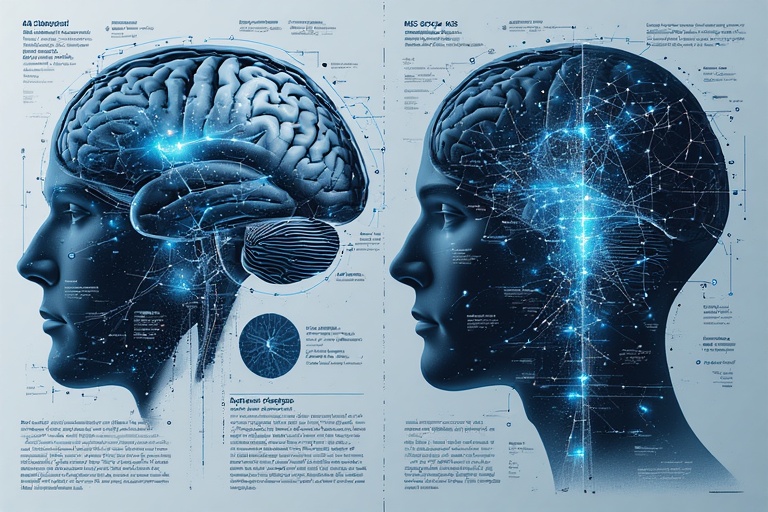
Experts believe this discovery could mark the beginning of truly personalized MS medicine—where treatment decisions are driven by biology rather than symptoms alone.
Why MS Has Been So Difficult to Treat Precisely
Multiple sclerosis is a complex autoimmune disease in which the immune system attacks the protective myelin sheath surrounding nerve fibers in the brain and spinal cord. This damage disrupts communication between the brain and the rest of the body, leading to symptoms such as fatigue, vision problems, mobility issues, and cognitive decline.
Despite decades of research, MS remains notoriously unpredictable. Two patients with similar symptoms can respond very differently to the same treatment. Some experience rapid disease progression, while others remain relatively stable for years.
The core challenge lies in how MS has traditionally been classified. Clinical labels describe outward behavior of the disease but fail to capture the underlying biological processes driving nerve damage. As a result, treatments are often chosen through trial and error rather than precision targeting.
The Role of Artificial Intelligence in Medical Discovery
Artificial intelligence has already demonstrated its power in fields such as drug discovery, cancer imaging, and genomics. What sets this MS breakthrough apart is AI’s ability to detect hidden patterns across massive, complex datasets that human researchers simply cannot process unaided.
In this study, researchers applied a machine learning model known as SuStaIn (Subtype and Stage Inference). Rather than forcing patients into predefined categories, SuStaIn analyzes biological data to uncover natural disease patterns and progression pathways.
This approach represents a shift from symptom-based medicine to data-driven disease modeling.
Inside the Study: Data, Scale, and Methodology
The research involved approximately 600 MS patients and was led by scientists from University College London (UCL) and Queen Square Analytics. The team combined three powerful diagnostic tools:
Blood analysis measuring serum neurofilament light chain (sNfL), a protein released into the bloodstream when nerve cells are damaged
High-resolution MRI scans of the brain
Machine learning analysis using SuStaIn
Neurofilament light chain has emerged in recent years as one of the most promising biomarkers in neurology. Elevated levels signal active nerve damage and disease intensity, making it an ideal biological indicator for AI-driven analysis.
By feeding longitudinal blood and imaging data into the AI model, researchers allowed the system to independently identify biological patterns—without being constrained by existing MS classifications.
The Discovery: Two Distinct Biological Subtypes of MS
The AI analysis revealed two clear and reproducible biological pathways of MS progression, now referred to as early sNfL MS and late sNfL MS.
These subtypes are not defined by symptoms or relapse frequency but by the timing, location, and nature of nerve damage inside the brain.
Early sNfL MS: An Aggressive Biological Pathway
In the early sNfL subtype, patients show elevated levels of neurofilament light chain very early in the disease. This spike indicates that nerve damage begins aggressively, even when outward symptoms may still appear manageable.
MRI scans revealed early damage to the corpus callosum, a critical structure connecting the brain’s hemispheres. Patients with this subtype also developed brain lesions more rapidly than others.
From a technological perspective, this subtype represents a fast-moving disease trajectory that demands early detection and immediate intervention. The AI model suggests that waiting for symptoms to worsen may allow irreversible damage to accumulate.
Clinically, this subtype may benefit most from high-efficacy treatments introduced earlier than current guidelines often recommend.
Late sNfL MS: A Slower, Neurodegenerative Pattern
The second subtype follows a markedly different biological timeline. In late sNfL MS, patients experience gradual brain shrinkage—particularly in areas like the limbic cortex and deep grey matter—before neurofilament levels rise.
This pattern suggests a more insidious form of disease progression, where neurodegeneration occurs quietly before overt nerve damage becomes detectable in blood tests.
From a treatment standpoint, this subtype may require therapies focused on neuroprotection rather than immune suppression alone. It also highlights the danger of relying solely on relapse activity as a marker of disease severity.
Why This Breakthrough Matters for Patients
The implications of this discovery are profound. For the first time, clinicians may be able to determine not just how MS behaves, but why it behaves that way in each individual patient.
This enables:
Earlier identification of high-risk patients
More accurate prediction of disease progression
Tailored treatment strategies based on biological need
Reduced exposure to ineffective or unnecessary therapies
In practical terms, a patient identified as early sNfL MS could receive aggressive treatment and closer monitoring, potentially preventing long-term disability. Meanwhile, a patient with late sNfL MS could receive therapies aimed at preserving brain tissue and slowing degeneration.
Transforming Clinical Practice With AI
Lead researcher Dr. Arman Eshaghi emphasized that MS is not a single disease and that current classifications fail to capture underlying tissue changes. By integrating AI with widely available diagnostic tools, this research opens the door to routine biological profiling in clinical settings.
What makes this advancement particularly powerful is its scalability. Blood tests and MRI scans are already standard in MS care. The AI layer enhances interpretation rather than requiring entirely new infrastructure.
This signals a future where AI augments neurologists rather than replacing them—providing deeper insight while preserving human clinical judgment.
A Shift Away From Symptom-Based Labels
Experts from the MS Society welcomed the findings, noting that traditional descriptors like “relapsing” and “progressive” often fail to reflect what is happening biologically.
As MS research evolves, the field is gradually moving toward a molecular and biomarker-based understanding of the disease. This mirrors trends seen in oncology, where tumor genetics now guide treatment decisions more than physical location.
MS appears poised to follow a similar transformation.
Limitations and the Road Ahead
While the findings are promising, researchers caution that further validation across larger and more diverse populations is needed. Regulatory approval, clinical integration, and long-term outcome studies will determine how quickly this approach becomes standard practice.
Nevertheless, this discovery represents one of the most significant conceptual advances in MS research in decades.
Conclusion: AI as a Catalyst for Personalized Neurology
This breakthrough demonstrates AI’s unique ability to reveal biological truths hidden beneath clinical symptoms. By uncovering two distinct subtypes of MS, researchers have taken a decisive step toward precision neurology.
For patients, this means hope—not just for better treatments, but for treatments that are right for them.
For medicine, it signals a future where diseases are defined by data, biology, and intelligence—not guesswork.
FAQs
1. What are the two new MS subtypes discovered?
They are called early sNfL MS and late sNfL MS, defined by biological damage patterns rather than symptoms.
2. What is sNfL?
Serum neurofilament light chain is a blood biomarker that indicates nerve cell damage.
3. How did AI help identify these subtypes?
A machine learning model analyzed blood and MRI data to uncover hidden disease patterns.
4. Why is this discovery important for patients?
It enables earlier diagnosis and personalized treatment strategies.
5. Will this replace current MS classifications?
Not immediately, but it supports a shift toward biology-based definitions.
6. Can this improve treatment effectiveness?
Yes, by matching therapies to a patient’s specific disease pathway.
7. Is this technology widely available?
The tests are common; the AI integration is still being adopted.
8. Does this help progressive MS patients?
Potentially, especially by identifying early neurodegeneration.
9. Are there risks to AI-driven diagnosis?
Like all tools, AI requires validation and careful clinical oversight.
10. What does this mean for the future of neurology?
It marks a move toward precision, data-driven brain medicine.