

In the digital-first era, internet connectivity is no longer a luxury or an optional amenity—it has become an essential utility, as fundamental as electricity or running water. A new white paper released by Parks Associates, titled Achieving Turnkey Connectivity: Elevating the Total Multifamily Experience, highlights a powerful shift in renter expectations across the United States. According to the research, 41% of apartment renters now expect their internet service to be fully operational from the very moment they move into a new home.
This finding reflects a broader transformation in how people live, work, communicate, and entertain themselves. As remote work, smart home technology, streaming services, online education, and digital health platforms become deeply embedded in everyday life, renters increasingly view seamless internet access as a baseline requirement rather than an upgrade.
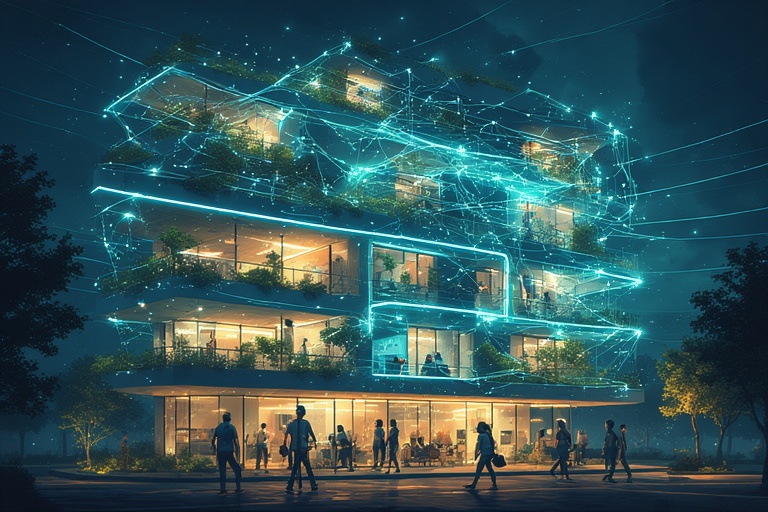
Developed in collaboration with Xfinity Communities, a division of Comcast Corporation focused on multifamily housing, the white paper explores how property owners and operators can meet these evolving expectations while navigating the increasing complexity of modern building technology.
Why “Ready-to-Go” Internet Has Become Non-Negotiable
The expectation of instant internet availability is rooted in lifestyle changes that have accelerated over the past decade and intensified since the global shift toward remote and hybrid work. Renters today are more digitally dependent than ever before. From video conferencing and cloud-based collaboration tools to online banking, smart security systems, and entertainment streaming, internet downtime is no longer tolerable—even for a single day.
Moving into a new apartment traditionally involved scheduling an internet installation, waiting for a technician, and dealing with service disruptions. For modern renters, especially professionals and families, this process feels outdated and inefficient. The Parks Associates research confirms that nearly half of apartment residents consider internet availability at move-in to be a top deciding factor when choosing a new home.
This expectation is not limited to younger renters. In fact, the data reveals that as of 2025, roughly half of apartment renters are aged 45 or older. Many live in multi-person households, often with children or elderly family members, and rely on stable connectivity for work, education, healthcare, and security.
The Changing Demographics of Apartment Renters
One of the most striking insights from the Parks Associates report is how renter demographics have evolved. Contrary to the long-held assumption that apartment living primarily serves young, single professionals, today’s renter base is older, more settled, and more family-oriented.
A significant portion of renters live with other household members, and nearly half own pets. These households tend to prioritize safety, reliability, and convenience over novelty. As a result, they place higher value on robust digital infrastructure that supports multiple devices, smart home features, and secure connectivity throughout the property.
This demographic shift has profound implications for property developers and operators. Internet service can no longer be treated as a standalone amenity or a simple add-on. Instead, it must be integrated into the core design and operational strategy of multifamily buildings.
Smart Buildings and the Demand for Robust Digital Infrastructure
Modern apartment communities are increasingly adopting smart building technologies to enhance security, efficiency, and resident experience. Features such as controlled access systems, property-wide security cameras, smart thermostats, energy monitoring, and in-unit security solutions all depend on reliable, high-capacity internet connectivity.
Kristen Hanich, Director of Research at Parks Associates, emphasizes that today’s renters are interested in a wide range of technology-driven amenities. However, these amenities place significant demands on property-level connectivity. Without a strong digital backbone, even the most advanced smart features can become sources of frustration rather than value.
The research underscores a critical point: smart technology is only as effective as the network that supports it. Inadequate connectivity can lead to service disruptions, resident dissatisfaction, and increased operational challenges for property staff.
The Hidden Cost of PropTech Fragmentation
While technology offers enormous potential to improve multifamily living, it also introduces new complexities. One of the most pressing challenges identified in the white paper is fragmentation within the proptech ecosystem.
According to a 2024 Parks Associates study, multifamily owners and operators work with an average of 21.5 smart building partners. Each vendor often brings its own hardware, software, service agreements, and support requirements. This fragmented approach increases operational overhead, complicates troubleshooting, and creates inconsistent experiences for residents.
For on-site staff, managing multiple technology providers can be overwhelming. For residents, it can result in confusing onboarding processes, incompatible systems, and uneven service quality. These challenges highlight the need for more integrated, turnkey solutions that simplify both deployment and ongoing management.
Turnkey Connectivity as a Competitive Differentiator
Turnkey connectivity refers to a model where internet service and related digital infrastructure are pre-installed, pre-configured, and ready for immediate use at move-in. Rather than requiring residents to select a provider, schedule installations, and manage separate accounts, the service is seamlessly integrated into the property experience.
The Parks Associates research shows that renters who have previously experienced bulk or managed internet services are significantly more likely to value them. Approximately 65% of these renters consider internet availability at move-in to be highly important, compared to those who have never experienced such setups.
This suggests that once renters experience the convenience of turnkey connectivity, their expectations permanently change. For property owners, this creates both an opportunity and a challenge. Those who invest early in integrated connectivity solutions can differentiate their properties in an increasingly competitive rental market.
Xfinity Communities and the Push for Seamless Move-In Experiences
Xfinity Communities, the research partner for the white paper, positions turnkey connectivity as a strategic solution to modern renter demands. According to Ilan Eframian, Vice President at Xfinity Communities, today’s residents expect more than physical space—they expect instant digital readiness.
From this perspective, day-one internet access is not merely a convenience but a foundational element of resident satisfaction. Properties that deliver seamless connectivity from the moment residents arrive are better positioned to reduce churn, improve online reviews, and build long-term loyalty.
Additionally, integrated connectivity solutions can simplify operations for property managers by reducing service calls, minimizing installation delays, and centralizing technical support.
The Impact of Connectivity on Resident Satisfaction and Retention
Resident satisfaction is closely tied to the performance of smart technology and internet services. The Parks Associates research highlights a stark statistic: when residents are dissatisfied with smart tech, Net Promoter Scores (NPS) drop to an average of -39. Such negative scores indicate not only dissatisfaction but also a high likelihood of residents discouraging others from choosing the property.
In contrast, properties that deliver reliable, seamless digital experiences tend to see higher engagement, better retention rates, and stronger community reputations. In an era where online reviews and social media influence rental decisions, connectivity performance can directly impact a property’s financial success.
Managed Wi-Fi and the Future of Multifamily Housing
Managed Wi-Fi is emerging as a key component of turnkey connectivity strategies. As of 2025, approximately 60% of multifamily owners or operators have implemented managed Wi-Fi in at least part of their portfolio, with 13% reporting full adoption across all properties.
Managed Wi-Fi allows property owners to maintain control over network performance, security, and scalability while offering residents a consistent, high-quality experience. It also provides a foundation for future innovations, including advanced smart building applications, data analytics, and energy optimization.
As digital demands continue to grow, managed connectivity is likely to become a standard feature rather than a differentiator.
Preparing Properties for a Digitally Native Future
The findings from Parks Associates point to a clear conclusion: multifamily properties must evolve to meet the expectations of digitally native renters. This evolution requires more than incremental upgrades—it demands a strategic approach to connectivity that prioritizes integration, scalability, and user experience.
Owners and operators who invest in robust digital infrastructure today are not only addressing current renter demands but also future-proofing their assets. As smart building technologies continue to advance, properties with strong connectivity foundations will be better positioned to adopt new innovations without costly retrofits.
Conclusion: Connectivity as the Cornerstone of Modern Living
The expectation that internet service should be ready-to-go at move-in reflects a broader transformation in housing priorities. Renters increasingly view connectivity as essential infrastructure that enables work, security, entertainment, and community engagement.
The Parks Associates white paper, developed with Xfinity Communities, provides a compelling roadmap for how the multifamily industry can respond to this shift. By embracing turnkey connectivity and reducing technological fragmentation, property owners can elevate the resident experience, improve operational efficiency, and remain competitive in a rapidly evolving market.
In the digital age, the quality of a home is measured not only by its physical features but by its ability to connect residents to the world beyond its walls.
FAQs
1. Why do renters expect internet to be ready at move-in?
Because work, education, security, and entertainment now depend on constant connectivity.
2. What is turnkey connectivity in apartments?
It refers to pre-installed, ready-to-use internet and digital services available immediately at move-in.
3. Who conducted this research?
Parks Associates, in partnership with Xfinity Communities.
4. How does internet availability impact renter decisions?
Nearly half of renters rank it as a top factor when choosing a new apartment.
5. What demographic trends influence this demand?
Renters are older, more family-oriented, and often work remotely.
6. What challenges do property owners face with smart technology?
Fragmentation across multiple vendors increases complexity and operational costs.
7. What is managed Wi-Fi?
A property-controlled network that delivers consistent, secure internet across a building.
8. How does poor connectivity affect resident satisfaction?
It significantly lowers Net Promoter Scores and increases dissatisfaction.
9. Are most apartment owners adopting managed Wi-Fi?
About 60% have adopted it partially, with growing full-property deployment.
10. What is the future of apartment connectivity?
Integrated, scalable digital infrastructure designed to support smart living and future technologies.