

For years, the idea of a foldable iPhone existed mostly in patents, analyst notes, and speculative conversations among Apple watchers. While competitors such as Samsung, Google, Huawei, and others aggressively pushed foldable hardware into the mainstream, Apple appeared unusually patient. That patience, according to the latest leaks, may finally be paying off.
A newly surfaced leak, attributed to well-known Apple leaker Jon Prosser, offers the clearest look yet at what could become Apple’s first foldable smartphone—widely referred to as the iPhone Fold. More than just another foldable phone, this device appears to represent Apple’s attempt to redefine the category rather than simply participate in it.
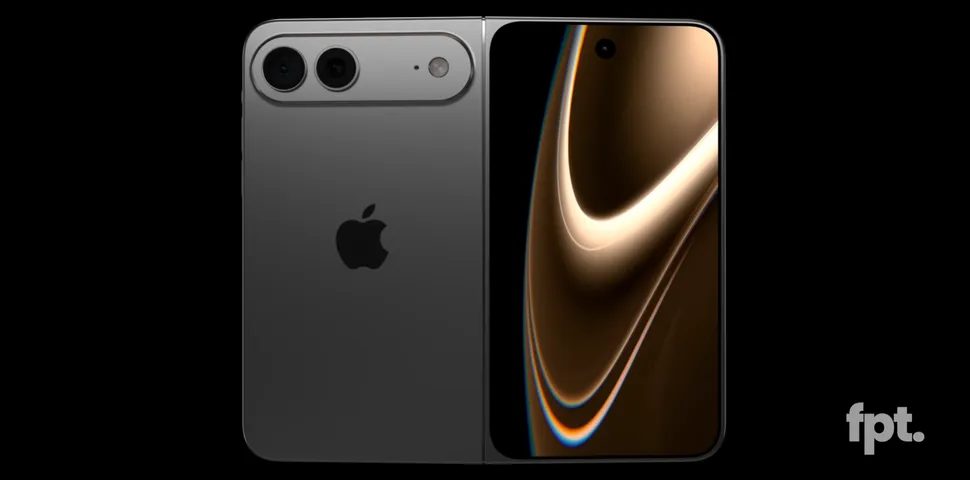
If the leak is accurate, Apple is preparing a foldable device that prioritizes engineering refinement over speed to market, addressing many of the pain points that have long plagued foldable phones.
Design Philosophy: Apple’s Relentless Focus on Refinement
Apple’s approach to product design has always been evolutionary rather than reactionary. The leaked renders suggest the iPhone Fold follows this philosophy closely. Rather than chasing the largest possible display or experimental form factors, Apple appears focused on usability, thinness, and long-term durability.
When folded, the iPhone Fold reportedly measures just 9mm thick, and when unfolded, an astonishingly slim 4.5mm. These dimensions would make it one of the thinnest foldable smartphones ever designed—potentially even slimmer than devices like Samsung’s Galaxy Z Fold series.
This emphasis on thinness is not merely aesthetic. Thinner foldables are lighter, easier to hold, and feel closer to traditional smartphones, reducing the psychological barrier for users hesitant to adopt foldable technology.
The Crease-Free Display: A Breakthrough Moment
Perhaps the most significant detail in the leak is Apple’s reported solution to the foldable display crease—a flaw that has haunted every foldable phone released so far.
According to the leak, Apple has engineered a metal pressure-distribution plate combined with a liquid metal hinge mechanism. This design allegedly disperses bending stress evenly across the display, preventing the visible crease that typically forms where foldable screens bend.
If Apple has truly achieved a crease-free display, this would mark a watershed moment for the foldable industry. The crease has long been the most visible reminder that foldable phones are still experimental. Removing it could instantly make foldables feel more “finished” and mainstream.
Display Sizes: A Balanced, Practical Approach
The leaked specifications suggest a 5.5-inch cover display when folded and a 7.8-inch inner display when opened. While slightly smaller than some competing foldables, this choice appears deliberate.
Apple seems less interested in creating a pocket tablet and more focused on offering a seamless transition between phone and productivity device. A 7.8-inch display is large enough for multitasking, media consumption, and document editing, while remaining manageable for everyday use.
This balance reflects Apple’s long-standing emphasis on ergonomics rather than spec sheet dominance.
Materials and Engineering: Liquid Metal Returns
Apple’s rumored use of liquid metal in the hinge is particularly notable. The company has experimented with liquid metal alloys before, particularly in SIM ejector tools and internal components, due to their strength and resistance to deformation.
In a foldable device, hinge durability is critical. The repeated stress of folding and unfolding can quickly degrade conventional materials. Liquid metal, combined with Apple’s pressure-distribution system, could dramatically increase longevity and reliability—two areas where early foldables struggled.
Cameras and Internal Hardware: Familiar Apple Excellence
The leak suggests the iPhone Fold will feature four cameras, though specific sensor details remain unclear. Given Apple’s current trajectory, it is reasonable to expect a combination of wide, ultra-wide, and telephoto lenses, optimized for both folded and unfolded usage.
Internally, the device is rumored to include Apple’s C2 modem, designed to improve power efficiency and connectivity. Battery life has historically been a challenge for foldables due to large displays and complex hardware, making Apple’s modem optimization especially significant.
The Return of Touch ID: A Strategic Decision
One of the more surprising elements of the leak is the reported return of Touch ID, integrated into the power button. Apple has largely moved away from fingerprint authentication in favor of Face ID, but foldable devices present unique challenges for facial recognition, particularly in various folded orientations.
Reintroducing Touch ID may provide faster, more reliable authentication across multiple usage modes. This move reflects Apple’s willingness to revisit older technologies when they serve modern use cases better.
Color Choices: Minimalism Remains King
The leaked color options—black and white—align perfectly with Apple’s minimalist design language. While competitors often launch foldables in bold or experimental finishes, Apple appears focused on timeless aesthetics that emphasize the hardware itself rather than visual novelty.
This restrained approach reinforces Apple’s positioning of the iPhone Fold as a premium, professional device rather than a flashy tech experiment.
Pricing Reality: A Premium Device for Early Adopters
Perhaps unsurprisingly, the iPhone Fold is expected to carry a premium price tag, with estimates ranging from $2,000 to $2,500. This places it firmly in the ultra-premium category, competing directly with Samsung’s Galaxy Z Fold lineup and Google’s Pixel Fold devices.
Apple’s pricing strategy suggests the iPhone Fold is not designed for mass adoption in its first generation. Instead, it targets enthusiasts, professionals, and early adopters willing to pay for cutting-edge design and Apple’s ecosystem integration.
Competitive Landscape: Apple Enters a Mature Market
Unlike Apple Watch or AirPods, the foldable smartphone market is already relatively mature. Samsung has refined its foldables across multiple generations, and Google has entered the space with its own interpretation.
Apple’s late entry means expectations are higher. The company cannot afford a flawed first attempt. The leaked focus on durability, thinness, and crease elimination indicates Apple understands this pressure.
Software Experience: The Silent Advantage
While leaks focus heavily on hardware, Apple’s true advantage may lie in software. iOS has historically been optimized tightly for Apple hardware, and a foldable iPhone would allow Apple to reimagine multitasking, app continuity, and interface scaling in ways Android foldables have struggled to perfect.
Apple’s control over both hardware and software could enable a more cohesive foldable experience—one where apps adapt seamlessly without awkward transitions.
Launch Timeline: A 2026 Statement Device
The iPhone Fold is rumored to debut alongside the iPhone 18 Pro series in September 2026. If accurate, this timeline suggests Apple is positioning the device as a flagship-level innovation rather than a side experiment.
A 2026 launch also allows Apple to leverage advancements in display manufacturing, hinge technology, and power efficiency that are still evolving today.
Why the iPhone Fold Matters Beyond Apple
Whether or not the iPhone Fold becomes a commercial hit, its existence would legitimize foldables in a way no other device has. Apple’s entry often signals that a category has matured enough for mainstream consumers.
If Apple delivers a truly crease-free, durable foldable, it could accelerate adoption across the industry and force competitors to rethink their designs.
A Calculated Bet on the Future of Smartphones
The smartphone market has reached a point of saturation. Incremental upgrades no longer excite consumers the way they once did. Foldables represent one of the few remaining frontiers for meaningful hardware innovation.
Apple’s iPhone Fold, if executed as described in the leaks, may not just be another phone—it could be Apple’s answer to stagnation, signaling the next evolution of mobile computing.
Frequently Asked Questions (FAQs)
1. What is the iPhone Fold?
The iPhone Fold is Apple’s rumored first foldable smartphone, expected to launch in 2026.
2. Will the iPhone Fold really be crease-free?
Leaks suggest Apple has developed a hinge and pressure-distribution system to eliminate visible creases.
3. How big is the iPhone Fold display?
It reportedly features a 5.5-inch cover display and a 7.8-inch inner display.
4. How thin is the iPhone Fold?
The device may measure 4.5mm when unfolded and 9mm when folded.
5. Will Touch ID return on the iPhone Fold?
Yes, leaks suggest Touch ID will be integrated into the power button.
6. How much will the iPhone Fold cost?
Estimated pricing ranges from $2,000 to $2,500.
7. When will Apple launch the iPhone Fold?
The expected launch window is September 2026.
8. How does it compare to Samsung’s foldables?
Apple appears to prioritize refinement and durability over display size.
9. Why did Apple wait so long to launch a foldable?
Apple traditionally enters markets late to deliver more polished products.
10. Will the iPhone Fold change the smartphone industry?
If successful, it could accelerate mainstream adoption of foldable devices.