

For nearly a decade, Apple has been rumored to be quietly preparing a major push into the smart home market. While competitors like Amazon and Google aggressively expanded with Echo and Nest devices, Apple appeared to move cautiously, refining HomeKit, rebuilding its Home app architecture, and integrating deeper Siri controls across iOS and macOS.
To many observers, Apple’s smart home ambitions felt stalled—perhaps even abandoned.
That perception may now be fundamentally wrong.
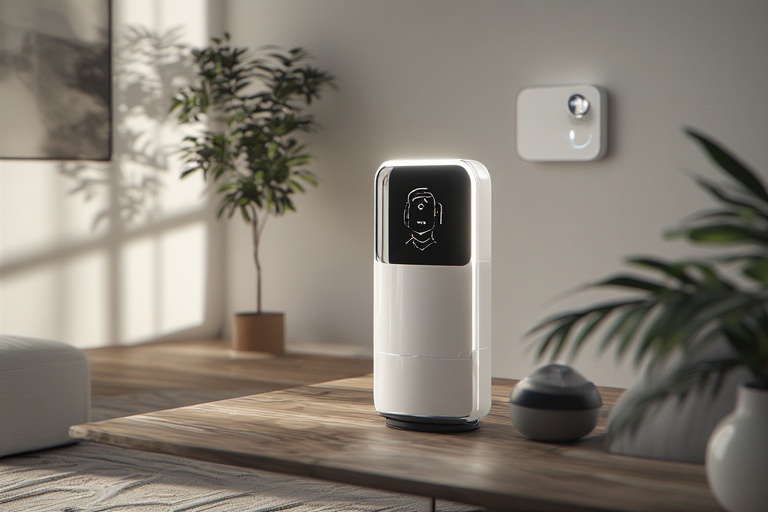
Leaked internal Apple code tied to pre-release builds of iOS 26 strongly suggests that Apple is preparing to launch its most ambitious smart home hardware lineup to date. At the center of this effort is a long-rumored smart home hub, internally identified as J490, widely believed to be Apple’s upcoming “HomePad.” Alongside it is a second, previously unknown accessory—J229—which appears to introduce camera-based intelligence into Apple’s home ecosystem.
Together, these products suggest Apple is no longer experimenting with the smart home. It is preparing to own it.
The HomePad: Apple’s Vision for the Smart Home Command Center
Apple’s HomePad has circulated in rumor circles for years, but leaked internal references now provide the clearest confirmation yet that the device is real, advanced, and nearing launch.
According to internal identifiers found in Apple’s own software builds, the HomePad is designed as a hybrid device—part iPad, part HomePod—optimized for constant presence in shared living spaces.
Unlike a traditional iPad, the HomePad is not meant to be picked up and carried around. Instead, it functions as a fixed, always-on smart home command center, blending display-driven interaction with voice-first control.
A Familiar Design, Reimagined for the Home
Apple’s design philosophy for the HomePad appears rooted in familiarity. The device reportedly features a square or near-square display, paired with integrated speakers that deliver room-filling audio similar to a HomePod.
The result is a device that visually resembles a compact iPad but behaves more like a smart assistant hub.
This design choice reflects Apple’s belief that smart home devices should feel personal yet unobtrusive—capable of blending into everyday life without demanding constant attention.
Powered by the A18 Chip: Why Performance Matters
One of the most striking details revealed by leaked code is the HomePad’s processor: Apple’s A18 chip.
This is not a low-power smart speaker processor. It is a flagship-class system-on-chip, the same class of silicon that powers iPhones and advanced iPads.
This decision signals something important: Apple does not see the HomePad as a passive device. It is intended to perform advanced, on-device computation, including:
Real-time facial recognition
Advanced Siri processing
Apple Intelligence features
Local automation logic
By keeping these capabilities on-device, Apple reinforces its privacy-first positioning while enabling faster, more reliable smart home interactions.
The Role of the Built-In Camera
Perhaps the most transformative feature of the HomePad is its front-facing ultra-wide camera.
While FaceTime support is expected—allowing users to make video calls directly from the HomePad—the camera’s role goes far beyond communication.
Internal testing tools referenced in the leaked code indicate that the HomePad uses facial biometrics not only for authentication but also for identity recognition.
This means the device can tell who is in the room.
A True Multi-User Smart Home Experience
Smart home devices have long struggled with personalization. Most assistants either respond generically or require manual profile switching.
Apple’s approach appears far more elegant.
By recognizing faces, the HomePad can automatically adapt its behavior depending on who is interacting with it. This could include:
Personal calendars and reminders
Music preferences
Message access restrictions
Customized automation triggers
In shared households, this transforms the smart home from a one-size-fits-all system into a truly personal environment.
Face ID Beyond Security
Face ID on the HomePad is not merely about unlocking features. It represents a new interaction paradigm.
The HomePad can function differently when a child, guest, or homeowner is present. Sensitive notifications may be hidden. Parental controls may activate automatically. Smart routines may adjust lighting, temperature, or music based on who enters the room.
This contextual awareness is something competitors have attempted—but never fully achieved.
Apple Intelligence Comes Home
The HomePad’s A18 chip also enables deep integration with Apple Intelligence, Apple’s evolving AI framework.
Flags in the code suggest support for a more conversational, context-aware Siri—one capable of sustained dialogue rather than single commands.
In the smart home context, this could finally deliver on Siri’s long-promised potential:
Understanding follow-up questions
Managing complex routines naturally
Responding with situational awareness
Rather than barking commands, users may simply talk to their home.
The Mysterious J229: Apple’s First New Camera Accessory in Years
Alongside the HomePad, leaked code references a second device, internally labeled J229. Unlike the HomePad, J229 is classified as an accessory rather than a standalone computing device.
What makes it intriguing is its feature set.
Internal references indicate that J229 includes:
Multiple sensors
Sound detection (including alarm recognition)
Image capture capabilities
Deep HomeKit integration
These features strongly suggest a smart home security camera.
Why Apple Is Finally Entering Home Security
Home security has long been dominated by companies like Ring, Google Nest, and Arlo. Apple has participated indirectly through HomeKit Secure Video, but it has never released its own camera hardware.
That may be about to change.
A native Apple camera allows tighter integration with:
iCloud encryption
Face recognition
Local processing
Apple TV and HomePad displays
By controlling both hardware and software, Apple can offer a security solution that emphasizes privacy without sacrificing intelligence.
The Doorbell Question
There have also been rumors of an Apple smart doorbell, though most reports suggest it is still years away.
Given J229’s classification and timeline, a security camera is far more likely than a doorbell—at least for the initial release.
However, the underlying technology could easily evolve into a doorbell system in future iterations.
A Design Nod to Apple’s Past?
Speculation around J229’s design has sparked nostalgia among longtime Apple users.
Apple’s last standalone camera product—the iconic iSight—was beloved for its minimalist design and visual clarity.
If Apple revives that aesthetic for its smart camera, it could stand out dramatically in a market dominated by plastic, utilitarian designs.
Timing: Why Spring 2026 Matters
Internal code points to iOS 26.4 as a key milestone, with both HomePad and J229 support scheduled for spring 2026.
This timing aligns with Apple’s typical product strategy:
Major platform announcements at WWDC
Hardware launches in spring or fall
Gradual ecosystem expansion
Launching both devices together would allow Apple to present a cohesive smart home vision rather than isolated products.
The Bigger Picture: Apple’s Ecosystem Play
Apple is not entering the smart home to sell gadgets. It is extending its ecosystem.
The HomePad and camera accessory connect naturally with:
iPhones and iPads
Apple TV
Apple Watch
HomeKit accessories
Apple Intelligence
Each device strengthens the value of the others.
Once embedded, the system becomes difficult to leave—a strategy Apple has mastered across every category it enters.
Why Apple Waited So Long
Some critics argue Apple is late to the smart home market. But Apple’s history suggests otherwise.
Apple often waits until:
Technology matures
User expectations are clear
Integration opportunities are strongest
The result is rarely the first product—but often the most refined.
The HomePad and J229 appear to follow this pattern.
Privacy as the Differentiator
In an era of always-on cameras and microphones, privacy concerns are growing.
Apple’s emphasis on on-device processing, encrypted storage, and user control could become its biggest advantage.
Unlike competitors that rely heavily on cloud analysis, Apple’s approach minimizes data exposure while maintaining advanced features.
The Competitive Impact
If Apple executes this strategy well, the implications for competitors are significant.
Amazon and Google may dominate market share, but Apple dominates loyalty.
A premium, privacy-focused smart home experience could attract users willing to pay more for trust and polish.
Final Thoughts: Apple’s Quietest Revolution Yet
The leaked code does more than confirm products—it reveals intent.
Apple is not dabbling in the smart home anymore. It is building a platform.
With the HomePad as the central intelligence and camera-based accessories extending awareness throughout the home, Apple appears ready to redefine how smart homes feel, behave, and protect their users.
After years of silence, Apple’s smart home future is finally coming into view—and it looks far more ambitious than anyone expected.
FAQs
1. What is Apple’s HomePad?
A smart home hub combining a display, speaker, camera, and Siri intelligence.
2. Is HomePad confirmed by Apple?
No, but internal Apple code strongly suggests active development.
3. What chip powers the HomePad?
Leaked references indicate Apple’s A18 processor.
4. Does HomePad support Face ID?
Yes, facial recognition is referenced for authentication and personalization.
5. What is the J229 device?
Likely an Apple-designed smart home security camera.
6. Will Apple launch a smart doorbell?
Possibly in the future, but current leaks point to a camera first.
7. When could these devices launch?
Spring 2026, based on iOS 26.4 references.
8. How does this affect HomeKit?
It significantly expands HomeKit’s intelligence and capabilities.
9. What makes Apple’s approach different?
On-device processing, privacy focus, and ecosystem integration.
10. Could this change the smart home market?
Yes, especially for users prioritizing privacy and seamless experiences.