

The automotive world thrives on passion, precision engineering, and deeply rooted traditions. Few topics ignite debate among enthusiasts and industry experts alike as intensely as the definition of a “sports car.” In 2026, this discussion has been reignited following a controversial list released by Consumer Reports. Their selection of top sports cars included vehicles that challenge long-standing classifications, prompting a reassessment of what truly qualifies as a sports car in today’s rapidly evolving automotive landscape.
This debate is not merely semantic. It reflects broader transformations in automotive engineering, electrification, consumer expectations, and the integration of advanced technologies. As performance metrics evolve and traditional boundaries blur, the industry must grapple with whether legacy definitions still hold relevance.
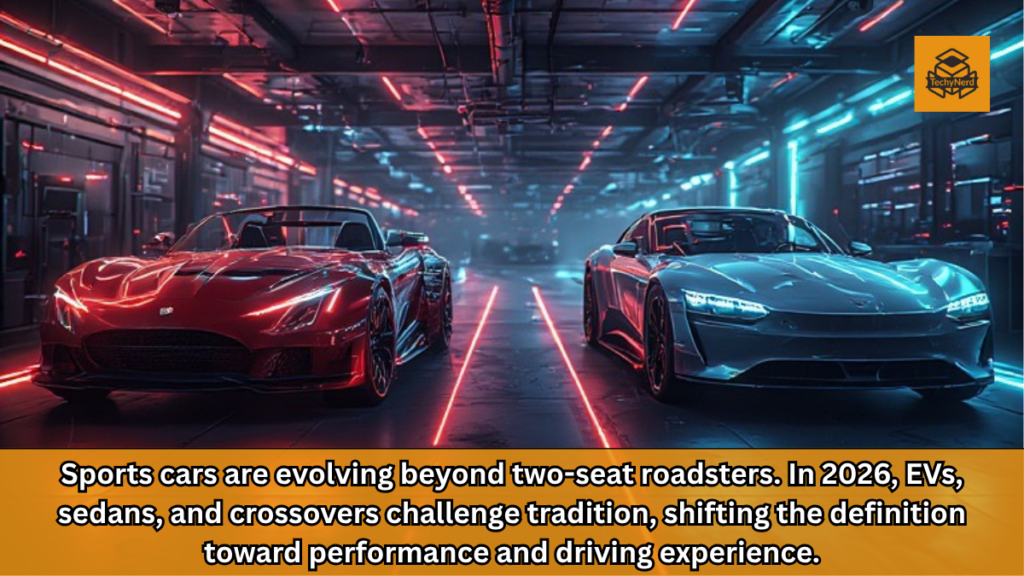
The Traditional Definition: Roots in Simplicity
Historically, the concept of a sports car was relatively straightforward. According to early standards set by the Sports Car Club of America, a sports car was defined as a lightweight, two-seat vehicle, typically featuring a soft top and designed for competitive driving. This definition emphasized simplicity, agility, and a direct connection between driver and machine.
Classic examples embodying this philosophy include the Mazda MX-5 Miata and earlier generations of European roadsters. These vehicles prioritized handling over raw power, delivering an engaging driving experience through balance and responsiveness rather than sheer speed.
However, this traditional definition emerged in an era when automotive technology was far less complex. Vehicles were mechanically simpler, and categories were more clearly delineated. Today, those boundaries have become increasingly fluid.
Consumer Reports’ 2026 List: Expanding the Definition
The inclusion of vehicles such as the Hyundai Ioniq 5 N and Honda Civic Si in a sports car list signals a fundamental shift in thinking. These models do not conform to the classic two-seat roadster archetype. Instead, they represent a broader interpretation centered on performance, driver engagement, and technological innovation.
The Ioniq 5 N, for instance, is an electric crossover delivering extraordinary acceleration and advanced performance features. Meanwhile, the Civic Si offers a refined manual driving experience in a practical sedan format. Both vehicles excel in performance-oriented metrics, yet their inclusion raises questions about whether performance alone is sufficient to define a sports car.
The Case for Preserving Tradition
Many purists argue that expanding the definition risks diluting the essence of what makes a sports car special. Vehicles like the Chevrolet Corvette and the BMW Z4 exemplify the traditional formula, combining two-seat layouts with a focus on driving dynamics.
From this perspective, categorizing heavier, multi-purpose vehicles as sports cars undermines the clarity of automotive classifications. A high-performance crossover, regardless of its speed, serves a fundamentally different purpose than a lightweight roadster. The argument here is not about performance capability but about intent and design philosophy.
Maintaining clear distinctions allows consumers to better understand what they are purchasing and preserves the heritage associated with iconic vehicle segments.
The Counterargument: Evolution Is Inevitable
On the other side of the debate lies a compelling argument rooted in technological progress. Modern vehicles are no longer constrained by the limitations of internal combustion engines or traditional chassis designs. Electrification, advanced materials, and digital systems have redefined what is possible in automotive engineering.
Consider the Toyota GR Supra. While it does not fit the classic two-seat, soft-top definition, its performance characteristics and driving dynamics align closely with what enthusiasts expect from a sports car. Similarly, the Ford Mustang has evolved from its origins as a muscle car into a vehicle capable of delivering refined handling and track-ready performance.
These examples illustrate that the essence of a sports car may lie more in its driving experience than in its physical configuration.
The Role of Electrification in Redefining Performance
One of the most significant factors influencing this debate is the rise of electric vehicles. Electric powertrains offer instant torque, precise control, and new possibilities for performance tuning. Vehicles like the Hyundai Ioniq 5 N demonstrate that electric platforms can deliver thrilling driving experiences traditionally associated with sports cars.
However, electrification also introduces new challenges. Electric vehicles are often heavier due to battery packs, which can affect handling characteristics. Engineers compensate with advanced suspension systems, torque vectoring, and software-driven enhancements, creating a different but equally engaging form of performance.
This shift raises an important question: should the definition of a sports car adapt to include new forms of performance enabled by technology?
Blurring Segment Boundaries
The modern automotive market is characterized by increasingly blurred segment boundaries. Crossovers, hatchbacks, sedans, and coupes now share platforms and technologies, making rigid classifications less relevant.
Performance-oriented variants exist across nearly every segment, from compact hatchbacks to luxury SUVs. Vehicles like the Volkswagen Golf R and BMW 8 Series demonstrate that performance is no longer confined to traditional sports car formats.
As a result, the term “sports car” may be evolving into a broader descriptor encompassing any vehicle designed to deliver an engaging driving experience.
The Influence of Consumer Expectations
Consumer preferences play a crucial role in shaping automotive classifications. Today’s buyers often seek vehicles that combine performance with practicality, comfort, and advanced technology.
A two-seat roadster, while appealing to enthusiasts, may not meet the needs of a broader audience. In contrast, a high-performance sedan or crossover offers versatility alongside driving excitement.
This shift in demand encourages manufacturers to create vehicles that blend characteristics from multiple segments, further complicating traditional definitions.
Technology as a Defining Factor
Modern sports cars are as much about technology as they are about mechanical engineering. Features such as adaptive suspension systems, advanced driver assistance, and customizable driving modes contribute significantly to the driving experience.
Software plays an increasingly important role, enabling real-time adjustments to performance characteristics. This integration of digital systems represents a departure from the purely mechanical focus of traditional sports cars.
As technology continues to advance, it may become the primary factor distinguishing sports cars from other vehicles.
Toward a New Definition
Given these changes, it may be time to reconsider how sports cars are defined. Rather than relying on rigid criteria such as seating configuration or body style, a more flexible approach could focus on core attributes:
A sports car could be defined as a vehicle designed primarily to deliver an engaging and performance-oriented driving experience, regardless of its form factor.
This definition acknowledges the diversity of modern vehicles while preserving the essence of what makes sports cars appealing.
Conclusion: A Category in Transition
The debate sparked by Consumer Reports’ 2026 list highlights a broader transformation within the automotive industry. As technology reshapes performance and consumer expectations evolve, traditional classifications must adapt.
While purists may resist these changes, the reality is that the concept of a sports car is no longer confined to a single formula. Instead, it represents a spectrum of vehicles united by a common goal: to provide driving enjoyment.
In this context, the question is not whether the definition of a sports car should change, but how it should evolve to reflect the realities of modern automotive design.
10 Unique FAQs
1. What traditionally defines a sports car?
A sports car was historically defined as a lightweight, two-seat vehicle designed for performance and agility.
2. Why is the definition of sports cars changing?
Advancements in technology and evolving consumer preferences have expanded what vehicles can deliver performance experiences.
3. Can electric vehicles be considered sports cars?
Yes, if they provide high performance and engaging driving dynamics, many argue they qualify.
4. Why are crossovers included in sports car lists?
Some crossovers now offer performance levels comparable to traditional sports cars.
5. Are sedans like the Civic Si true sports cars?
They are often considered “sporty” but not traditional sports cars, depending on interpretation.
6. What role does technology play in modern sports cars?
Technology enhances performance, handling, and driver engagement through software and advanced systems.
7. Is body style still important in defining sports cars?
It matters less today, as performance characteristics are becoming more significant.
8. What is the impact of electrification on sports cars?
Electrification introduces new performance capabilities while changing traditional driving dynamics.
9. Will traditional sports cars disappear?
Unlikely, but they may become niche offerings alongside new performance vehicle types.
10. How should sports cars be defined in the future?
By focusing on driving experience and performance rather than strict physical criteria.