

In an industry dominated by sealed slabs of glass and metal, the idea of a smartphone that users can physically modify feels almost radical. Yet that is precisely what Jolla is proposing with its upcoming Sailfish-powered phone. As crowdfunding interest surges past expectations, the Finnish company is once again positioning itself as a challenger to mainstream smartphone orthodoxy—this time by revisiting modular hardware in a way that feels both nostalgic and forward-looking.
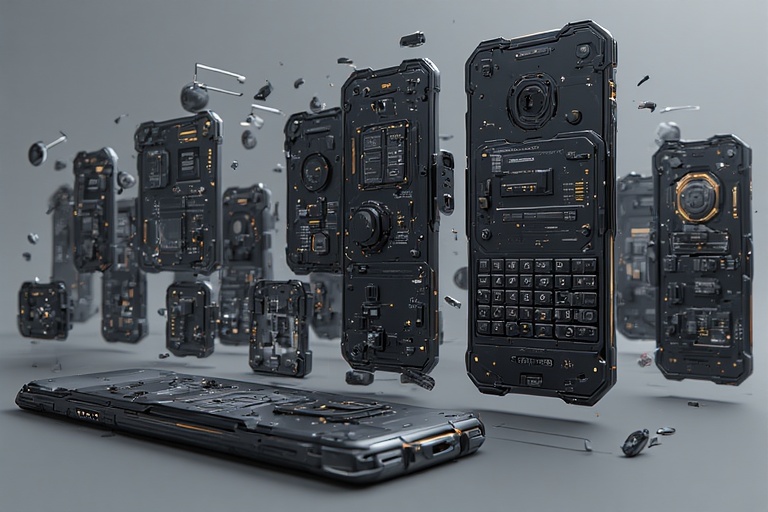
Jolla’s newly announced stretch goal suggests that if demand reaches a critical mass, the phone will support swappable rear covers capable of doing far more than cosmetic customization. These covers could add entirely new hardware capabilities, transforming the smartphone from a static device into a flexible platform tailored to individual needs.
At a time when most smartphone innovation revolves around camera tuning and AI features, Jolla’s approach represents a philosophical departure—one rooted in user freedom, open systems, and long-term device relevance.
Crowdfunding Momentum Reveals Demand for Alternatives
When Jolla launched its crowdfunding campaign, expectations were modest. The company stated that it would only proceed with manufacturing if at least 2,000 people committed to pre-orders. That threshold was not only met but exceeded dramatically, with more than 5,600 backers pledging support within weeks.
This response is notable not just for its volume, but for what it represents. In a market saturated with near-identical Android devices and tightly controlled ecosystems, thousands of users are signaling a willingness to invest in a Linux-based alternative—even one without mass-market polish or carrier backing.
The stretch goal announced by Jolla underscores confidence that this audience is not merely nostalgic, but actively seeking deeper control over their devices. Modular hardware, if realized, could become a defining feature that separates Jolla’s phone from every mainstream competitor.
The Return of “The Other Half”: A Proven Idea Reimagined
Jolla’s concept of swappable covers is not new. When the original Jolla Phone launched in 2013, it introduced a system called “The Other Half.” These rear covers connected electronically to the phone using an I2C interface and NFC, enabling not only aesthetic changes but software-level personalization such as wallpapers and ringtones.
While innovative, the original implementation was limited by the technology of its time. The covers were more symbolic than functional, and the ecosystem never reached critical mass.
In its 2025 iteration, however, Jolla is proposing a far more ambitious version. By adopting I3C, a modern high-speed interface, the company opens the door to hardware extensions that could meaningfully alter how the phone operates.
This shift transforms modularity from a novelty into a potential cornerstone of the device’s identity.
What Hardware Expansion Could Mean in Practical Terms
The possibilities outlined by Jolla—and imagined by its community—are extensive. High-speed data connections between the phone and its rear cover could enable modules that add entirely new capabilities rather than duplicating existing ones.
An E Ink back cover, for instance, could provide persistent notifications or reading functionality without draining the main display’s battery. A physical keyboard module could appeal to developers, writers, or users who value tactile input. Additional wireless radios such as Zigbee or LoRa could turn the phone into a gateway for IoT devices.
Even more intriguing are ideas like camera modules, extended battery packs, or the return of hardware features long abandoned by mainstream manufacturers—such as a proper headphone jack.
This approach reframes the smartphone as a base computing unit, expandable according to context rather than replaced every two years.
Community-Driven Development as a Strategic Choice
Rather than dictating which modules will exist, Jolla is actively polling its community. The company is asking potential buyers what features matter most, how frequently covers might be swapped, and what price points feel reasonable.
This participatory development model is rare in consumer electronics but deeply aligned with open-source culture. It also reduces risk: instead of guessing market demand, Jolla can prioritize the most requested features and limit initial production to a small number of modules.
This strategy reflects an understanding that modular ecosystems do not succeed through abundance, but through relevance.
Open Hardware Could Be the Most Important Feature of All
Perhaps the most consequential aspect of Jolla’s plan is its intention to open source both the hardware and software interface specifications for The Other Half system.
This decision dramatically expands the platform’s potential. It allows hobbyists, developers, and small manufacturers to design their own covers, 3D print enclosures, and experiment without corporate gatekeeping.
In practical terms, this could create a grassroots ecosystem where innovation comes from the community rather than the company alone. It also ensures longevity: even if Jolla itself produces only a handful of official modules, the platform can continue evolving independently.
This openness stands in stark contrast to mainstream smartphones, where even battery replacement is often discouraged.
Sailfish OS and the Philosophy of Control
The modular hardware story cannot be separated from Sailfish OS itself. As a Linux-based operating system, Sailfish offers a level of transparency and user control unavailable on Android or iOS.
While critics often point to proprietary components or paid updates, Sailfish still represents a fundamentally different power dynamic. Users are not the product, and system behavior is less dictated by advertising incentives or data extraction.
In this context, modular hardware becomes more than a feature—it becomes an extension of a philosophy centered on user sovereignty.
Challenges That Could Shape the Outcome
Despite its promise, Jolla’s modular vision faces significant challenges. Manufacturing complexity increases with modularity, and maintaining compatibility across hardware generations is nontrivial. There is also the economic reality that only a subset of users will purchase add-on modules.
Additionally, regulatory considerations—particularly for wireless modules—could limit which features are feasible in different regions.
Yet these challenges do not negate the importance of the attempt. In an industry where experimentation has largely vanished, even partial success would be meaningful.
Why Jolla’s Idea Matters Beyond This One Phone
Whether or not Jolla reaches the 10,000 pre-order milestone, the implications of this project extend beyond a single device. It demonstrates that there is still appetite for smartphones that prioritize longevity, adaptability, and user agency.
In a world increasingly concerned with electronic waste, modular hardware also offers a sustainability narrative: upgrade what you need, not what marketing dictates.
Jolla’s phone may never rival flagship sales numbers, but it does not need to. Its value lies in proving that alternative paths still exist.
FAQs
1. What is Jolla’s new smartphone project?
It is a Linux-based Sailfish OS phone currently funded through crowdfunding.
2. What are swappable back covers?
Rear phone covers that connect electronically and can add new hardware features.
3. What is “The Other Half”?
Jolla’s modular cover system originally introduced with its 2013 phone.
4. What’s new about the 2025 version?
It may use high-speed I3C connections to support real hardware expansion.
5. What hardware could these covers add?
Possible modules include batteries, keyboards, radios, displays, and cameras.
6. Will Jolla make all the modules?
Likely only a few; the rest may come from the community.
7. Are the designs open source?
Yes, Jolla plans to open source hardware and software specifications.
8. Who is this phone meant for?
Linux enthusiasts, privacy-focused users, and hardware experimenters.
9. Will it work outside Europe?
Jolla states it aims for broad global cellular compatibility.
10. Why does this phone matter?
It challenges closed smartphone ecosystems and promotes user control.