

For millions across generations, LEGO is more than a toy—it is a sensory memory. The sharp click of two bricks snapping together, the unmistakable rattle inside a box, and the sudden sting of stepping on a stray piece are universally shared experiences. Yet behind these small plastic bricks lies one of the most sophisticated design systems ever created. Hidden in Billund, Denmark, inside a museum that only LEGO employees can access, the full story of this system quietly unfolds.
Recently, cameras were allowed inside this restricted space, offering an unprecedented look into how LEGO transformed a simple toy into a global, intergenerational platform for creativity. What emerges is not nostalgia alone, but a case study in systems engineering, product longevity, and disciplined innovation—principles that most technology companies strive for but rarely achieve.
From a Carpenter’s Workshop to a Global Design System
LEGO’s story begins not with plastic, but with wood. Ole Kirk Kristiansen, a Danish carpenter, founded the company in the early 1930s, long before injection molding would define the brand. The company name, derived from the Danish phrase “leg godt”—meaning “play well”—was not a marketing slogan but a guiding philosophy.
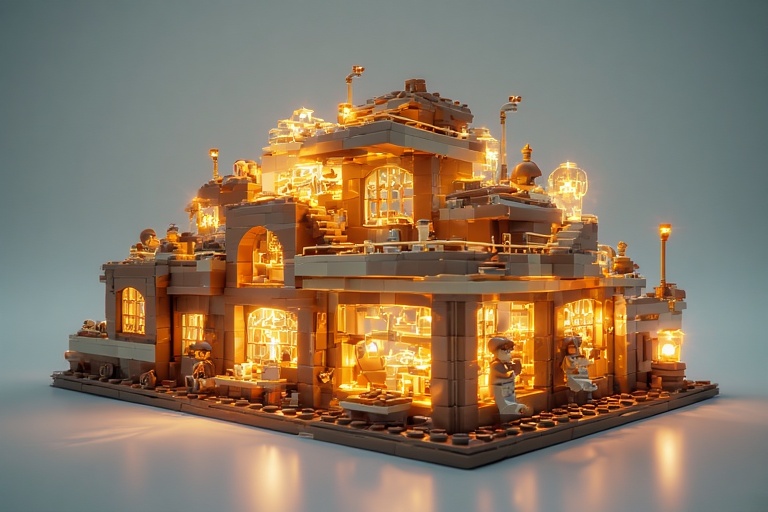
Inside the secret museum, LEGO’s earliest artifacts trace this transition from handcrafted wooden toys to plastic bricks in the post-war era. What becomes immediately clear is that LEGO’s success was not an accident of mass production. It was the result of an early and radical commitment to system thinking—the idea that every product must belong to a larger, expandable whole.
This philosophy crystalized in 1955 with the introduction of the LEGO System of Play. That year, the company assembled a small town made entirely of interlocking bricks, demonstrating a revolutionary concept: every piece, regardless of when it was made, would always fit with every other piece.
In an industry obsessed with trends, LEGO instead chose permanence.
Precision as a Competitive Advantage
One of the museum’s most striking revelations is LEGO’s obsessive focus on precision. Each brick is engineered to tolerances smaller than the width of a human hair. This is not a trivial detail—it is the foundation of LEGO’s promise that a brick manufactured today will connect seamlessly with one made six decades ago.
From a technology standpoint, this is extraordinary. Most consumer products are designed with planned obsolescence in mind. LEGO rejected this model entirely. Instead, it committed to backward compatibility long before software companies turned the concept into a selling point.
In the museum, visitors can see vintage sets from the 1950s functioning exactly as intended, including mechanical elements such as drawbridges from 1970s castles that still operate smoothly. The lesson here is not just durability, but trust. LEGO built a product ecosystem where customers could invest emotionally and financially, knowing nothing would be rendered obsolete.
Evolution Without Fragmentation
Walking through the museum is like watching evolution in slow motion. Medieval villages give way to space stations. Simple houses grow into architectural replicas of global landmarks. Yet despite dramatic aesthetic changes, the core system remains untouched.
This balance—radical creativity layered atop an unchanging foundation—is one of LEGO’s greatest technical achievements. Unlike digital platforms that frequently break compatibility during major updates, LEGO innovates by adding possibilities, not replacing them.
Sub-brands such as Ninjago, Technic, and Architecture demonstrate this philosophy in action. Each introduces new complexity, storytelling, or engineering challenges, while remaining fully interoperable with the core brick system.
In modern tech terms, LEGO behaves less like a toy company and more like a mature platform provider.
LEGO House: A Physical Manifestation of Creative Scale
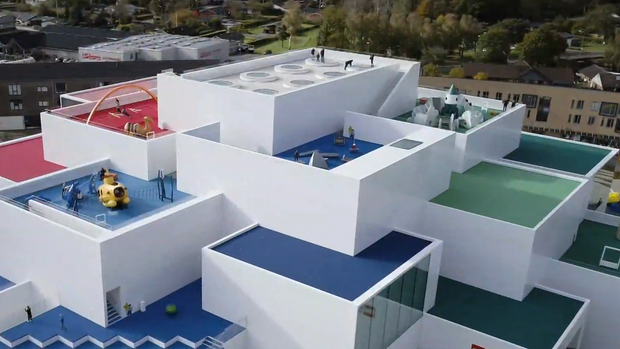
Adjacent to the museum stands LEGO House, a nearly 130,000-square-foot structure that serves as both a public experience and a symbolic headquarters for the brand’s creative ethos. Inside are approximately 25 million LEGO bricks, including the awe-inspiring Tree of Creativity.
Standing nearly 50 feet tall, this massive structure is the largest known LEGO build in the world. Each branch contains intricate details, mini-worlds, and hidden references—an architectural metaphor for the LEGO system itself: countless ideas branching from a single foundation.
From a design perspective, LEGO House functions as experiential branding at its finest. It does not explain LEGO’s philosophy—it lets visitors feel it.
The Designers Behind the Bricks
Behind LEGO’s enduring success is an in-house design organization that rivals major technology firms. Approximately 700 designers work across disciplines, blending industrial design, storytelling, engineering, and child psychology.
According to LEGO’s leadership, technical skill is secondary to curiosity. The company prioritizes designers who think like children, who are willing to experiment, fail, and rebuild. This mindset ensures that innovation remains human-centered rather than purely efficiency-driven.
While digital tools play an increasing role in modern LEGO design, many senior designers still prefer working with physical bricks. The tactile feedback, they argue, creates a cognitive connection that screens cannot replicate.
In an era of AI-assisted design, LEGO’s insistence on hands-on creativity feels almost countercultural—and deeply intentional.
Adults, Nostalgia, and the Expanding Market
LEGO is no longer just for children. Adult Fans of LEGO, often referred to as AFOLs, represent a rapidly growing segment of the market. Complex sets, premium pricing, and display-oriented designs cater directly to this audience.
Yet inside the museum, LEGO’s leadership is clear: children remain the primary inspiration. Adult products are extensions of the system, not its core purpose. This clarity of audience prevents brand drift, a common problem for legacy companies seeking new revenue streams.
Nostalgia is leveraged carefully—not as a replacement for innovation, but as a bridge between generations.
The Plastic Paradox and Sustainability Challenge
Despite its design brilliance, LEGO faces a fundamental contradiction. Its empire is built almost entirely on plastic, a material increasingly scrutinized in a climate-conscious world. Producing LEGO bricks requires significant petrochemical input, and the company manufactures tens of billions of pieces annually.
LEGO has tested more than 600 alternative materials, including plant-based plastics and recycled composites. Yet most have failed to meet the company’s uncompromising standards for safety, durability, and precision. A high-profile “bottles-to-bricks” initiative was abandoned after internal analysis revealed it would increase overall emissions.
From a technology and sustainability standpoint, LEGO’s challenge is uniquely difficult. Any new material must maintain compatibility across decades—a requirement that few sustainable materials can currently satisfy.
The company aims to source 60% of its materials from sustainable inputs by the end of the year, but full transformation remains elusive.
Why LEGO Endures While Others Fade
LEGO’s longevity is not rooted in branding alone. It is the result of disciplined system architecture, long-term thinking, and a refusal to sacrifice compatibility for short-term gains. Where many companies chase novelty, LEGO refines fundamentals.
In a technology landscape obsessed with disruption, LEGO offers a different model: continuous relevance through structural stability.
The secret museum does not merely preserve the past—it documents a living system that continues to evolve without losing itself.
FAQs
1. What is LEGO’s secret museum?
It is a private, employee-only archive in Billund that documents LEGO’s full design and product history.
2. Why is LEGO’s brick compatibility so important?
Compatibility ensures long-term value, trust, and creative freedom across generations.
3. When was the LEGO System of Play introduced?
The foundational system was formally introduced in 1955.
4. How precise are LEGO bricks?
They are manufactured to tolerances smaller than the width of a human hair.
5. Does LEGO still design with physical bricks?
Yes, many designers prefer hands-on building despite advanced digital tools.
6. Who are AFOLs?
Adult Fans of LEGO, a rapidly growing segment of the LEGO community.
7. What is LEGO House?
A massive interactive LEGO experience center in Billund featuring 25 million bricks.
8. What is the Tree of Creativity?
The world’s largest LEGO build, standing nearly 50 feet tall.
9. Why hasn’t LEGO fully switched to sustainable materials?
Most alternatives fail LEGO’s standards for safety, durability, and compatibility.
10. What makes LEGO different from other toy companies?
Its system-based design philosophy prioritizes longevity over trends.