

At CES 2026, LG is preparing to make a bold statement about the future of televisions—one that blurs the line between consumer electronics and fine art. The company is set to unveil the LG Gallery TV, a canvas-style television designed not merely to display video content, but to exist as a permanent, aesthetic fixture within modern living spaces.
This move reflects a growing shift in how consumers view screens in their homes. Televisions are no longer expected to disappear when not in use. Instead, they are increasingly being asked to complement interior design, express personal taste, and function as ambient digital canvases. With the LG Gallery TV, LG is signaling that the television of the future is not just watched—it is curated.
The Rise of the Art Television Concept
The concept of an art-focused television is not entirely new, but it has gained significant momentum in recent years. As homes become more design-conscious and open-plan living spaces dominate urban architecture, large black rectangles mounted on walls are increasingly viewed as visual disruptions rather than neutral appliances.
Samsung’s “The Frame” was among the first mainstream products to directly address this concern by allowing TVs to masquerade as framed artwork when idle. LG’s Gallery TV takes this idea further by emphasizing museum-grade presentation, advanced display technology, and AI-driven adaptability.
This shift reflects a broader trend within the consumer electronics industry, where functionality alone is no longer sufficient. Products must also offer emotional resonance, personalization, and aesthetic harmony with the home.
Design First: A Television That Looks Like Art
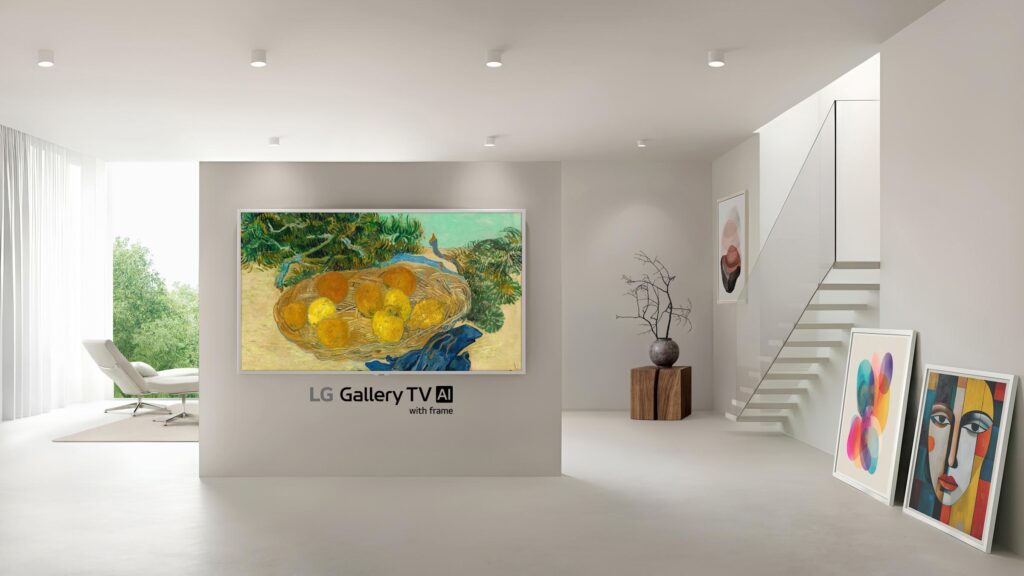
The LG Gallery TV has been designed with a clear visual philosophy: when mounted on a wall, it should resemble a framed artwork rather than a piece of technology. Offered in 55-inch and 65-inch variants, the television features a flush-mount design that eliminates the gap typically seen between TVs and walls.
Customizable magnetic frames allow users to tailor the TV’s appearance to match different décor styles, whether minimalist, classic, or contemporary. This modular approach recognizes that homes evolve over time, and so should the objects within them.
LG’s emphasis on physical design reflects an understanding that televisions increasingly occupy prominent visual real estate. In an era where screens are omnipresent, differentiation comes not just from resolution or processing power, but from how seamlessly a device integrates into daily life.
Mini LED Meets AI: Display Technology Built for Art
At the core of the Gallery TV is a Mini LED display paired with LG’s Alpha 7 AI processor. While OLED remains LG’s flagship technology, the choice of Mini LED for this product highlights a focus on brightness consistency, longevity, and precise backlight control—qualities particularly important for displaying artwork.
Mini LED technology enables finer control over local dimming zones, resulting in improved contrast and reduced blooming. This is especially valuable when displaying static images, detailed textures, and subtle color gradients found in fine art and photography.
The Alpha 7 AI processor plays a crucial role in adapting content for display. It dynamically adjusts brightness, color balance, and contrast based on ambient lighting conditions, ensuring that artwork looks natural throughout the day, whether in bright daylight or low evening light.
Gallery Mode: Designed With Museum Principles in Mind
LG has stated that the Gallery TV was developed in collaboration with museum curators, an unusual but telling partnership. The result is Gallery Mode, a dedicated display setting designed to replicate the way artwork is presented in professional exhibition spaces.
This mode prioritizes accurate color reproduction, texture visibility, and controlled brightness. Unlike standard TV modes optimized for motion or HDR video, Gallery Mode focuses on visual stability and realism, allowing brushstrokes, canvas grain, and photographic details to remain visible without artificial enhancement.
Reflection handling and glare reduction are also part of the design, acknowledging that living rooms are rarely optimized lighting environments. While LG has not disclosed specific technical details, the emphasis suggests coatings and algorithms designed to preserve visual integrity under varied lighting conditions.
LG Gallery+: Turning the TV Into a Digital Art Library
A key pillar of the Gallery TV experience is LG Gallery+, a subscription-based service offering access to a curated library of more than 4,500 artworks. This collection includes both classical masterpieces and contemporary works, allowing users to transform their living spaces into rotating digital galleries.
The subscription model reflects a broader shift toward content ecosystems rather than one-time hardware purchases. LG is positioning itself not just as a TV manufacturer, but as a platform provider that curates visual culture.
By offering licensed artworks and curated collections, LG aims to provide a premium alternative to generic screensavers or static images. This also opens the door to future partnerships with artists, museums, and cultural institutions.
Generative AI: Personalized Art for the Living Room
One of the most forward-looking aspects of the Gallery TV is its integration of generative AI. Users can create custom images tailored to their preferences, transforming the television into a living canvas that reflects personal taste rather than pre-selected content.
This feature taps into a growing cultural fascination with AI-generated creativity. Rather than replacing traditional art, generative AI offers a complementary experience—allowing users to explore new visual styles, color palettes, and compositions unique to their home.
In addition, users can display images from personal photo libraries, further personalizing the experience. This transforms the Gallery TV into a hybrid object: part television, part digital frame, part generative art engine.
Ambient Intelligence: Adapting to the Room in Real Time
One of the defining features of modern smart displays is contextual awareness. The LG Gallery TV automatically adjusts its picture settings in response to changes in ambient light throughout the day.
This capability ensures that artwork remains visually consistent without manual intervention. In bright daylight, the display can increase brightness and contrast to maintain visibility. In darker environments, it can soften illumination to create a more natural, gallery-like atmosphere.
This ambient intelligence highlights the role of AI as an invisible facilitator rather than a headline feature. Instead of drawing attention to itself, the technology works quietly in the background, enhancing the user experience without demanding interaction.
A Strategic Response to Competitive Pressure
The LG Gallery TV enters a competitive landscape already shaped by Samsung’s The Frame and Hisense’s CanvasTV. These products have demonstrated that there is real demand for televisions designed with aesthetics in mind.
LG’s differentiation lies in its emphasis on display technology, museum-inspired presentation, and AI-driven personalization. Rather than simply mimicking the appearance of framed art, the Gallery TV aims to recreate the experience of viewing art in a curated space.
This approach aligns with LG’s broader brand identity, which emphasizes display innovation and visual quality. By focusing on how content is experienced rather than merely displayed, LG is positioning the Gallery TV as a premium lifestyle product rather than a novelty.
A Continuation of LG’s Gallery Design Philosophy
The Gallery TV is not LG’s first exploration of art-inspired displays. In 2020, the company released the ultra-thin OLED GX Gallery TV, followed by other wall-flush “Gallery Design” models.
What distinguishes the 2026 Gallery TV is its deeper commitment to art as a core use case rather than a secondary feature. Dedicated software modes, curated content, and generative AI tools suggest that LG views this category as a strategic growth area rather than an experimental offshoot.
What This Means for the Future of Home Entertainment
The introduction of the Gallery TV reflects a broader evolution in how technology fits into domestic spaces. As screens become larger and more numerous, their aesthetic impact becomes impossible to ignore.
Televisions that double as art challenge the traditional on/off dichotomy of screen usage. Instead of disappearing when idle, they remain active contributors to the visual environment.
This shift may influence future product categories beyond TVs, including monitors, smart displays, and even foldable screens designed for ambient use.
Conclusion: The Television as a Cultural Object
With the Gallery TV, LG is redefining what a television can be. No longer just a device for consuming content, it becomes a cultural object—one that reflects taste, mood, and lifestyle.
By combining Mini LED technology, AI processing, curated art, and generative creativity, LG is positioning itself at the intersection of technology and design. As CES 2026 approaches, the Gallery TV stands as a compelling example of how consumer electronics are evolving beyond function into expression.
FAQs
1. What is the LG Gallery TV?
It’s a canvas-style television designed to function as digital artwork when not in use.
2. When will the LG Gallery TV be unveiled?
It will debut at CES 2026.
3. What sizes will be available?
The TV will be offered in 55-inch and 65-inch models.
4. What display technology does it use?
It features a Mini LED display with 4K resolution.
5. What is Gallery Mode?
A special mode optimized for displaying artwork with accurate color and texture.
6. Does it support AI-generated art?
Yes, users can create custom images using generative AI.
7. What is LG Gallery+?
A paid subscription service offering over 4,500 curated artworks.
8. How does it handle ambient lighting?
The TV automatically adjusts picture settings based on room lighting.
9. How does it compare to Samsung’s The Frame?
LG emphasizes Mini LED performance, museum-inspired presentation, and AI personalization.
10. Who is this TV designed for?
Users who value interior design, art, and premium visual experiences.