

The history of computing has always been defined by one recurring ambition: to process more information in less time and with less energy. For decades, silicon-based electronics have delivered on this promise, evolving from vacuum tubes to integrated circuits and then to multi-core CPUs and GPU accelerators. Yet even the latest GPUs, engineered with billions of transistors and immense parallel capabilities, have started to show their limitations. Massive AI computations, large-scale scientific simulations, and global cloud workloads have pushed GPUs to the brink of power, heat, and scalability constraints.
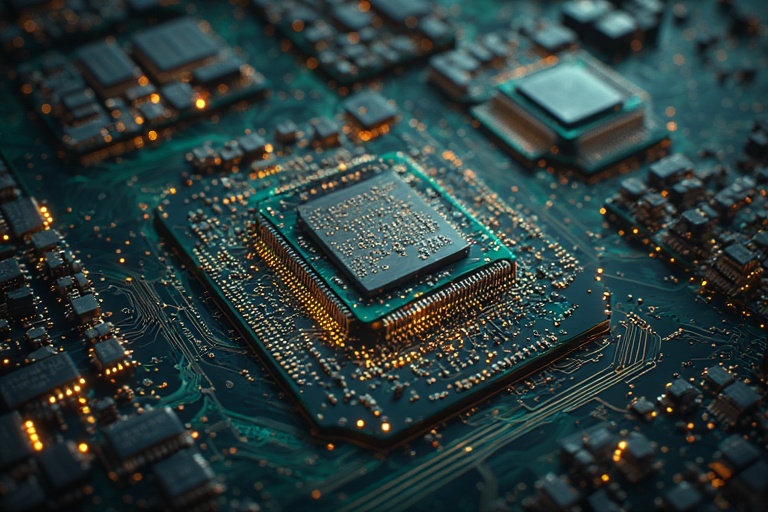
In this backdrop emerges a groundbreaking achievement: single-shot tensor computing using coherent light, also known as Parallel Optical Matrix–Matrix Multiplication (POMMM). Developed by researchers Yufeng Zhang of Aalto University and Xiaobing Liu of the Chinese Academy of Sciences, this optical computing method could rapidly redefine the very foundations of how machines think, analyze, and learn.
Their Nature Photonics paper unveils an entirely new paradigm of computation—one where data is not shuttled across electronic pathways but instead encoded in amplitude and phase of light waves, processed instantaneously through a single pass of coherent light. The implications are not merely incremental; they are potentially civilization-shaping.
This is more than a faster processor.
This is computing at the speed of light.
Why Light-Speed Computing Matters Today
Modern society rests on digital infrastructure: cloud servers, data centers, generative AI models, autonomous systems, 5G/6G networks, and quantum-level research. The volume of data generated globally doubles every 18–24 months. AI models double in size even faster.
Yet the hardware powering this revolution is hitting hard barriers:
1. GPUs Consume Extreme Power
AI data centers require massive cooling systems, often drawing power equivalent to small towns.
Water consumption in cooling towers has sparked sustainability concerns.
2. Heat Limitations Slow Scaling
Electrical resistance generates heat.
Cooling becomes the bottleneck.
Silicon scaling cannot continue indefinitely.
3. Data Movement Is the True Bottleneck
In modern AI models, the majority of time is spent moving data between memory and compute units—not on arithmetic operations.
4. Environmental Impact Is Rising
As reported by scientific journals, AI training runs are consuming hundreds of megawatt-hours per project and generating as much carbon as dozens of flights.
Optical computing promises to solve these issues in one stroke by shifting from electrons to photons.
The Science Behind Single-Shot Optical Tensor Computing
At the heart of Zhang and Liu’s breakthrough is the concept that light waves naturally perform mathematical operations when they interact. By harnessing these natural interactions in structured optical systems, researchers can achieve native tensor operations.
What exactly does it mean?
Instead of digital logic gates performing binary multiplications and additions, the light itself carries and transforms information through:
- Its phase
- Its amplitude
- Its interference patterns
- Its wavelength diversity
The optical system acts as a multidimensional processor.
All operations occur in parallel.
All results emerge instantly from a single propagation.
This is where the term single-shot becomes literal.
A laser pulse enters → computations occur → results come out.
No repeated cycles.
No clock speeds.
No iterative loops.
Just instantaneous tensor processing.
How the System Works: The Package Sorting Analogy
Zhang describes the system using an analogy that anyone can understand.
A traditional GPU is like a customs officer who:
- Processes each package individually
- Sends each package through separate machines
- Sorts each one into specific bins
- Repeats this endlessly for millions of packages
The POMMM optical system is like transforming the entire process:
- All packages enter simultaneously
- All machines merge into one interconnected super-system
- Light pathways act as “optical hooks” linking every input to every output
- A single pass of light performs all operations at once
This is parallelism beyond anything silicon can offer.
A Major Leap Over Previous Optical Computing Attempts
Optical computing has been researched for decades, but earlier attempts fell short because:
- They could not handle the multidimensional tensors required for modern AI
- They lacked the ability to scale beyond simple matrix multiplication
- Encoding information in light was difficult
- Physical systems introduced noise and low precision
- Multi-wavelength operations were not reliable
The Aalto-CAS breakthrough overcomes all these limitations.
It supports:
- High-dimensional tensors
- Multiple wavelengths
- Convolutions
- Attention mechanisms
- Deep learning operations
This positions it as a realistic successor—not a supplement—to GPUs.
Technical Advantages That Could Transform AI
1. Speed of Light Processing
Photons do not slow down.
They move at 299,792 km/s and perform computations during propagation.
2. Massive Parallelism
Every wavelength can perform independent tensor operations simultaneously.
3. Near-Zero Heat Generation
Optical signals do not suffer resistance-driven heating like electrons.
4. Ultra-Low Power Requirements
Light-based computing requires minimal electrical power apart from lasers and detectors.
5. Bandwidth Beyond Silicon
Optical bandwidth is magnitudes higher than electrical interconnects.
6. Scalable to Large Models
Tensor operations scale naturally through light-based parallel interactions.
7. Ideal for Deep Learning
Convolutions, attention layers, and transformer-based operations thrive on tensor operations.
Toward Light-Based Photonic Chips
According to Zhipei Sun, leader of Aalto University’s Photonics Group, the next phase is miniaturization. Their team plans to integrate the technology into:
- Photonic chips
- Light-based AI accelerators
- Processor-on-fiber systems
- Optical neural networks
Such hardware could sit inside:
- Data centers
- Edge AI devices
- Robotics platforms
- Autonomous vehicles
- Wearable devices
- Scientific research labs
If successful, these systems could operate at ultra-low power with ultra-high speed, enabling AI to scale beyond current energy and cost limits.
Economic and Industrial Impact
1. Data Centers Will Transform
Instead of building new GPU farms requiring nuclear-scale power supplies, optical accelerators could cut energy use dramatically.
2. AI Development Accelerates
AGI (Artificial General Intelligence) timetables could shorten because large models become easier—and cheaper—to train.
3. Chip Manufacturing Evolution
Silicon fabs may begin integrating photonic manufacturing lines.
4. Sustainability Improves
Lower energy requirements reduce carbon emissions dramatically.
5. New Industry Standards
Tensor processing benchmarks will evolve beyond FLOPS to photon-based metrics.
Challenges Ahead
Even with immense promise, several challenges remain:
- Building stable, miniaturized photonic circuits
- Ensuring manufacturing repeatability
- Improving precision-controlled detectors
- Managing noise and coherence loss
- Integrating optical systems with electronic architectures
But these problems are engineering challenges—not scientific impossibilities.
Conclusion: A Future Powered by Light
If successful, single-shot optical tensor computing could do for AI what the invention of the transistor did for electronics. A five-year integration timeline means we may soon witness:
- Light-speed AI reasoning
- Sustainable data centers
- Instantaneous machine learning inference
- Optical neural processors
- A computing revolution built on photons instead of electrons
The future of computation may not be electronic.
It may be illuminated.
FAQs
1. What is single-shot tensor computing?
It is a method where light performs complex tensor operations in a single propagation, enabling instant processing at the speed of light.
2. How does optical computing differ from GPU-based computing?
GPUs use electrical circuits and binary signals, while optical computing encodes data in light waves, enabling faster and more parallel operations.
3. Why is tensor processing important for AI?
Tensor operations form the foundation of neural networks, deep learning, and large-scale AI models.
4. Will optical computing replace GPUs entirely?
It may not immediately replace them but could become the preferred system for high-performance AI workloads.
5. How energy-efficient is optical computing?
It uses significantly less power because photons generate negligible heat and require minimal electrical energy.
6. What challenges does optical computing still face?
Miniaturization, noise control, photonic chip manufacturing, and integration with existing hardware remain key challenges.
7. Can optical processors run traditional software?
Not directly—they require specialized architectures but can integrate with electronic systems.
8. What industries will benefit most?
AI development, cloud computing, robotics, defense, scientific modeling, and autonomous systems.
9. How soon could we see commercial optical AI chips?
Researchers estimate within five years if engineering challenges are successfully addressed.
10. Could this technology accelerate progress toward AGI?
Yes—greater compute power at lower cost makes training large-scale AI models far easier, potentially advancing AGI timelines.