

As the retail industry prepares to enter 2026, few companies appear to be embracing transformation as aggressively—and strategically—as Lowe’s. Long known as one of America’s most trusted home improvement retailers, the company is positioning itself for a future defined by artificial intelligence, data-driven personalization, and a renewed focus on home renovation demand.
With more than 1,700 locations across the United States, Lowe’s is not merely reacting to consumer behavior shifts. Instead, it is actively redefining what a large-format retail experience should look like in an era shaped by AI, rising housing costs, and changing homeowner priorities.
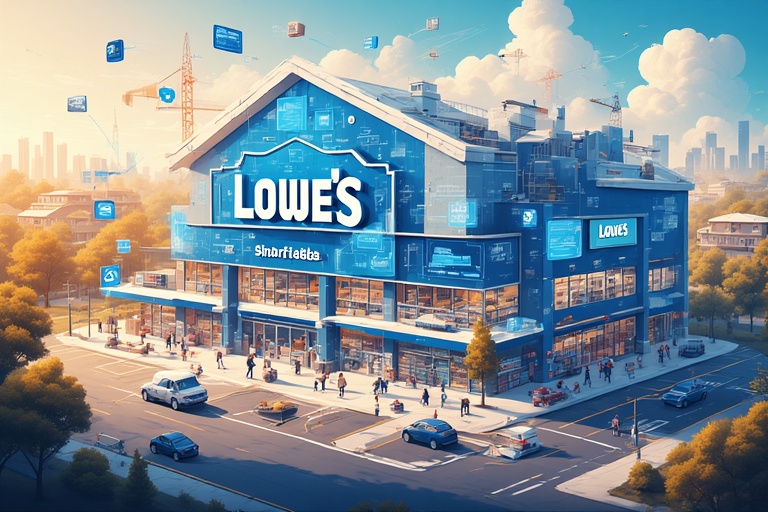
The coming year will bring three major shifts that will affect every Lowe’s shopper: physical store expansion, deep AI integration across operations, and a strategic bet on a long-anticipated home renovation rebound.
Why 2026 Matters More Than Ever for Retail
The retail sector has spent much of the past five years navigating unprecedented disruption. Pandemic-era supply chain chaos, inflationary pressures, evolving consumer expectations, and digital competition forced even legacy brands to rethink their models.
For Lowe’s, 2026 represents a convergence point. Mortgage rates remain high, discouraging homeowners from moving. Housing inventory remains tight. At the same time, millions of Americans sit on record levels of home equity. This creates fertile ground for renovation rather than relocation—and Lowe’s intends to be at the center of that economic shift.
But the company’s strategy goes far beyond selling lumber, tools, and appliances. Lowe’s is quietly transforming itself into a technology-powered retail platform designed to serve both DIY homeowners and professional contractors with unprecedented precision.
Strategic Store Expansion in a Digital Age
While many retailers have slowed or reversed physical expansion, Lowe’s is moving confidently in the opposite direction. The company plans to open between 10 and 15 new stores in 2026, with similar expansion expected in the years that follow.
This is not random growth. Lowe’s store placement decisions are increasingly data-driven, factoring in regional homeownership rates, population density, construction activity, and long-term community growth patterns. These stores are designed to serve as logistical hubs as much as retail showrooms, supporting online orders, professional services, and same-day fulfillment.
Recent store openings in Arizona, North Carolina, and Texas signal a strong focus on fast-growing housing markets where renovation demand is likely to surge. Rather than oversaturating urban centers, Lowe’s is strategically targeting suburban and semi-rural regions where homeowners are investing heavily in property upgrades.
Physical Stores Are Evolving, Not Disappearing
Despite the rise of e-commerce, Lowe’s leadership clearly believes physical stores remain essential—provided they evolve. New and remodeled locations are expected to feature smarter layouts, improved navigation, and deeper integration between digital tools and in-store experiences.
These stores are no longer just places to browse shelves. They are becoming hybrid environments where customers research projects online, consult AI-powered assistants, interact with knowledgeable associates, and schedule services—all in one seamless journey.
AI Becomes the Backbone of the Lowe’s Experience
Perhaps the most transformative element of Lowe’s 2026 strategy is its aggressive adoption of artificial intelligence. Under CEO Marvin Ellison’s leadership, the company has moved beyond experimentation and into full-scale deployment of AI across both customer-facing and internal operations.
At the center of this strategy are Lowe’s AI virtual assistants, Mylow and Mylow Companion, which are already handling nearly one million customer interactions each month. These systems help shoppers find products, plan projects, and make purchasing decisions with greater confidence.
The results speak volumes. Lowe’s reports that online shoppers who engage with Mylow convert at more than double the rate of those who do not. In-store associates using AI-powered tools are seeing significant increases in customer satisfaction scores, demonstrating that AI is augmenting—not replacing—human expertise.
AI Inside the Organization: Productivity at Scale
Beyond customer interaction, Lowe’s is embedding AI deeply into its internal workflows. In 2026, the company plans to expand AI usage across software development, engineering, logistics, and operational planning.
By using AI for tasks such as code review, demand forecasting, and inventory optimization, Lowe’s expects to achieve double-digit productivity gains. This efficiency allows teams to focus on higher-value work, accelerate innovation, and respond more quickly to market shifts.
This approach positions Lowe’s not just as a retailer, but as a technology-driven enterprise operating at the intersection of commerce and data science.
A Marketplace Model and Expanded Home Services
In parallel with AI adoption, Lowe’s is preparing to launch a broader marketplace platform. This initiative aims to expand product selection beyond what can be stocked in physical stores, while also integrating third-party sellers and specialized service providers.
Home services—including installation, remodeling support, and professional contractor partnerships—are becoming central to Lowe’s long-term vision. By offering end-to-end solutions rather than standalone products, the company strengthens customer loyalty and increases lifetime value.
For rural communities, where access to specialized home services can be limited, Lowe’s expanded offerings may prove particularly impactful.
Loyalty Programs and Data-Driven Personalization
Another key pillar of Lowe’s 2026 strategy is the evolution of its loyalty programs. AI enables more personalized recommendations, targeted promotions, and proactive project reminders based on customer behavior and purchase history.
Rather than generic discounts, shoppers can expect tailored experiences that reflect their homes, climate, and renovation goals. This level of personalization is rapidly becoming the standard in modern retail, and Lowe’s is investing heavily to ensure it keeps pace with consumer expectations.
Betting Big on the Renovation Economy
At the heart of Lowe’s optimism is a strong belief in an impending renovation boom. With mortgage rates discouraging home sales, many homeowners are choosing to upgrade their existing properties instead of moving.
According to industry estimates, the average American homeowner holds roughly $400,000 in home equity. This financial cushion provides significant capacity for renovation spending, particularly when financed through home equity lines of credit.
Lowe’s leadership expects this trend to accelerate as homeowners seek modernized kitchens, additional bathrooms, home offices, garages, and energy-efficient upgrades.
Why Renovation Beats Relocation
High interest rates have fundamentally changed housing decisions. Homeowners with sub-4% or even sub-3% fixed mortgages are reluctant to trade those rates for significantly higher ones. Renovation becomes the logical alternative.
Lowe’s is aligning its inventory, services, and digital tools to capture this demand. From AI-assisted project planning to expanded installation services, the company aims to simplify complex renovation decisions for customers at every stage.
Prepared for Demand at Scale
One of the most critical questions facing any retailer anticipating a demand surge is readiness. Lowe’s leadership has expressed confidence that the company’s investments in supply chain resilience, workforce training, and digital infrastructure position it well to handle increased volume.
By leveraging AI forecasting and inventory optimization, Lowe’s believes it can avoid the stock shortages and fulfillment delays that plagued the industry in recent years.
How Lowe’s Strategy Reflects Broader Retail Trends
Lowe’s 2026 roadmap reflects broader shifts across the retail landscape. Physical stores are becoming experience centers. AI is moving from novelty to necessity. Services are becoming as important as products.
What sets Lowe’s apart is the scale at which it is implementing these changes. Few retailers have the resources—or the customer trust—to integrate AI so deeply while simultaneously expanding physical locations.
Risks and Challenges Ahead
No transformation is without risk. AI adoption raises questions around data privacy, workforce adaptation, and system reliability. Store expansion requires careful execution to avoid overextension.
Additionally, renovation demand is sensitive to economic conditions. A downturn or tightening credit environment could slow spending. Lowe’s appears aware of these risks and is diversifying its strategy accordingly.
A Retail Giant Reinventing Itself
Ultimately, Lowe’s 2026 shakeup is about more than new stores or smarter chatbots. It represents a fundamental shift in how a legacy retailer competes in a digital-first economy.
By combining AI intelligence, physical presence, and service-driven offerings, Lowe’s is positioning itself not just to survive the next decade—but to lead it.
For shoppers, contractors, and homeowners alike, the Lowe’s of 2026 may feel very different from the one they know today. And that, by design, is exactly the point.
Frequently Asked Questions (FAQs)
1. What major changes is Lowe’s making in 2026?
Lowe’s is expanding stores, integrating AI deeply, and preparing for increased renovation demand.
2. How many new Lowe’s stores will open in 2026?
The company plans to open 10–15 new locations.
3. How is Lowe’s using artificial intelligence?
AI is used for customer assistance, inventory planning, software development, and productivity improvements.
4. What is Mylow?
Mylow is Lowe’s AI virtual assistant that helps customers plan projects and find products.
5. Why does Lowe’s expect a renovation boom?
High mortgage rates discourage moving, pushing homeowners toward renovations instead.
6. Will Lowe’s expand home services?
Yes, expanding installation and renovation services is a key strategy.
7. Are physical stores still important to Lowe’s?
Yes, but they are evolving into tech-enabled experience hubs.
8. How does AI improve customer satisfaction?
AI helps provide faster, more accurate recommendations and support.
9. Is Lowe’s launching a marketplace platform?
Yes, to expand product offerings and services beyond physical inventory.
10. What makes Lowe’s 2026 strategy unique?
Its combination of AI, physical expansion, and service-led growth at national scale.