

Over the last few years, the virtual reality sector has been defined by a relentless push toward immersion, realism, and seamless cross-device compatibility. From enhanced spatial computing frameworks to AI-powered rendering pipelines, the trajectory of VR technology has moved swiftly toward collapsing the boundaries between the digital and physical worlds. Meta, often regarded as the most aggressive and vocal player in the immersive technology race, has unveiled yet another milestone in its Horizon platform evolution: the full public rollout of its photorealistic Hyperscape scanning tool.
What began in limited beta earlier this year has now evolved into a cross-platform, real-time rendered exploration system. This upgraded feature enables users to scan real-world environments using a Meta Quest headset, transform them into high-fidelity virtual environments, and then invite up to seven others to explore those worlds together — whether they are using a Meta Quest headset or simply a smartphone.
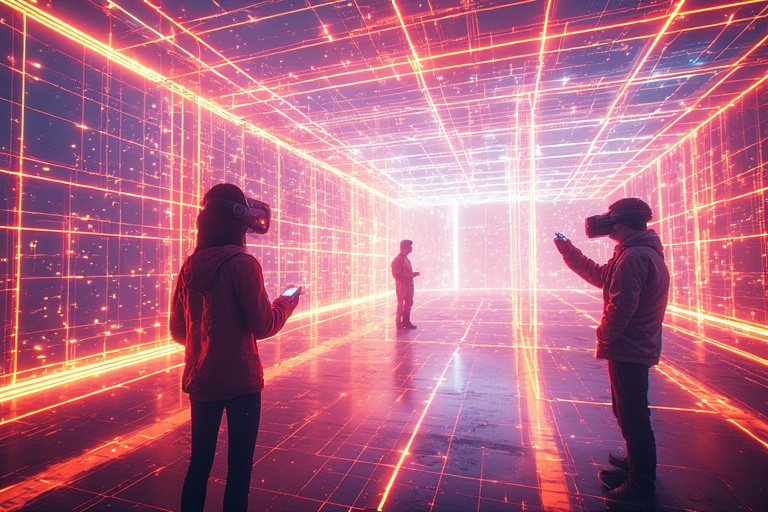
This breakthrough is not just a software enhancement; it signals a transformative moment for social VR, spatial computing, and consumer-grade photogrammetry. It demonstrates how immersive technologies can move from isolated experiences toward shared, persistent, and fully navigable spaces.
Hyperscape: Turning Reality Into a Walkable Virtual World
Meta Hyperscape began as an experimental application designed to take advantage of the Meta Quest 3’s spatial mapping hardware. Leveraging a combination of advanced sensors, machine learning reconstruction models, depth detection, and real-time mesh optimization, the Hyperscape tool allows users to scan real-world surroundings — rooms, kitchens, yards, studios, iconic locations, and more — and convert them into digital twins.
In its early beta phase, environments were streamed from Meta’s cloud infrastructure. This server-based rendering allowed for near-photorealistic quality, but it was limited by bandwidth fluctuations, latency, and scalability constraints. The newest update, however, changes this architecture dramatically: Hyperscape worlds now render locally on the user’s device, whether it’s a Quest headset or a smartphone.
This means several things:
- The environment loads faster and feels smoother.
- Latency issues are minimized since inputs and rendering are local.
- Users do not require consistent internet speed to maintain visual fidelity.
- The platform becomes more accessible to users without high-end Wi-Fi infrastructure.
This shift aligns with Meta’s broader vision for on-device AI and graphics processing, leveraging the Quest 3’s upgraded GPU pipeline and extended mixed-reality capabilities.
The Horizon Worlds Engine Upgrade: Photorealism Meets Social Connectivity
Perhaps the most revolutionary layer of this rollout is the integration of Hyperscape environments into the Meta Horizon Engine, the core software infrastructure powering Meta’s social VR ecosystem.
Previously, Horizon Worlds relied on stylized, game-engine-like visuals. This worked well for social hubs, lightweight avatars, and creative custom-built worlds. But it lacked the emotional weight and sensory realism that photogrammetry-based environments provide.
Now, with Hyperscape worlds hosted directly in the Horizon engine, Meta unlocks a new tier of social presence:
- Shared Real World–Inspired Worlds: Users can walk inside each other’s scans — a living room, a kitchen, a childhood home, a new apartment, a backyard, a famous restaurant, or even an artist’s studio.
- Cross-Device Compatibility: Friends with smartphones can join without needing a VR headset, expanding the potential user base drastically.
- Local Rendering on All Devices: Eliminates cloud dependency, reducing streaming artifacts and network-induced motion issues.
- Up to Eight Players Together: This expands social VR into a multi-person experience, ideal for gatherings, holiday meetups, remote hangouts, and virtual tourism.
Meta’s long-term ambition for Horizon has always been about building persistent virtual worlds, and Hyperscape’s integration makes that goal far more attainable.
A Technological Breakdown: How Hyperscape Achieves Ultra-Realism
The realism delivered by the Hyperscape system is a combination of several high-end pipelines, typically only found in enterprise-grade 3D reconstruction systems:
1. Spatial Depth Sensing
The Meta Quest 3 uses a hybrid sensor array that captures dense spatial information while simultaneously interpreting textures, edges, and structural geometry.
2. AI-Based Photogrammetry
Meta integrates an AI model that reconstructs the scanned area by stitching together images, depth maps, and inferred geometry, resulting in a seamless digital twin.
3. Mesh Compression + Real-Time Optimization
To ensure these worlds remain playable and lightweight, the system compresses the mesh while retaining high visual fidelity. This allows both smartphones and headsets to render complex scenes without lag.
4. Environment Lighting & Reconstruction
One of the most impressive elements is dynamic lighting — reflections and shadows adapt to user movement, enhancing depth perception and presence.
Why Cross-Platform VR Socialization Matters
Historically, VR has been limited by hardware adoption barriers. Not everyone owns a VR headset, but nearly everyone owns a smartphone. With Meta allowing smartphone users to walk inside a photorealistic VR world, it creates several industry-shifting outcomes:
- Lowers Entry Barriers: Users can attend VR meetups without purchasing a headset.
- Expands Market Reach: More platforms = more audience = more creators.
- Enhances Social Stickiness: The more accessible the platform becomes, the higher the engagement and potential for viral adoption.
- Future AR Integration: These environments could eventually feed into Meta’s smart glasses ecosystem.
This transition marks Meta’s shift from “VR company” to “spatial computing company”—a crucial distinction in a market increasingly shaped by mixed reality, AI, and context-aware devices.
The Gordon Ramsay Kitchen Demo: A Showcase of Photorealistic Presence
One example highlighted in the original article is Gordon Ramsay’s kitchen, a meticulously scanned environment that showcases the system’s power. Users can walk inside the kitchen, explore its textures, cupboards, metallic reflections, and spatial layout as though they are physically present in the room.
It’s a perfect demonstration of the emotional resonance this technology can deliver. A scanned world isn’t just a place — it’s a memory, a location with meaning, a space with history.
Imagine the following possibilities:
- Visiting a family home with loved ones who live across the world.
- Touring a childhood playground with friends who haven’t seen it in decades.
- Sharing a new apartment with relatives who can’t travel.
- Exploring museums, landmarks, or culinary spaces in immersive detail.
It blurs the line between virtual tourism and emotional reconnection.
The Social Layer: Inviting Friends Into Your Memories
Meta has simplified the sharing process dramatically:
- Scan an environment using Hyperscape.
- Open the Meta Horizon app.
- Tap Share World.
- Send the link to anyone on a supported device.
This tap-to-invite system transforms private memories into shared social experiences. And Meta has confirmed it intends to expand the eight-player limit in future updates.
Meta’s Long-Term Vision: The Road to a Unified Spatial Ecosystem
Meta is not simply building a VR tool. It is building the foundation of a future spatial internet — an ecosystem where digital layers will overlay the physical world.
The Hyperscape update fits perfectly into Meta’s roadmap:
- Real-world AR integration (via future smart glasses)
- AI-powered reconstruction (automatic scene generation)
- Cross-platform Horizon metaverse (Quest, smartphones, future AR glasses)
- Persistent social spaces
This rollout is early evidence of Meta moving toward truly blended reality experiences, where physical and virtual boundaries dissolve seamlessly.