

In a technology landscape dominated by glowing screens, constant notifications, and wrist-mounted computers, one of the most serious threats to the smartwatch industry has emerged without a display, without aggressive marketing theatrics, and without the backing of a Big Tech parent. The Oura Ring, a minimalist piece of wearable technology weighing less than an ounce, has quietly become one of the most influential health devices of the decade.
Once considered a niche wellness gadget from a Finnish startup, Oura has evolved into a billion-dollar contender in the global wearables market. By the end of 2025, the company is on pace to reach nearly $1 billion in annual revenue, driven by explosive growth, cultural relevance, and strategic positioning that sets it apart from technology giants like Apple, Google, and Samsung.
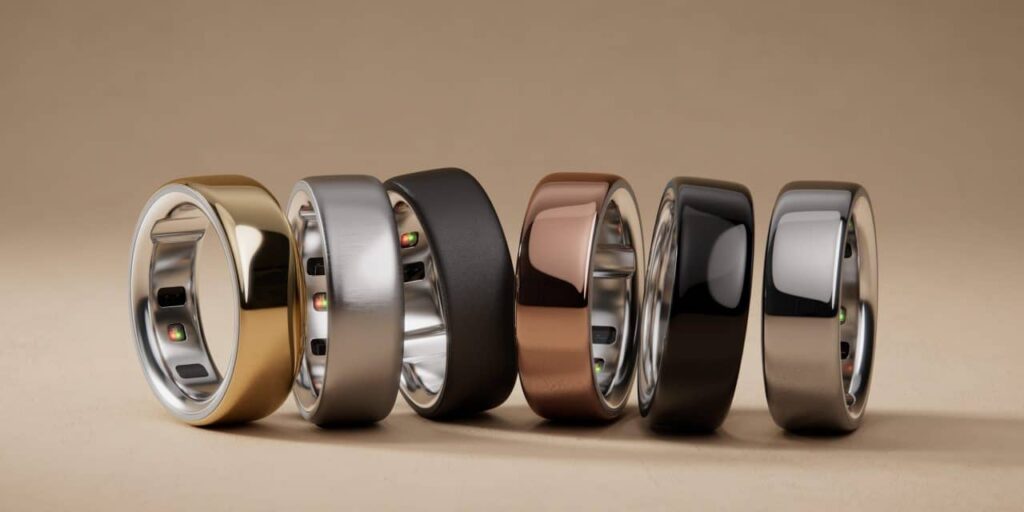
Its appeal stretches from Silicon Valley boardrooms to Hollywood film sets. Celebrities, athletes, and Fortune 500 executives increasingly rely on Oura’s subtle presence to monitor sleep, recovery, stress, and overall health. In an era where consumers are seeking technology that enhances life without dominating attention, Oura’s philosophy feels distinctly modern.
Yet success has consequences. As Oura’s influence grows, so does competition from companies with far deeper pockets, massive ecosystems, and unparalleled distribution power. The question facing Oura is no longer whether it can succeed—but whether it can stay ahead.
From Obscurity to Cultural Symbol
Oura’s rise did not follow the traditional Silicon Valley playbook. There was no viral launch moment, no immediate mass adoption, and no early acquisition by a tech conglomerate. Instead, the company built credibility through precision, patience, and an almost academic focus on biometric accuracy.
The ring form factor was initially seen as unconventional. Wearables, after all, had become synonymous with wrist-based devices. But Oura’s founders bet on an overlooked truth: the finger is one of the most data-rich points on the human body for measuring heart rate variability, body temperature, blood oxygen levels, and sleep cycles.
That bet paid off. Over time, Oura’s data reliability became its strongest marketing asset. Doctors, professional athletes, and high-performance professionals began to trust the device not as a gadget, but as a health companion.
By 2024, Oura had sold over 5.5 million rings globally, with more than half of those sales occurring in just the last year. This acceleration reflects not just consumer interest, but a broader shift in how people think about wellness technology.
Why Screenless Wearables Are Winning
The modern consumer is exhausted by screens. Smartphones dominate attention, smartwatches buzz incessantly, and notifications fragment focus throughout the day. Against this backdrop, Oura’s decision to remain screen-free has become a competitive advantage rather than a limitation.
The ring does not demand attention. It collects data passively, delivering insights only when the user chooses to engage through a smartphone app. This design philosophy aligns with a growing demand for calm technology—tools that inform without overwhelming.
Industry analysts have noted that Oura’s appeal is particularly strong among users who already spend significant time in front of screens. For executives, creatives, and athletes, the ring offers a way to measure performance and recovery without adding another digital distraction.
The Subscription Question and the Value of Insights
Unlike many competitors, Oura operates on a subscription-based model. While the upfront cost of the ring itself starts at a premium price point, most of its advanced features are unlocked through a monthly subscription.
This model has sparked debate. Apple and Samsung, for example, do not charge subscriptions for core smartwatch health features. However, Oura’s leadership believes the value lies not in raw data, but in interpretation.
The company has invested heavily in software that transforms biometric signals into actionable insights. Sleep readiness scores, recovery metrics, and stress indicators are contextualized through AI-driven analysis rather than simple charts. For users who care deeply about health optimization, this depth justifies the recurring cost.
From a business perspective, subscriptions also provide predictable revenue, allowing Oura to reinvest consistently in research, development, and long-term innovation.
AI as the Next Competitive Frontier
Artificial intelligence has become the defining battleground for the future of health technology, and Oura is positioning itself accordingly. Earlier this year, the company launched an AI-powered assistant capable of answering personalized questions about sleep patterns, recovery trends, and lifestyle habits.
This assistant represents more than a convenience feature. It signals Oura’s ambition to become a health intelligence platform rather than just a hardware company.
CEO Tom Hale envisions a future where AI synthesizes wearable data with medical records, lifestyle inputs, and environmental factors to provide a holistic understanding of individual health. Such integration could fundamentally change how people manage chronic conditions, detect early warning signs, and communicate with healthcare providers.
Smartphones as Untapped Health Sensors
One of Oura’s most intriguing strategic ideas involves rethinking the role of the smartphone. Rather than viewing it solely as a display for wearable data, Hale sees the phone itself as a powerful health sensor.
Emerging prototypes suggest that smartphones can analyze voice patterns to detect stress, fatigue, or emotional changes. Microphone-based cough analysis, for example, could one day provide early indicators of respiratory illness. These concepts are not theoretical; early-stage implementations already exist across the industry.
Oura’s long-term strategy may involve combining passive ring data with smartphone-derived signals to create a multi-layered health profile—without requiring users to wear additional hardware.
Why Oura Isn’t Chasing Smartwatches
Despite pressure to expand into more mainstream devices, Oura has resisted the temptation to build a smartwatch. This restraint is strategic.
Smartwatches are crowded, expensive to develop, and deeply tied to platform ecosystems. Competing directly with Apple Watch or Galaxy Watch would require massive investments in displays, processors, operating systems, and app ecosystems.
By contrast, Oura’s ring-first approach allows it to remain platform-agnostic, working seamlessly with both Android and iOS. This neutrality has made Oura particularly attractive to healthcare systems and researchers who prioritize compatibility and data integrity.
Partnerships Over Product Sprawl
Rather than expanding its hardware portfolio aggressively, Oura is choosing partnerships. Its collaboration with glucose monitoring company Dexcom exemplifies this approach, combining metabolic data with activity and sleep insights to offer deeper health understanding.
Future partnerships are expected to focus on medical-grade devices rather than consumer electronics. This direction reinforces Oura’s credibility as a serious health technology company rather than a lifestyle gadget brand.
By integrating with specialized tools instead of reinventing them, Oura can extend its reach without diluting its core identity.
The Trust Factor in Health Technology
Trust is Oura’s most valuable asset. In an age where data privacy concerns dominate headlines, Oura’s independence from Big Tech is seen as a strength rather than a weakness.
CEO Tom Hale has openly stated that acquisition by a tech giant could compromise user trust. Health data, unlike fitness achievements or step counts, carries deeply personal implications. Oura’s commitment to transparency and independence resonates with users who are increasingly wary of data monetization.
Healthcare institutions have echoed this sentiment, valuing Oura’s cross-platform compatibility and perceived neutrality.
Facing Giants: Apple, Google, Samsung, and Meta
Competition in the wearables market is intensifying. Apple continues to expand health features across Watch and AirPods, Google is building AI-powered health coaching tools, and Samsung has entered the smart ring category directly.
Meanwhile, companies like Meta are experimenting with new form factors such as smart glasses, which could eventually compete for consumer attention even if they are not health-focused today.
Oura’s challenge is not to outspend these companies, but to out-specialize them. Its advantage lies in precision, focus, and a clear understanding of what its users value.
Wearables and Chronic Disease Management
Perhaps the most transformative potential for Oura lies in chronic health management. Conditions like chronic fatigue syndrome, lupus, and autoimmune disorders are notoriously difficult to monitor due to fluctuating symptoms.
Continuous biometric tracking could provide early warning signs of flare-ups, allowing patients to intervene before symptoms escalate. Oura’s leadership believes this capability could redefine preventive care, shifting healthcare from reactive treatment to proactive management.
Such applications would require regulatory collaboration, medical validation, and tailored software—but the foundation already exists.
The Road Ahead for Oura
As Oura approaches the $1 billion revenue milestone, its next phase will define its legacy. The company must continue refining its software, expanding AI capabilities, and deepening partnerships without losing the simplicity that made it successful.
In a world obsessed with more screens, louder alerts, and constant engagement, Oura’s quiet approach feels almost radical. Its future depends on whether consumers continue to value insight over interruption—and trust over convenience.
If current trends hold, Oura may not just survive the Big Tech onslaught. It may redefine what wearable health technology is supposed to be.
FAQs
1. What makes Oura different from smartwatches?
Oura focuses on passive, screen-free health tracking with deeper biometric accuracy.
2. Why is the Oura Ring worn on the finger?
The finger provides more accurate readings for heart rate and temperature.
3. How much revenue is Oura expected to generate in 2025?
The company is on track to reach nearly $1 billion in annual sales.
4. Does Oura require a subscription?
Yes, most advanced insights are unlocked via a monthly subscription.
5. Is Oura competing directly with Apple Watch?
Indirectly. Oura targets users seeking minimal, distraction-free health tracking.
6. How does AI fit into Oura’s strategy?
AI helps interpret health data and deliver personalized insights.
7. Will Oura make other devices besides rings?
The company prefers partnerships over building new hardware itself.
8. Is Oura compatible with Android and iOS?
Yes, it works with both platforms.
9. Why hasn’t Oura sold to a Big Tech company?
Independence helps maintain trust and platform neutrality.
10. Can Oura help with chronic illness management?
Potentially yes, through early detection of physiological changes.