

At the 2026 Consumer Electronics Show in Las Vegas, virtual reality hardware manufacturer Pimax made a decisive statement about the future of PC-based VR. In a landscape increasingly split between standalone headsets and enterprise-grade immersive systems, Pimax reaffirmed its commitment to enthusiasts, professionals, and simulation users who demand uncompromising visual fidelity and performance.
The company unveiled three new personal computer-based VR headsets—the Crystal Super Micro-OLED, Dream Air, and Dream Air SE—each designed to serve a distinct segment of the VR market while sharing a common technological foundation. These headsets are not incremental upgrades; they represent a strategic evolution driven by advances in micro-OLED displays, optical engineering, and ecosystem partnerships.
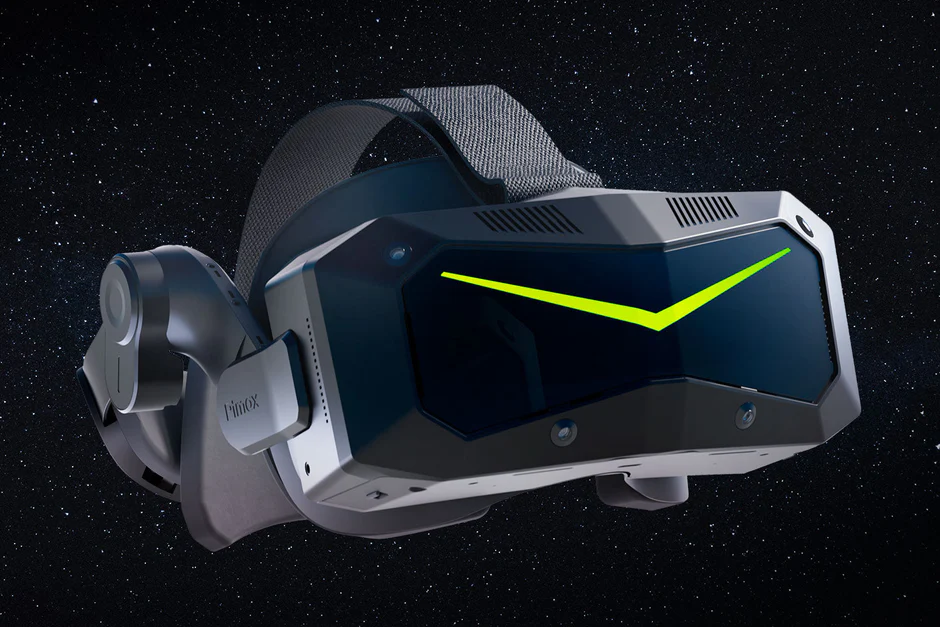
As VR adoption expands beyond gaming into training, simulation, design, and productivity, Pimax’s CES 2026 lineup illustrates how PCVR is repositioning itself as the premium tier of immersive computing rather than a niche alternative.
Why PC-Based VR Still Matters in 2026
In recent years, standalone VR headsets have dominated mainstream discussions due to their convenience and affordability. However, PC-based VR remains essential for users who prioritize visual accuracy, computational power, and modular flexibility.
PCVR allows headsets to leverage high-end GPUs, advanced physics simulations, and complex rendering pipelines that standalone systems cannot yet replicate at scale. Industries such as aviation training, motorsports simulation, architectural visualization, and medical education continue to rely heavily on PC-powered VR environments.
Pimax has consistently aligned itself with this high-performance segment, and its latest headsets demonstrate that PCVR is evolving rapidly rather than stagnating.
Introducing the Crystal Super Micro-OLED: Visual Fidelity Without Compromise
The Crystal Super Micro-OLED stands as Pimax’s flagship announcement. Built around Sony-manufactured micro-OLED panels, the headset delivers ultra-high resolution per eye, dramatically improving pixel density and eliminating the screen-door effect that has historically plagued VR displays.
Micro-OLED technology offers several inherent advantages over traditional LCD and OLED panels. It enables deeper contrast ratios, true blacks, faster pixel response times, and superior color accuracy—all critical for immersive realism. For applications such as night-time flight simulations or cinematic VR storytelling, these characteristics fundamentally change the experience.
Pimax pairs these displays with its proprietary ConcaveView pancake lens system, which shortens the optical path while maintaining clarity across a wide field of view. The result is a headset that balances visual immersion with a more compact and ergonomic design than earlier PCVR generations.
Dream Air: Lightweight Design Meets Premium Performance
While the Crystal Super Micro-OLED targets professionals and enthusiasts seeking maximum fidelity, the Dream Air addresses a different challenge: comfort and accessibility without sacrificing performance.
The Dream Air was one of the most talked-about headsets at CES 2026, earning TechRadar Pro’s CES Picks Award. Its appeal lies in its lightweight construction combined with high-resolution displays and advanced optics. By reducing headset weight and improving balance, Pimax aims to minimize user fatigue during extended VR sessions—a critical factor for simulation training and competitive gaming.
This model demonstrates Pimax’s understanding that immersive technology must be wearable for hours, not minutes. The Dream Air bridges the gap between premium PCVR and practical everyday usability.
Dream Air SE: Expanding the Entry Point to High-End PCVR
Recognizing the need for a more cost-effective option, Pimax also introduced the Dream Air SE. While positioned as the most affordable of the three, it retains core elements of the Dream Air’s design philosophy.
Rather than stripping features indiscriminately, the SE variant selectively optimizes components to reduce cost while maintaining compatibility with the broader PCVR ecosystem. This approach reflects a broader industry trend toward tiered product strategies that invite new users into premium platforms without diluting brand identity.
For PC gamers upgrading from older headsets or first-time PCVR adopters, the Dream Air SE represents a more attainable entry point into advanced immersive hardware.
Optical Innovation: Pancake Lenses and ConcaveView Design
One of the most significant technical achievements across all three headsets is Pimax’s continued refinement of its pancake-style ConcaveView lens system.
Traditional Fresnel lenses, once common in VR headsets, introduced glare, distortion, and visual artifacts. Pancake lenses, by contrast, use folded optical paths to deliver clearer imagery in a thinner form factor. Pimax’s ConcaveView implementation further enhances edge-to-edge clarity and reduces chromatic aberration.
These advancements not only improve image quality but also contribute to lighter headset designs—an essential factor for long-term comfort and enterprise adoption.
CES 2026 Demonstrations: VR Meets Physical Simulation
Pimax’s CES booth went beyond static hardware displays. The company partnered with DOF Reality, Trak Racer, Virtuix, FXG, and EOZ VR to showcase fully integrated simulation environments.
These demonstrations combined VR headsets with motion platforms, racing rigs, treadmills, and specialized controllers, highlighting the growing convergence between immersive visuals and physical feedback systems. This integration is particularly relevant for industries such as motorsports training, defense simulation, and experiential entertainment.
The presence of these partners underscores a key trend: VR hardware is increasingly part of a larger experiential ecosystem rather than a standalone device.
Micro-OLED Displays: A Defining Trend in Immersive Technology
The adoption of high-resolution micro-OLED displays represents one of the most important shifts in VR hardware design. Unlike conventional OLED panels, micro-OLED displays are fabricated on silicon substrates, enabling extremely high pixel densities in compact form factors.
For VR, this translates into sharper text, more realistic environments, and improved depth perception. As VR expands into productivity and professional workflows, display clarity becomes as critical as raw immersion.
Pimax’s early and aggressive adoption of micro-OLED positions it as a technological leader at a time when display quality is becoming the primary differentiator in high-end VR.
Implications for the Virtual Reality Hardware Industry
Pimax’s CES 2026 announcements reflect broader changes within the VR hardware industry. As consumer expectations rise, manufacturers are increasingly focusing on optical quality, ergonomics, and ecosystem compatibility rather than headline features alone.
PC-based VR, once perceived as complex and inaccessible, is evolving into a premium category defined by performance and precision. This shift aligns with the needs of enterprise users, content creators, and serious enthusiasts who demand reliability and visual excellence.
Simulation, Training, and Professional Applications
Beyond gaming, Pimax’s latest headsets reinforce VR’s growing role in simulation and training environments. From pilot training to industrial safety simulations, high-resolution PCVR enables realistic scenarios that are difficult or dangerous to replicate in the real world.
The ability to integrate VR with motion platforms and specialized peripherals further enhances realism, making immersive training more effective and scalable.
Consumer Electronics and the Future of Immersive Experiences
CES has long been a bellwether for consumer electronics trends, and Pimax’s presence at the 2026 show highlights VR’s maturation as a core computing platform rather than a novelty.
As hardware becomes lighter, clearer, and more adaptable, VR is poised to influence everything from entertainment and education to remote collaboration and digital design. Pimax’s latest headsets suggest that the next phase of VR innovation will be defined not by hype, but by tangible improvements in usability and realism.
Conclusion: Pimax’s Strategic Bet on Premium PCVR
With the Crystal Super Micro-OLED, Dream Air, and Dream Air SE, Pimax has delivered a clear message: PC-based virtual reality is entering a refined, performance-driven era.
By investing in micro-OLED displays, advanced optics, and ecosystem partnerships, Pimax is positioning itself at the forefront of immersive technology. CES 2026 may well be remembered as the moment when PCVR reasserted its relevance—and Pimax emerged as one of its most influential champions.
FAQs
- What did Pimax announce at CES 2026?
Pimax introduced three new PC-based VR headsets focused on high-resolution displays and advanced optics. - What makes micro-OLED displays important for VR?
They offer higher pixel density, better contrast, and improved realism compared to traditional panels. - Which headset is Pimax’s flagship model?
The Crystal Super Micro-OLED is positioned as the premium flagship. - What is the Dream Air designed for?
It balances high performance with lightweight comfort for extended use. - Is there a budget-friendly option?
Yes, the Dream Air SE targets users seeking affordability without major compromises. - What lens technology does Pimax use?
Pimax employs proprietary pancake-style ConcaveView lenses. - Are these headsets standalone?
No, all three are PC-based VR headsets. - Who are Pimax’s CES partners?
Partners included DOF Reality, Trak Racer, Virtuix, FXG, and EOZ VR. - Which industries benefit most from these headsets?
Gaming, simulation, training, design, and professional visualization. - Why is CES 2026 significant for PCVR?
It showcased how PCVR is evolving into a premium, performance-driven platform.