

The artificial intelligence landscape is undergoing a fundamental shift. For years, AI assistants have been reactive tools, waiting for users to input commands before generating responses. Today, a new paradigm is emerging—one defined by proactive intelligence, continuous context awareness, and deep integration into everyday communication.
At the forefront of this transformation is Poke AI, a product that challenges conventional expectations of what an AI assistant should be. Unlike traditional chatbots, Poke operates entirely within text messaging environments, offering an experience that feels less like interacting with software and more like communicating with a human assistant.
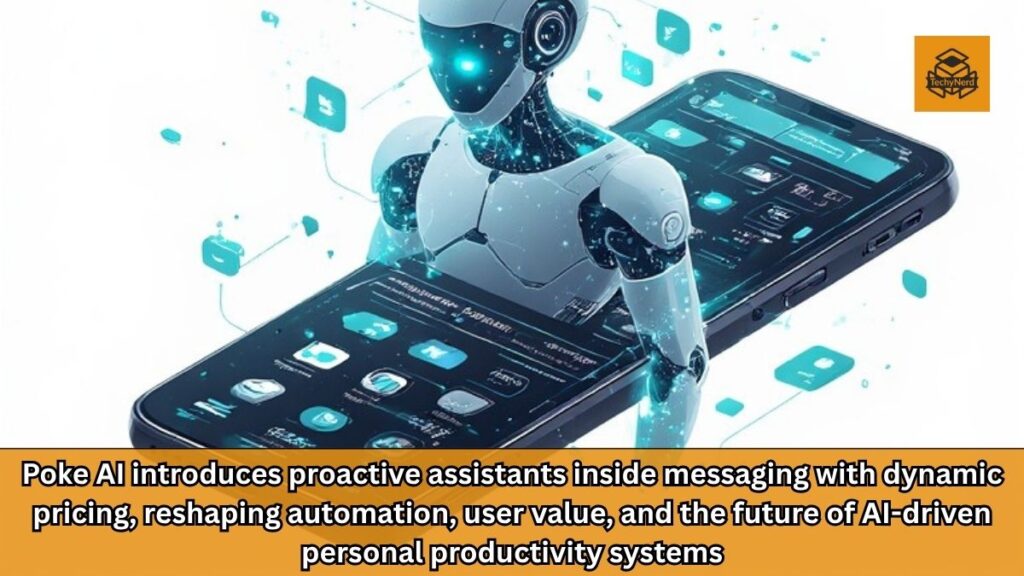
This shift is not merely technical; it represents a broader redefinition of how value is created and monetized in the AI economy.
The Concept: AI That Lives Inside Your Conversations
Poke’s core innovation lies in its design philosophy. Instead of requiring users to open an app or interface, the assistant integrates directly into messaging workflows. This approach removes friction and aligns with how people naturally communicate.
The experience is intentionally conversational. Users interact with Poke as they would with a trusted contact, issuing requests, asking questions, and delegating tasks in a fluid, ongoing dialogue. This design reduces the cognitive load associated with structured prompts and commands.
What sets Poke apart, however, is not just its interface but its behavior. The assistant is proactive, meaning it can anticipate needs, suggest actions, and execute tasks without explicit instructions. This capability moves AI from a tool to a collaborator.
The OpenClaw Comparison: From Technical Complexity to Mass Accessibility
Poke is often described as a consumer-friendly evolution of OpenClaw, a more technical system designed for advanced users. OpenClaw represents the cutting edge of AI automation, enabling deep integrations and complex workflows.
However, its complexity limits accessibility. Poke bridges this gap by abstracting technical details and presenting a simplified, user-friendly interface. In doing so, it brings advanced automation capabilities to a broader audience.
This transition mirrors broader trends in technology, where powerful tools evolve from niche applications into mainstream products. Just as cloud computing and smartphones democratized access to advanced capabilities, proactive AI assistants are poised to do the same for automation.
A Pricing Model That Redefines Value
Perhaps the most controversial aspect of Poke is its pricing strategy. Unlike traditional subscription models, Poke employs dynamic pricing based on perceived value and usage patterns.
This approach has led to extreme variations in cost. In one widely discussed case, a user—reportedly a billionaire—was quoted $136,000 per month and accepted the price. This example highlights the platform’s ability to tailor pricing to individual circumstances.
From a business perspective, this model reflects a shift toward value-based pricing in software. Instead of charging a flat fee, companies capture a portion of the value they create for users. In the context of AI, where automation can generate significant economic benefits, this approach has strong theoretical appeal.
However, it also raises questions about fairness, transparency, and accessibility. Dynamic pricing can create disparities, potentially limiting access for smaller users while maximizing revenue from high-value clients.
Leadership and Vision: The Role of Marvin von Hagen
The vision behind Poke is driven by its CEO, Marvin von Hagen, who has positioned the company at the intersection of usability and advanced AI capabilities. Under his leadership, the company has pursued an aggressive development strategy, focusing on rapid iteration and user feedback.
Poke operates under the corporate entity The Interaction Company of California, a relatively small team based in Palo Alto. Despite its size, the company has attracted significant investment, including funding from prominent venture capital firms.
This combination of focused leadership and strong financial backing has enabled Poke to compete in a rapidly evolving market dominated by larger players.
Funding and Market Confidence
Poke’s growth trajectory is supported by substantial निवेश from leading investors. The company recently secured $10 million in funding from Spark Capital, adding to its earlier $15 million seed round led by General Catalyst.
This level of investment reflects growing confidence in the potential of proactive AI systems. Investors are betting that the next wave of AI innovation will be defined not by incremental improvements in chat interfaces but by fundamentally new interaction models.
The involvement of high-profile backers also signals a broader industry trend: the convergence of AI, communication, and automation into unified platforms.
The Competitive Landscape: A Race Toward Proactivity
Poke is not operating in isolation. Major AI research labs and technology companies are actively pursuing similar goals. The race is on to develop systems that can seamlessly integrate into users’ lives, providing continuous assistance without explicit prompting.
This shift represents a departure from the traditional chatbot paradigm. Instead of answering questions, future AI systems will anticipate needs, manage workflows, and act as digital agents.
The implications of this transition are profound. Proactive AI has the potential to redefine productivity, streamline operations, and create entirely new categories of applications.
Ethical and Societal Implications
As with any transformative technology, the rise of proactive AI raises important ethical considerations. The ability of an AI system to anticipate and act on behalf of users introduces questions about autonomy, consent, and control.
Dynamic pricing models further complicate the landscape. While they can optimize value capture, they also risk creating unequal access to advanced capabilities. Ensuring fairness and transparency will be critical as these systems become more widespread.
Privacy is another key concern. Operating within messaging environments requires access to sensitive data, making robust security measures essential. Users must trust that their information is handled responsibly.
The Future of Personal AI: From Assistants to Agents
Poke represents an early step toward a broader vision of personal AI agents. These systems will not only respond to requests but actively manage aspects of users’ lives, from scheduling and communication to financial and operational tasks.
This evolution will blur the line between software and service. AI assistants will increasingly resemble human assistants, capable of understanding context, making decisions, and executing complex workflows.
The economic implications are significant. As AI agents become more capable, they could replace or augment a wide range of roles, from administrative support to specialized professional services.
Conclusion: A Glimpse Into the Next Phase of AI Innovation
The emergence of Poke AI highlights a pivotal moment in the evolution of artificial intelligence. By combining proactive behavior, seamless integration, and value-based pricing, Poke challenges traditional assumptions about how AI should function and be monetized.
While the technology is still in its early stages, its trajectory is clear. Proactive AI assistants are poised to become a central component of the digital ecosystem, reshaping how individuals and organizations interact with technology.
The path forward will require careful navigation of technical, ethical, and economic challenges. However, the potential rewards—greater efficiency, enhanced productivity, and new forms of value creation—make this one of the most exciting developments in the tech industry today.
FAQs
1. What is Poke AI?
It is a proactive AI assistant that works inside messaging platforms.
2. How is Poke different from chatbots?
It anticipates needs instead of just responding to prompts.
3. Why is Poke’s pricing controversial?
Because it uses dynamic pricing based on user value.
4. Who created Poke AI?
It is led by CEO Marvin von Hagen.
5. What is OpenClaw?
A more technical AI automation framework similar in concept.
6. How much can Poke cost?
Pricing varies widely, even reaching $136,000 per month.
7. Who invested in Poke?
Firms like Spark Capital and General Catalyst.
8. Is Poke available to everyone?
Yes, after its private beta, it became publicly accessible.
9. What makes proactive AI important?
It reduces manual input and increases efficiency.
10. What are the risks of proactive AI?
Privacy, control, and pricing fairness concerns.