

For more than a decade, smartphone manufacturers have fiercely competed on photography. Megapixels, sensor size, night mode, computational photography, and AI-enhanced images have defined flagship launches year after year. But as the smartphone market matures and still photography improvements become incremental, video recording is emerging as the next decisive frontier.
Samsung appears to be fully aware of this shift. Recent findings buried deep within One UI 8.5 code strongly suggest that the upcoming Galaxy S26 Ultra is not just refining photography, but is positioning itself as a serious tool for advanced mobile videography. These changes may represent one of the most meaningful evolutions in Samsung’s camera philosophy in years.
What the One UI 8.5 Code Reveals
Code discovered in One UI 8.5 hints at a substantial expansion of Samsung’s Camera Assistant capabilities, particularly for video recording. While Camera Assistant has traditionally focused on still photography enhancements, the upcoming iteration appears to repurpose those principles for moving images.
Unlike minor UI tweaks or cosmetic updates, these changes point to deeper control over how video footage is captured, processed, and rendered. This is significant because Samsung has historically leaned heavily on automated processing, often at the expense of manual control preferred by professional users.
Camera Assistant Evolves Beyond Photography
Camera Assistant has long been Samsung’s experimental playground for users who want finer control without diving into full manual modes. Until now, its strengths lay in photo sharpening, HDR behavior, and image optimization.
With the Galaxy S26 Ultra, Camera Assistant is reportedly being reimagined as a bridge between casual video shooting and professional-grade control. This evolution aligns with broader industry trends, where creators increasingly rely on smartphones for content creation across YouTube, Instagram, TikTok, and even independent filmmaking.
Video Softness Control: Redefining Samsung’s Image Processing
One of the most intriguing new features suggested by the code is adjustable video softness. This setting allows users to determine how aggressively the camera sharpens video footage in real time.
Samsung devices have often been criticized for over-sharpening, producing footage that looks artificially crisp but lacks natural texture. By introducing softness control, Samsung acknowledges this criticism and offers users a choice between clarity and realism.
This feature mirrors professional video workflows, where filmmakers prefer flatter, less processed footage that retains detail for post-production. The presence of multiple softness levels suggests Samsung is targeting both casual users and creators who want cinematic results straight out of their phones.
Autofocus Speed and Sensitivity: A Creator-Centric Upgrade
Another major enhancement revolves around autofocus behavior during video recording. According to the leaked code, users may soon be able to control how quickly and aggressively the camera shifts focus between subjects.
This is a critical upgrade. In professional videography, autofocus transitions are a creative choice, not a technical afterthought. Slow focus pulls create dramatic emphasis, while fast autofocus suits dynamic action shots.
By allowing users to fine-tune autofocus speed and sensitivity, Samsung is moving closer to tools traditionally found only in dedicated cameras. This level of control could significantly improve the Galaxy S26 Ultra’s appeal to vloggers, filmmakers, and journalists.
Why These Features Matter More Than Megapixels
For years, smartphone camera marketing revolved around sensor size and megapixel counts. While hardware still matters, software control increasingly defines real-world results.
Video softness adjustment and autofocus tuning directly impact storytelling quality. These tools influence how footage feels emotionally, how subjects are perceived, and how professional the final output appears.
In a market where nearly every flagship phone captures “good enough” video, nuanced control becomes the true differentiator.
Samsung Responds to Long-Standing Criticism
Samsung has faced consistent criticism for reusing camera hardware across multiple generations, particularly in its Ultra lineup. While sensors improved incrementally, many users felt the company relied too heavily on software to mask hardware stagnation.
The Galaxy S26 Ultra appears to address this perception from two angles. First, reports suggest a wider aperture lens that improves low-light performance. Second, these Camera Assistant upgrades show Samsung is rethinking how users interact with video capture itself.
Together, these changes signal a broader shift in strategy rather than a simple feature refresh.
The Return of the Camera Island and What It Signals
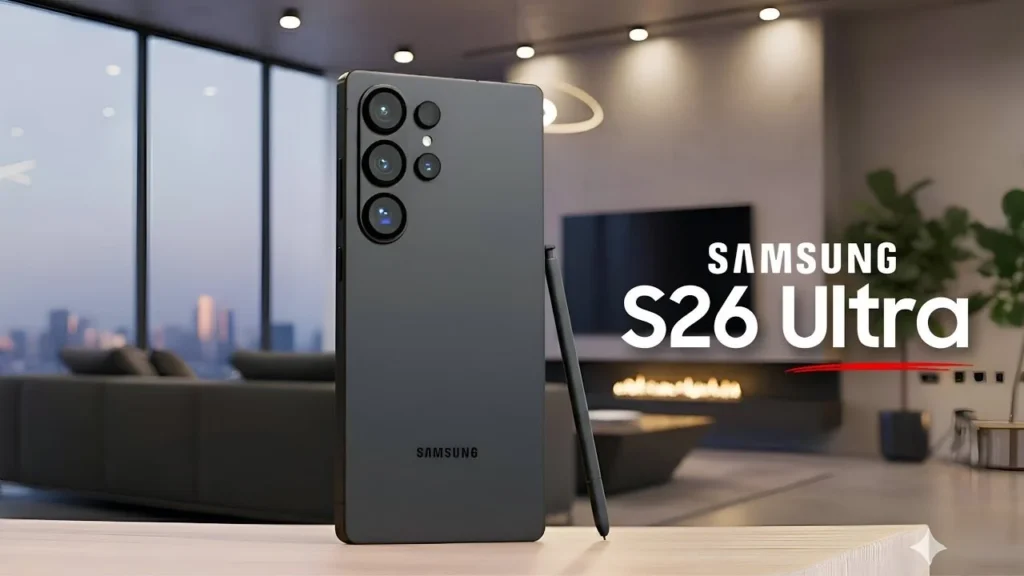
Leaks indicate that Samsung may reintroduce a rear camera island design for the Galaxy S26 Ultra. This design choice is not merely aesthetic. A camera island often allows for larger sensors, wider apertures, and more advanced optics.
Combined with enhanced software controls, this suggests Samsung is investing in a more holistic camera system rather than incremental updates. It also hints that future Galaxy Ultra devices may prioritize optical improvements alongside computational enhancements.
Competition with Apple: A New Angle of Attack
Apple has long dominated smartphone video recording, particularly with its consistent color science, stable autofocus, and natural motion rendering. However, Apple’s approach remains heavily automated, offering limited manual control outside of specialized apps.
Samsung’s move toward customizable video parameters could give it a distinct edge. By empowering users rather than locking them into predefined profiles, Samsung positions the Galaxy S26 Ultra as a more flexible creative tool.
This approach may resonate strongly with professionals who want control without abandoning smartphone convenience.
AI, Video Processing, and the Risk of Overreach
Modern smartphones rely heavily on AI for image and video processing. While AI enables impressive results, it also introduces artifacts, inconsistencies, and unexpected behavior.
Recent Apple devices, for example, have faced criticism for AI-induced visual glitches such as distorted text, unnatural lighting, and strange artifacts. Samsung’s new approach appears to emphasize user control as a counterbalance to aggressive AI intervention.
Giving users the ability to dial back processing could be the key to producing more authentic, trustworthy footage.
Are These Features Exclusive to the Galaxy S26 Ultra?
While nothing is officially confirmed, early indications suggest these advanced video controls may be exclusive to the Galaxy S26 Ultra. If true, this would reinforce the Ultra’s identity as a professional-grade device rather than merely a larger flagship.
This exclusivity could also generate backlash from users of recent Galaxy Ultra models who may feel left behind. Samsung will need to carefully manage expectations to avoid fragmenting its premium user base.
The Bigger Picture: Smartphones as Primary Cameras
The Galaxy S26 Ultra’s rumored upgrades reflect a broader industry reality. Smartphones are no longer secondary cameras; for many users, they are the only cameras.
As traditional camera sales decline, smartphones increasingly inherit features once reserved for professional equipment. Samsung’s approach suggests it understands this responsibility and is willing to invest in tools that respect both casual and professional use cases.
Conclusion: A Meaningful Step Forward, Not Just Another Update
If these One UI 8.5 features make it to the final Galaxy S26 Ultra, Samsung may deliver one of its most creator-focused camera upgrades in years. Rather than chasing specs for marketing headlines, the company appears to be addressing real-world usability and creative control.
In an era where video defines communication, storytelling, and influence, the Galaxy S26 Ultra could represent a pivotal moment—not just for Samsung, but for the entire smartphone industry.
FAQs
- What new video features are rumored for the Galaxy S26 Ultra?
Leaked code suggests adjustable video softness and customizable autofocus speed and sensitivity. - What is Camera Assistant in Samsung phones?
It is an advanced camera settings tool that allows users more control over image processing behavior. - Will these features improve video quality?
They may not increase resolution but can significantly improve visual realism and creative control. - Are these features confirmed by Samsung?
No, they are based on code found in One UI 8.5 and not officially announced. - Will older Galaxy Ultra phones receive these features?
Early indications suggest they may be exclusive to the Galaxy S26 Ultra. - How does video softness control help creators?
It reduces over-sharpening, producing more natural footage suitable for editing. - Why is autofocus control important for video?
It allows smoother focus transitions and better storytelling control. - Does this challenge Apple’s video dominance?
Yes, by offering manual control where Apple relies heavily on automation. - Is hardware also expected to improve?
Reports suggest a wider aperture lens and possible camera hardware upgrades. - When is the Galaxy S26 Ultra expected to launch?
The device is expected in 2026, following Samsung’s annual flagship cycle.