

The global television industry is once again at an inflection point. As consumers increasingly demand cinematic experiences at home, manufacturers are under pressure to deliver not just bigger screens, but smarter, brighter, and more lifelike displays. Samsung’s announcement of its expanded Micro RGB TV lineup for 2026 signals a decisive move toward redefining what “premium” truly means in home entertainment.
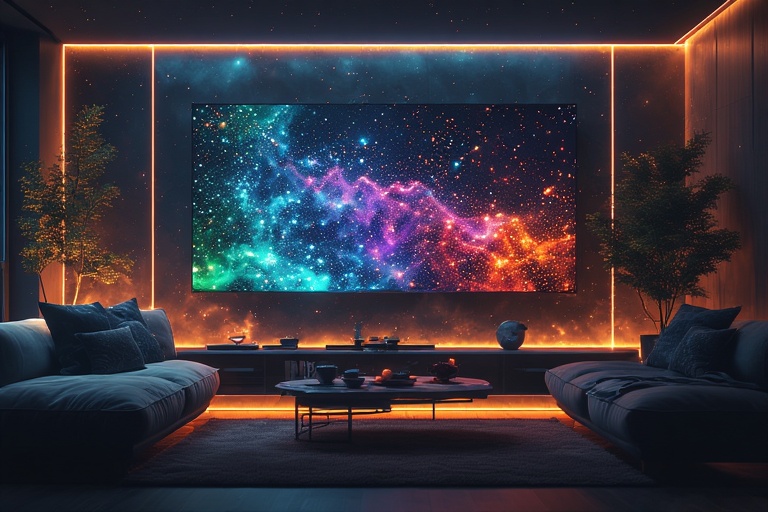
With new models ranging from 55 inches to a massive 115 inches, Samsung is no longer positioning Micro RGB as an ultra-niche luxury technology. Instead, the company is shaping it into a scalable, intelligent display platform designed for real-world living spaces, while preserving elite picture standards that push beyond traditional OLED and Mini-LED boundaries.
Micro RGB Technology: The Engineering Leap Forward
At the heart of Samsung’s 2026 lineup is Micro RGB technology, a display architecture that represents a fundamental shift from conventional backlit or self-emissive panel designs. Unlike traditional LED TVs that rely on white backlights and color filters, Micro RGB uses microscopic red, green, and blue LEDs that emit light independently.
Each of these LEDs measures less than 100 micrometers, allowing Samsung to achieve extraordinarily precise control over brightness, contrast, and color reproduction. This independent light emission eliminates the need for color filters, reducing light loss and significantly improving efficiency and accuracy.
The result is a display capable of producing colors that are not merely vivid, but deeply nuanced. Skin tones appear more natural, shadow detail is preserved even in challenging scenes, and bright highlights retain texture rather than washing out.
Precision Color and the BT.2020 Benchmark
One of the most important technical achievements in Samsung’s new lineup is the introduction of Micro RGB Precision Color 100. Verified by VDE, this technology allows the TVs to achieve 100 percent coverage of the BT.2020 color gamut, a standard that far exceeds what most consumer televisions can reproduce today.
In practical terms, this means that colors are not just brighter, but more accurate across a wider spectrum. Deep reds maintain richness without bleeding, greens appear lush without artificial saturation, and blues retain depth without losing detail. For filmmakers, gamers, and content creators, this level of fidelity ensures that what appears on screen closely matches the creator’s original intent.
AI Processing: Intelligence Behind Every Frame
Hardware alone no longer defines premium televisions. Samsung’s 2026 Micro RGB TVs integrate a next-generation AI processing platform designed to enhance content in real time.
The Micro RGB AI Engine Pro acts as the brain of the display, analyzing each frame individually. It adjusts brightness, contrast, sharpness, and motion dynamically based on content type, viewing conditions, and scene complexity. Whether watching fast-paced sports, cinematic films, or streaming content, the system ensures consistent clarity without user intervention.
Advanced features such as 4K AI Upscaling Pro transform lower-resolution content into near-4K quality, preserving texture while minimizing artifacts. AI Motion Enhancer Pro smooths fast-moving scenes, reducing blur without introducing the “soap opera effect” that often plagues motion interpolation technologies.
Vision AI Companion: The TV Becomes Conversational
Samsung’s Vision AI Companion represents a major evolution in how users interact with their televisions. Built on large language model intelligence and powered by Bixby, the system transforms the TV into an interactive, conversational assistant.
Instead of navigating menus manually, users can ask natural-language questions, search for content conversationally, or receive proactive recommendations based on viewing habits. The system also enables advanced features such as real-time translation for broadcast content, generative wallpapers that adapt to mood or time of day, and AI-powered discovery tools that surface relevant apps and services.
This shift positions the TV not just as a display device, but as an intelligent hub within the connected home ecosystem.
Glare-Free Viewing: Designed for Real Living Spaces
One of the most overlooked challenges in premium TV ownership is glare. Large, high-brightness screens often struggle in brightly lit rooms, where reflections degrade contrast and color accuracy.
Samsung’s proprietary Glare Free technology directly addresses this issue. By minimizing reflections without compromising brightness or sharpness, Micro RGB TVs maintain image integrity across a wide range of lighting conditions. Whether placed in a sunlit living room or a dedicated home theater, the display remains clear, immersive, and visually consistent.
Immersive Audio: Sound That Matches the Visual Scale
A premium visual experience demands equally compelling audio. Samsung’s 2026 Micro RGB lineup incorporates a comprehensive suite of advanced sound technologies designed to match the scale and realism of the display.
Dolby Atmos delivers multidimensional sound that moves fluidly around the viewer, while Adaptive Sound Pro analyzes both room acoustics and content type to optimize clarity and impact. Q-Symphony further enhances immersion by synchronizing TV speakers with compatible Samsung sound systems, creating a wider and more cohesive soundstage.
Additionally, all 2026 Samsung TVs introduce Eclipsa Audio, a new spatial audio system engineered to provide immersive three-dimensional sound without the need for complex external setups.
A Broad Range of Sizes for Modern Homes
By expanding the Micro RGB lineup to include 55-, 65-, 75-, 85-, 100-, and 115-inch models, Samsung is making a strategic statement. Premium display technology is no longer reserved solely for ultra-large luxury installations. Instead, it is becoming adaptable to apartments, family living rooms, and dedicated entertainment spaces alike.
This size diversity ensures that consumers can access cutting-edge display innovation without compromising on space constraints, while still benefiting from the same core technology across the range.
CES 2026: A Showcase of Display Leadership
Samsung’s decision to debut the expanded Micro RGB lineup at CES 2026 underscores the company’s confidence in this technology. CES has long been the stage where industry-defining innovations are unveiled, and Samsung’s presence reinforces its position as a leader in display engineering.
By demonstrating Micro RGB across multiple sizes and use cases, Samsung is signaling a future where ultra-premium viewing experiences are both scalable and intelligent.
Industry Impact: Raising the Bar for Competitors
Samsung’s Micro RGB expansion will inevitably influence the broader TV market. Competing manufacturers will face increased pressure to deliver higher color accuracy, smarter AI processing, and improved real-world usability.
As Micro RGB technology matures, it may also accelerate shifts away from traditional OLED and Mini-LED architectures, particularly in the ultra-premium segment where performance margins matter most.
Conclusion: A Defining Moment for Home Entertainment
Samsung’s expanded Micro RGB TV lineup for 2026 represents more than a product refresh. It marks a strategic evolution in how premium televisions are designed, experienced, and integrated into modern homes.
By combining precision-engineered hardware, advanced AI intelligence, immersive audio, and thoughtful usability features, Samsung is shaping the next chapter of home entertainment—one where technology fades into the background and the experience takes center stage.
FAQs
1. What is Micro RGB TV technology?
Micro RGB uses microscopic red, green, and blue LEDs that emit light independently for superior color accuracy.
2. How is Micro RGB different from OLED?
Micro RGB eliminates color filters, offering higher brightness, longer lifespan, and more precise color control.
3. What screen sizes will be available in 2026?
Samsung will offer Micro RGB TVs from 55 inches up to 115 inches.
4. What is Vision AI Companion?
It is Samsung’s AI platform that enables conversational search, recommendations, and smart TV interactions.
5. Does Micro RGB support HDR?
Yes, Micro RGB HDR Pro enhances brightness, contrast, and color depth for HDR content.
6. Are these TVs suitable for bright rooms?
Yes, Samsung’s glare-free technology minimizes reflections in well-lit environments.
7. What audio features are included?
Dolby Atmos, Adaptive Sound Pro, Q-Symphony, and the new Eclipsa Audio system.
8. Will all models support AI upscaling?
AI upscaling features are available on select models within the lineup.
9. When will the TVs be available?
Availability begins in 2026, varying by region.
10. Who are these TVs best suited for?
They are ideal for users seeking top-tier picture quality, immersive sound, and advanced smart features.