

In modern defense ecosystems, where digital infrastructure, autonomous surveillance, and cyber-physical systems dominate strategic narratives, one domain still remains profoundly human—health. The U.S. Space Force, the youngest and most technologically ambitious branch of the American armed forces, is actively attempting to merge the physiological wellbeing of its Guardians with the precision and predictability of modern analytics. In a rapidly evolving era of biometric intelligence and predictive health systems, the case of Tech Sgt. Garry Springle stands out as a defining example of how military technology is no longer confined to battlefields—it is increasingly saving lives in quiet, unexpected ways.
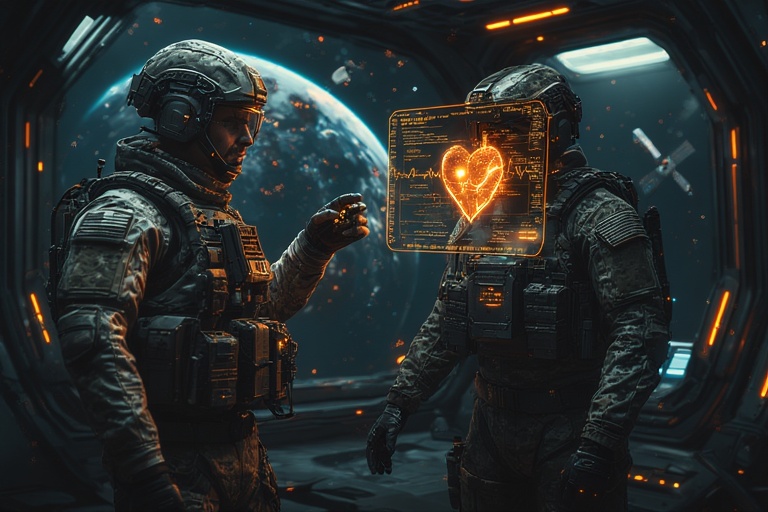
Springle’s story begins with what initially appeared to be a routine element of a fitness study. He was issued a smartwatch not as a luxury gadget but as part of the Continuous Fitness Assessment (CFA) program—an initiative designed to shift military fitness from episodic testing to real-time physiological monitoring. The watch was intended to calculate intensity minutes, track heart rate zones, and create a more accurate picture of each Guardian’s continuous readiness.
Yet what emerged was far more significant. The device didn’t just track performance; it became a diagnostic tool—a silent, algorithmic companion that helped uncover a potentially deadly cardiac issue, one that Springle had no reason to suspect.
This wasn’t a case of luck—it was a case study in how defense technologies, when aligned with biometric data and intelligent systems, can extend beyond operational readiness and directly intervene in the preservation of life.
The Unexpected Data Pattern That Changed Everything
Not long after the study began, Springle noticed an odd and persistent trend: no matter how hard he pushed, the smartwatch insisted he wasn’t hitting the required intensity minutes. For a Guardian maintaining high physical activity levels, this made little sense. He worked out five days a week, hiked with his family, and felt no fatigue, dizziness, or discomfort. Yet the smartwatch metrics told a different story.
The Space Force fitness system requires members to elevate their heart rate to at least 70% of their age-predicted maximum to qualify intensity minutes. In Springle’s case, however, the data showed a cardiac plateau—his heart rate simply refused to increase into the expected zone.
Most individuals would dismiss this as a hardware glitch. Springle did not. He stayed consistent, monitored the numbers, and paid attention to the anomaly. Weeks passed, and the pattern persisted.
Underlying this situation is an emerging truth about modern biometrics: wearables detect abnormalities long before symptoms manifest. Human senses cannot quantify micro-variations in heart rhythm—but sensors can. Algorithms can. Machine-interpreted biological signals often reveal problems that the body does not immediately communicate.
Eventually, the concerns he shared with Space Force physical fitness experts triggered an important observation: his heart rate response curve was atypical for his activity level. This anomaly prompted a recommendation—get medical evaluation immediately.
Diagnosis: A Heart Working at Only 50% Capacity
Medical testing finally revealed the source of the abnormal smartwatch performance: premature ventricular contractions (PVCs). In simple terms, Springle’s heart was frequently producing “false” or incomplete beats, causing his actual beat output to drop nearly in half.
Every second beat was essentially nonfunctional. What the smartwatch interpreted as failure to meet intensity thresholds was actually a physiological malfunction—his heart could not generate the output necessary to reach elevated heart rate zones.
This put Springle in a uniquely dangerous position:
- He was physically active enough to mask symptoms.
- He experienced no pain or discomfort.
- His outward health appeared pristine.
Yet internally, his cardiac system was deteriorating quietly. According to both the cardiologist and electrophysiologist who treated him, the condition could have resulted in sudden unexpected heart failure.
The smartwatch, a wearable designed primarily for fitness optimization, became—unexpectedly—a life-saving diagnostic tool.
The Intersection of Military Fitness and Predictive Health Technology
The Space Force’s fitness philosophy is distinctly different from legacy military branches. Traditionally, the U.S. military has relied on periodic fitness tests—annual or biannual metrics used to assess readiness. These tests, while effective for standardization, create predictable behavioral patterns: long cycles of inactivity followed by intense “pre-test preparation”—a model that risks short-term strain and long-term inconsistency.
The Continuous Fitness Assessment represents an industry-leading shift toward:
- Continuous biomonitoring
- Mobility-based health analytics
- Real-time readiness scoring
- Machine-assisted physiological oversight
In the context of global defense organizations, this places the Space Force at the forefront of personal readiness digitization—a trend that parallels innovations in commercial sectors, from the Apple Watch’s arrhythmia detection to Garmin’s VO2-max monitoring.
However, unlike civilian devices, military wearables incorporate specific compliance metrics. These metrics are used not just for personal health but for maintaining force readiness, mission safety, and operational capability.
Why Military Wearables Are No Longer Just Fitness Accessories
Springle’s case underscores a crucial shift in defense health technology: wearables are becoming proactive health intelligence systems, not passive trackers.
Modern military wearables enable:
1. Early Detection of Asymptomatic Illness
Silent cardiovascular issues, particularly arrhythmias, often remain undetected until catastrophic failure. Wearables bridge that gap by spotting deviations in rhythm patterns, heart rate curves, and physiological signals long in advance.
2. Data-Driven Decision Making in High-Stress Environments
Space Force operations often require rapid response, high cognitive performance, and precision. Biological data monitoring ensures that Guardians remain mission-ready not just physically, but neurologically and cardiovascularly.
3. Reduction in Medical Costs and Downtime
Early detection prevents severe medical emergencies, reducing hospital stays and long rehabilitation cycles. This translates into both saved lives and improved operational efficiency.
4. A Culture Shift Toward Preventative Health
Guardians are taught to view health as a continuous parameter, not a periodic requirement.
The Technology Behind the Wearable: How Smart Sensors Interpreted the Anomaly
While specific vendor details were not publicly disclosed, modern military-grade wearables typically leverage:
- PPG (photoplethysmography) sensors
- ECG-capable electrodes
- Tri-LED heart rate detection arrays
- AI-assisted rhythm analysis
- Continuous zone monitoring algorithms
When Springle’s heart failed to elevate into the required target zone, the device recorded inconsistent signal patterns indicative of arrhythmic interference—patterns impossible for an untrained observer to detect manually.
These wearables analyze:
- Heart rate variability
- Beat-to-beat interval patterns
- Resting heart rate fluctuations
- Irregular electrical sequences
- Cadence vs. pulse mismatch
The device’s insights didn’t just reflect performance data—they reflected cardiac irregularities in real time.
A New Era of Defense Health: When Technology Becomes a Soldier’s Advocate
Springle’s experience demonstrates a principle gaining momentum across defense and civilian tech industries:
Data saves lives when people pay attention to it.
The smartwatch did not diagnose the heart condition.
It did something more powerful—it raised the alarm.
This moment highlights the evolving role of AI-assisted fitness technology:
- The watch detected irregularities.
- The program ensured Springle monitored trends.
- The Space Force fitness expert recognized abnormal response patterns.
- Medical professionals conducted clinical diagnosis.
Together, these steps formed a layered safety net that caught a silent, deadly condition before it became fatal.
Why Springle’s Story Matters for the Future of Military Technology
His experience is not simply a personal survival story. It stands as:
1. A proof of concept for biometric readiness systems
Military organizations can leverage wearables for both fitness and health surveillance.
2. A validation of predictive analytics in defense health management
Physiological data streams can provide early-warning systems for dangerous conditions.
3. A cultural shift away from episodic fitness
Continuous, real-time monitoring is more effective than annual fitness exams.
4. A case study in military technology saving lives beyond combat
Wearables are no longer convenience gadgets—they are strategic assets.
The Guardian’s New Mission: Advocating for Personal Health Awareness
Tech Sgt. Springle’s reflection encapsulates a universal truth:
“If you notice something wrong, don’t brush it off.”
His case reinforces the importance of:
- Listening to technology
- Paying attention to data patterns
- Advocating for oneself in medical situations
- Acting early rather than waiting for symptoms
Springle’s survival is grounded not only in technology but in personal vigilance—a combination that will increasingly define the future of human-centric defense technologies.
FAQs
1. What specific condition did the smartwatch help detect?
It detected irregular heart rhythm patterns related to premature ventricular contractions, which kept Springle’s heart from beating effectively.
2. How did the smartwatch identify something was wrong?
It consistently showed that his heart rate wouldn’t rise into the required exercise zone, indicating a deeper cardiac issue.
3. Was the smartwatch designed to detect medical problems?
While primarily intended for fitness monitoring, its biometric sensors can reveal abnormal heart patterns.
4. What is the Continuous Fitness Assessment (CFA)?
A Space Force initiative that monitors Guardians’ fitness in real time instead of relying on periodic tests.
5. Why didn’t Springle feel any symptoms?
His cardiovascular issue was a “silent” arrhythmia that didn’t cause immediate physical discomfort.
6. Did the Space Force intend for wearables to provide medical insights?
Indirectly, yes. They aimed to improve continuous health monitoring, which naturally supports early detection.
7. Could this technology benefit other military branches?
Absolutely—continuous biometrics could enhance readiness across all services.
8. What sensors do military wearables typically use?
PPG, ECG, heart rate variability detection, zone monitoring algorithms, and motion sensors.
9. Can such wearables prevent sudden cardiac events?
They cannot prevent conditions but can help identify early warning signs to enable timely medical intervention.
10. What lesson does Springle emphasize from his experience?
Trust the data—never ignore signs that something is off, even when you feel physically fine.