

When people think of technology endings, they imagine dramatic shutdowns, headline-grabbing failures, or sudden collapses. But 2025 told a different story. Instead of loud farewells, this year delivered quiet goodbyes, subtle shifts, and slow fades into obsolescence. Many of the technologies that disappeared weren’t failures—they were victims of changing economics, evolving user behavior, and industry-wide transformations.
Unlike past years that saw iconic exits like the iPod or Internet Explorer, 2025’s losses felt more personal. These were tools embedded into daily routines, habits, and even muscle memory. From the familiar click of a home button to the shriek of dial-up modems, these technologies shaped how generations interacted with the digital world.
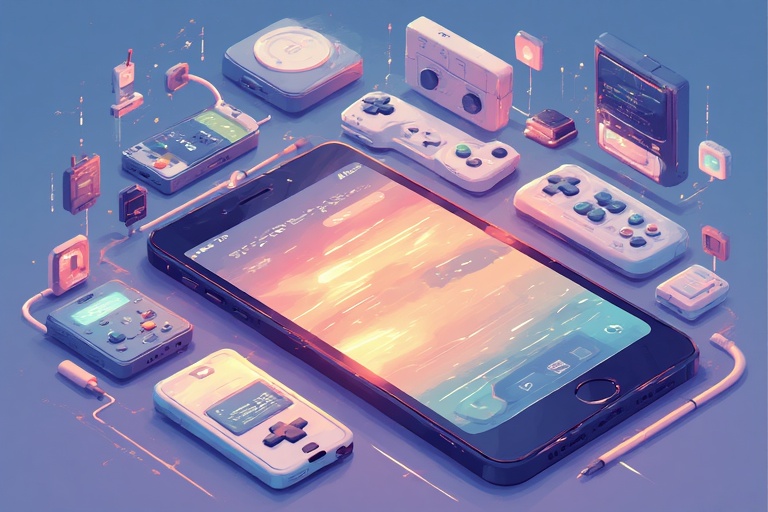
This retrospective isn’t about mourning progress—it’s about understanding what these losses reveal about where technology is heading next.
AOL Dial-Up: The Sound That Built the Internet
For an entire generation, the internet didn’t start with Wi-Fi—it started with noise. The screeching handshake of an AOL dial-up modem wasn’t just functional; it was ceremonial. Logging online meant commitment. It meant patience.
In September 2025, AOL quietly shut down its dial-up internet service after more than three decades. While the number of active users had dwindled dramatically, millions still relied on it as recently as a decade ago—particularly in rural regions where broadband alternatives remain limited.
The shutdown symbolized more than outdated technology. It exposed persistent infrastructure gaps and reminded us that technological progress doesn’t reach everyone at the same pace.
Humane AI Pin: A Short-Lived Experiment in Wearable AI
The Humane AI Pin arrived amid massive excitement, positioned as a revolutionary alternative to smartphones. A wearable, screenless AI assistant promised hands-free interaction and a new paradigm for personal computing.
But within a year, it was gone.
The problem wasn’t just execution—it was purpose. The device offered limited functionality compared to smartphones and smartwatches, while introducing new friction instead of removing it. When HP acquired Humane in early 2025, it wasn’t the hardware that mattered. It was the talent, patents, and operating system knowledge.
The AI Pin joins a long list of single-purpose devices that failed to survive in a world dominated by multifunction platforms.
The iPhone Home Button: The End of Tactile Certainty
Perhaps no loss felt more emotional than the disappearance of the last physical home button. With the retirement of the iPhone SE and the arrival of the home-button-free iPhone 16E, Apple officially ended a design era that began in 2007.
The home button was more than hardware. It was reassurance. It offered an instant escape hatch when gestures failed or apps froze. Gesture navigation may be powerful, but it lacks the reliability of a physical anchor.
This change reflects Apple’s broader philosophy shift: fewer physical controls, more abstraction, and increased reliance on software interpretation over tactile feedback.
Consumer Memory Takes a Backseat to AI Demand
In November 2025, Micron announced it was pivoting away from consumer memory under its Crucial brand. The reason was simple and sobering: AI data centers now consume vast quantities of high-margin memory, leaving traditional PC consumers behind.
This move highlighted a major industry realignment. Consumer hardware is no longer the priority it once was. Instead, cloud providers and AI companies dictate production, pricing, and availability.
For everyday users, this means higher prices, limited availability, and fewer choices—an invisible but impactful loss.
The Blue Screen of Death Turns Black
For decades, the Blue Screen of Death (BSoD) was both feared and familiar. It was a universal sign that something had gone terribly wrong.
In October 2025, Microsoft replaced it with a black screen featuring simplified diagnostics. From a usability standpoint, this makes sense—faster recovery, clearer data collection, and less panic.
But culturally, something was lost. The BSoD was part of computing folklore, instantly recognizable even outside tech circles. Its disappearance marked the end of an era where system crashes felt personal rather than abstract.
Amazon Shuts Down Its Android App Store
Amazon’s Android App Store launched in 2011 as an ambitious attempt to challenge Google’s ecosystem. Fourteen years later, Amazon shut it down for general Android devices, refocusing exclusively on apps for its own Fire hardware.
This move underscored a growing trend: platform consolidation. Tech giants increasingly prefer closed ecosystems that reinforce hardware sales and service subscriptions rather than open competition.
For developers and users, this reduced choice—but simplified Amazon’s business model.
Skype: From Internet Pioneer to Corporate Subroutine
Skype once defined online communication. Long before Zoom or FaceTime, it normalized free voice and video calls across borders.
In February 2025, Microsoft officially folded Skype into the free version of Teams, ending its life as a standalone app. While the functionality lives on, the identity does not.
This transition symbolizes how consumer-friendly tools often evolve into enterprise-first platforms, leaving nostalgia behind in favor of scalability and monetization.
Google Nest Thermostats and Planned Obsolescence
When Google ended support for early-generation Nest Learning Thermostats, the hardware didn’t stop working—but it stopped being smart.
Remote access, notifications, and security updates were removed, effectively pushing users toward upgrades. This decision reignited debates around planned obsolescence and digital ownership.
The Nest situation reflects a broader issue in smart home technology: devices are only as “smart” as the servers that support them.
Google Stadia Controllers: Hardware Without a Home
After Google shut down Stadia in 2022, the company offered firmware updates to convert its controllers to Bluetooth. By the end of 2025, even that support ended.
Without conversion, the controllers become beautifully designed paperweights—a reminder that cloud-dependent hardware lives and dies by backend services.
DJI Drones and the Impact of Policy
The U.S. ban on imports of foreign-made drones, including DJI, marked a different kind of tech loss. The technology still exists. The demand remains. But access is restricted by geopolitics.
This highlights how technology can vanish from markets not due to failure—but regulation.
Conclusion: Progress Leaves Ghosts Behind
The technologies lost in 2025 weren’t necessarily obsolete—they were overtaken by new priorities. AI, platform control, geopolitical shifts, and subscription-driven economics reshaped the industry landscape.
These endings remind us that technology is not permanent. It evolves, consolidates, and sometimes erases what once felt essential. The devices may be gone, but their influence remains embedded in how we design, interact, and innovate.
FAQs
1. Why were so many technologies discontinued in 2025?
Shifts in business models, AI demand, and platform consolidation.
2. Was 2025 a major year for tech shutdowns?
It was quieter than previous years but symbolically impactful.
3. Why did AOL dial-up finally shut down?
Declining usage and outdated infrastructure.
4. What replaced the iPhone home button?
Gesture-based navigation and software controls.
5. Why did the Humane AI Pin fail?
Limited functionality and unclear value proposition.
6. Is planned obsolescence increasing?
Yes, especially in smart home and connected devices.
7. Why did Micron abandon consumer memory?
Higher profits from AI-focused data center demand.
8. Is Skype completely gone?
Its features live on inside Microsoft Teams.
9. Why was the Blue Screen of Death removed?
To improve usability and reduce user anxiety.
10. What does this say about future technology?
Adaptability matters more than nostalgia.