

Few video game franchises have shaped the identity of action-adventure gaming as profoundly as Tomb Raider. When Lara Croft first appeared in 1996, she wasn’t merely a new character—she became a cultural icon, redefining how games portrayed exploration, puzzle-solving, and cinematic storytelling. Nearly three decades later, Crystal Dynamics has officially pulled back the curtain on Tomb Raider: Legacy of Atlantis, a full-scale remake of the very first Tomb Raider game, designed to honor its origins while embracing the technical and creative possibilities of modern gaming.
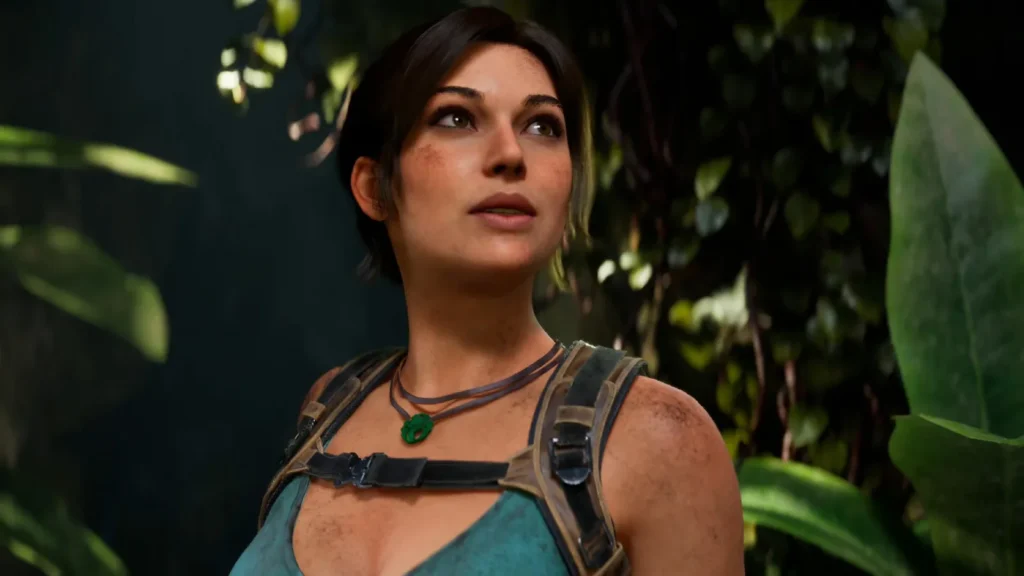
Revealed during The Game Awards 2025, Legacy of Atlantis is not a simple remaster or visual touch-up. Instead, it represents a ground-up reconstruction of the original experience, rebuilt using Unreal Engine 5, and developed in collaboration with Flying Wild Hog. The game is slated for release in 2026 on PlayStation 5, Xbox Series X/S, and PC (Steam).
This announcement marks a pivotal moment not only for the Tomb Raider franchise, but for the broader trend of legacy game preservation through modern technology.
Revisiting the 1996 Classic: Why the Original Tomb Raider Still Matters
The original Tomb Raider launched in an era when 3D gaming was still finding its footing. Limited by hardware constraints, yet ambitious in scope, it introduced players to vast, lonely environments filled with traps, puzzles, and secrets. Its sense of isolation, danger, and discovery set it apart from its contemporaries.
Legacy of Atlantis takes this foundation seriously. Rather than replacing the original’s atmosphere with excessive cinematic flair, the developers have emphasized authenticity, ensuring the remake preserves the tone, pacing, and mystery that made the 1996 game so memorable.
Lara Croft’s design in the reveal trailer reflects this philosophy. She closely resembles her original polygonal appearance, but with refined textures, realistic movement, expressive animation, and contemporary visual fidelity. The result is a character that feels instantly familiar yet unmistakably modern.
Unreal Engine 5: Rebuilding Adventure with Cutting-Edge Technology
At the heart of Legacy of Atlantis lies Unreal Engine 5, a technology that enables unprecedented levels of detail, lighting realism, and environmental scale. Crystal Dynamics has leveraged UE5’s advanced features—such as Nanite geometry and Lumen global illumination—to reconstruct ancient tombs, jungle ruins, and lost civilizations with breathtaking depth.
The environments showcased in the reveal trailer demonstrate dynamic lighting that reacts naturally to torchlight, environmental destruction that feels physical and weighty, and architectural detail that transforms exploration into a visual experience as much as a mechanical one.
From a technical standpoint, this remake serves as a case study in how modern engines can revive classic gameplay without sacrificing its soul.
Gameplay Evolution: Familiar Mechanics, Modern Sensibilities
While the spirit of the original remains intact, Legacy of Atlantis introduces refined mechanics designed to meet contemporary expectations. Platforming has been reworked to feel more responsive and fluid, combat encounters are more dynamic, and puzzle systems benefit from clearer environmental cues without losing their challenge.
Importantly, the developers have avoided turning the game into a cinematic action spectacle. This is not an open-world RPG nor a live-service title. Instead, it remains a tightly curated, exploration-driven adventure that rewards patience, observation, and mastery.
Classic elements—such as deadly traps, pressure plates, vertical traversal, and enemy encounters including dinosaurs—return with modern AI and physics systems enhancing tension and unpredictability.
Narrative Focus: The Scion and the Myth of Atlantis
The story follows Lara Croft’s quest for the Scion, an artifact of immeasurable power tied to the myth of Atlantis. This narrative thread was central to the original game, and Legacy of Atlantis expands upon it through deeper environmental storytelling, enhanced cutscenes, and refined character interactions.
Rather than rewriting history, Crystal Dynamics has chosen to enrich the existing narrative, adding context and depth while respecting established lore. This approach aligns with modern expectations for storytelling without alienating long-time fans.
Development Collaboration: Crystal Dynamics and Flying Wild Hog
The partnership between Crystal Dynamics, the long-time steward of the franchise, and Flying Wild Hog, known for its technical expertise and action-focused design, signals a strategic effort to balance legacy respect with modern execution.
Crystal Dynamics brings institutional knowledge of Lara Croft’s identity, while Flying Wild Hog contributes experience in fluid combat systems and high-performance optimization. Together, they aim to deliver a remake that feels handcrafted rather than formulaic.
Tomb Raider’s Broader Strategy: Remakes, Reboots, and the Future
The reveal of Legacy of Atlantis arrives alongside news of Tomb Raider: Catalyst, a brand-new entry in the franchise. This dual-track strategy—honoring the past while building the future—suggests Crystal Dynamics is positioning Tomb Raider as a long-term narrative universe rather than a single-direction franchise.
For the industry, this approach reflects a broader trend: using remakes not as nostalgia cash-ins, but as cultural preservation projects that introduce foundational experiences to new generations.
Platform Support and Accessibility
Launching exclusively on current-generation platforms, Legacy of Atlantis is built without legacy hardware limitations. This allows higher frame rates, faster load times, and more complex world design.
While accessibility features have not yet been fully detailed, Crystal Dynamics has historically emphasized inclusive design, suggesting options such as customizable controls, difficulty adjustments, and visual accessibility tools will be present.
Why This Remake Matters to the Gaming Industry
Tomb Raider: Legacy of Atlantis represents more than a franchise revival. It demonstrates how legacy IPs can be reintroduced thoughtfully, using modern tools to enhance—not overwrite—the original experience.
In an industry increasingly dominated by live services and monetization models, this remake stands out as a premium, single-player, narrative-driven experience, reinforcing the enduring value of traditional game design.
Release Window and Expectations
The game is scheduled for release in 2026, with further gameplay showcases expected throughout 2026 gaming events. Given the scope of the remake and the technology involved, expectations are high—but so is confidence in the teams behind it.
FAQs
1. Is Tomb Raider: Legacy of Atlantis a remaster or a full remake?
It is a full remake rebuilt from the ground up using Unreal Engine 5.
2. Which game is being remade?
The original Tomb Raider released in 1996.
3. Who is developing the game?
Crystal Dynamics in partnership with Flying Wild Hog.
4. What platforms will it launch on?
PlayStation 5, Xbox Series X/S, and PC via Steam.
5. When is the release date?
The game is scheduled to launch in 2026.
6. Will the story remain faithful to the original?
Yes, the core narrative is preserved with expanded depth.
7. Does the game include dinosaurs like the original?
Yes, classic enemies including dinosaurs return.
8. Is this connected to Tomb Raider: Catalyst?
They are separate projects within a broader franchise strategy.
9. Will gameplay be modernized?
Yes, controls, combat, and puzzles are refined for modern players.
10. Why is this remake important?
It preserves gaming history while introducing a foundational classic to new audiences.