

Artificial intelligence has reached a pivotal moment in the United States. Once confined to research labs and speculative conversations, AI is now deeply embedded in daily life, commerce, defense, and political power. As states rush to regulate AI’s risks and opportunities, Washington faces mounting pressure to establish a unified national framework.
Instead of consensus, however, the Trump administration’s latest move has ignited controversy. At the center of the storm stands David Sacks, President Donald Trump’s AI and crypto czar—an investor turned policymaker whose aggressive approach is unsettling both lawmakers and the very tech industry he is supposed to champion.
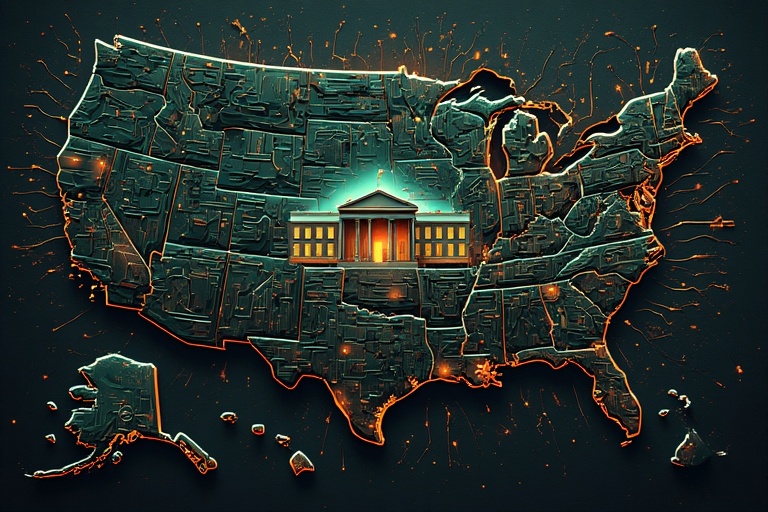
What was intended as a bold federal intervention has instead fractured alliances, reignited partisan tensions, and cast uncertainty over America’s AI governance strategy.
Who Is David Sacks and Why His Role Matters
David Sacks is no traditional Washington insider. A Silicon Valley investor and longtime confidant of Elon Musk, Sacks entered the Trump administration with minimal experience in federal policymaking. Appointed as a special government employee overseeing AI and cryptocurrency policy, his mandate was clear: accelerate innovation while preventing regulatory fragmentation.
His background, however, shaped his governing style. In venture capital, speed and decisiveness are virtues. In Washington, they can be liabilities.
Sacks quickly became one of the most influential figures shaping AI policy, drafting executive orders, advising Trump directly, and pushing for federal supremacy over state AI regulation. His rise represented Silicon Valley’s growing influence inside the White House—but also its growing disconnect from political reality.
The Executive Order That Changed Everything
The controversy erupted when President Trump signed an executive order largely authored by Sacks. The order aimed to block states from enforcing their own AI laws, threatening federal legal action against jurisdictions that attempted independent regulation.
Standing beside Trump during the signing, Sacks framed the order as a necessary correction. Fifty states regulating AI independently, he argued, would create a chaotic patchwork that stifles innovation and investment.
In principle, many technology companies agree with that assessment. The problem was not the goal—it was the method.
Why the Tech Industry Is Nervous
Despite broad support for a single federal AI framework, industry leaders and lobbyists quickly grew alarmed. The executive order bypassed Congress, relied on legally uncertain authority, and turned AI regulation into a national political battleground.
Businesses crave predictability. Executive orders, particularly controversial ones, offer none. They can be challenged in court, reversed by future administrations, or ignored by states willing to fight.
Instead of protecting the industry, many feared the order exposed them to prolonged legal uncertainty while simultaneously derailing bipartisan legislative efforts already underway.
A Lost Opportunity on Capitol Hill
Before the executive order, momentum was quietly building in Congress. After years of gridlock, lawmakers from both parties appeared open to compromise: preempting state AI laws in exchange for federal protections focused on child safety, consumer rights, and frontier AI risks.
California had just passed a landmark AI safety law with broad industry support. Many hoped it would serve as a blueprint for federal action.
That fragile consensus collapsed almost overnight.
By unilaterally asserting federal authority, the White House hardened opposition among Democrats, skeptical Republicans, state governors, and advocacy groups. What could have been negotiated became confrontational.
Political Backlash From All Sides
The response was swift and fierce. California Governor Gavin Newsom accused Trump and Sacks of political theater rather than policymaking. Democratic lawmakers vowed to challenge the order legislatively. Republican governors, including Florida’s Ron DeSantis, publicly defended states’ rights to regulate AI.
Instead of unifying the debate, the order fractured it further.
AI regulation, once a technical policy discussion, became a culture-war flashpoint. That shift alarmed industry leaders who feared that partisan hostility would delay meaningful federal legislation for years.
The Washington Learning Curve
Critics inside and outside government pointed to a familiar problem: Silicon Valley’s difficulty adapting to Washington’s consensus-driven culture.
Legislative success often depends on compromise, coalition-building, and incremental progress. According to multiple people involved in negotiations, Sacks resisted concessions, preferring a maximalist approach that alienated potential allies.
The result was paralysis. A rare legislative window opened—and slammed shut.
Why States Are Filling the Federal Vacuum
Congress’s failure to act has left states little choice. In 2025 alone, lawmakers in all 50 states introduced AI-related bills addressing issues from algorithmic bias to child safety.
Some of these laws are imperfect. Others are experimental. But they exist because federal leadership has lagged.
The executive order did nothing to resolve that tension. Instead, it intensified it, inviting legal challenges and emboldening states to double down on their regulatory efforts.
Legal Uncertainty and Business Risk
From a legal perspective, the order rests on shaky ground. Constitutional scholars note that executive authority to preempt state law without congressional backing is limited.
For companies operating nationwide, this creates a nightmare scenario: conflicting court rulings, ongoing litigation, and unclear compliance obligations.
Far from simplifying regulation, the order may have multiplied complexity.
Supporters Push Back
Not everyone believes Sacks has failed. Some industry figures argue that bold action was necessary to force Congress to confront AI regulation seriously.
They point to his earlier successes in crypto legislation and semiconductor policy as evidence that his confrontational style can deliver results.
Even critics concede that the order underscores urgency. But urgency without consensus can be destructive.
Can the Administration Recover?
Recent signs suggest a possible recalibration. The final version of the executive order included carve-outs allowing states to regulate AI’s impact on children. Sacks has reportedly met with Republican governors to ease concerns.
At the signing ceremony, he pledged to work with Congress on a long-term framework.
Still, skepticism remains high. Trust, once lost, is difficult to rebuild in Washington.
What This Means for the Future of AI Regulation
The stakes could not be higher. AI is reshaping labor, national security, healthcare, and democracy itself. Without a stable regulatory foundation, the U.S. risks falling behind globally while exposing citizens to unchecked harms.
This episode illustrates a broader lesson: technological leadership requires political fluency. Innovation alone cannot substitute for governance.
Whether David Sacks adapts—or is sidelined—may determine whether the U.S. achieves coherent AI policy or remains trapped in regulatory limbo.
Conclusion: A Crossroads for American AI Governance
Trump’s executive order was meant to impose order. Instead, it revealed fault lines between Silicon Valley and Washington, between federal authority and state autonomy, and between speed and stability.
The AI industry now faces a choice: continue down a path of confrontation, or return to the slow, difficult work of consensus-building.
The future of American AI leadership depends on which path is chosen.
FAQs
1. What is the main goal of Trump’s AI executive order?
To block states from enforcing independent AI regulations.
2. Why is David Sacks controversial in this role?
His aggressive approach bypasses Congress and resists compromise.
3. Do tech companies support federal AI regulation?
Yes, but many oppose unilateral executive action.
4. Why are states regulating AI independently?
Because Congress has failed to pass comprehensive AI laws.
5. Is the executive order legally secure?
Many experts believe it is vulnerable to court challenges.
6. How did California influence this debate?
Its AI law showed bipartisan, industry-backed regulation was possible.
7. What risks does this create for businesses?
Regulatory uncertainty, lawsuits, and compliance confusion.
8. Are Republicans united on AI preemption?
No, several GOP governors oppose federal overreach.
9. Could Congress still pass an AI framework?
Yes, but political tensions have made it harder.
10. What’s at stake if no deal is reached?
Fragmented regulation and weakened U.S. AI leadership.