

Photorealistic avatars have long been a holy grail of extended reality. For decades, the XR industry struggled to move beyond cartoonish representations that felt playful but emotionally hollow. Apple changed that conversation with Personas on Vision Pro, proving that realistic digital self-representation could cross the uncanny valley and feel genuinely human.
Now, Google has entered the arena.
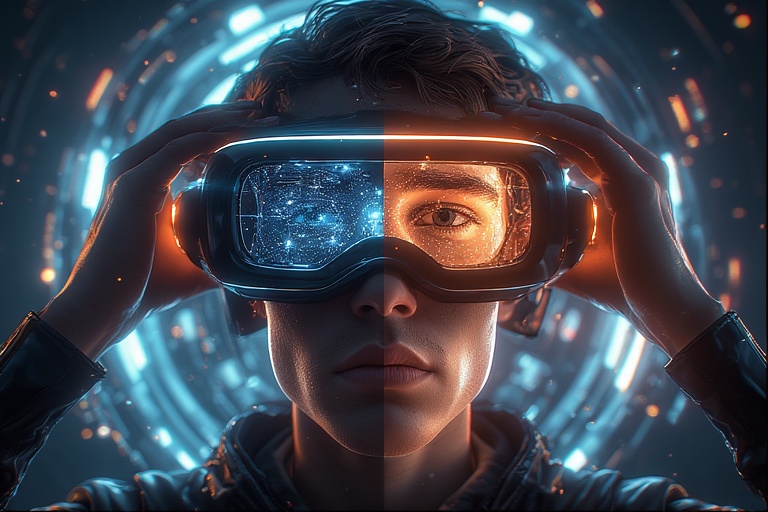
With the rollout of its new photorealistic “Likeness” avatars for Android XR, Google is signaling that it intends to compete seriously in the emerging market for spatial presence and virtual communication. This is not just about avatars. It is about redefining how people appear, interact, and connect in a future where physical and digital realities increasingly overlap.
Likeness avatars represent Google’s most direct response yet to Apple’s Personas, and while the two systems share philosophical similarities, Google’s execution reveals a distinctly different strategic mindset.
What Are Likeness Avatars and Why They Matter
Likeness avatars are Google’s attempt to recreate a user’s real-world appearance inside XR environments with striking realism. The system works by scanning a user’s face to generate a detailed digital likeness, which is then animated in real time using data from headset sensors such as eye tracking, head movement, and facial motion.
The result is an avatar that moves, reacts, and expresses itself in ways that closely mirror the real person behind the headset. Unlike stylized avatars, Likeness aims to preserve identity, emotion, and subtle human cues that are essential for meaningful communication.
This matters because XR is no longer just about immersive games or experimental experiences. It is increasingly about meetings, collaboration, telepresence, and remote social interaction. In these contexts, the ability to “be yourself” digitally is not a novelty—it is a necessity.
Google’s Different Approach to Face Scanning
One of the most notable differences between Google’s Likeness avatars and Apple’s Personas lies in how users create them.
Apple requires users to scan their face using the Vision Pro headset itself, an approach that ensures consistency but can feel awkward and physically demanding. Google, by contrast, has opted for a mobile-first scanning process. Users create their Likeness avatar using a dedicated Android app, scanning their face with their smartphone camera instead of holding a headset.
From a usability standpoint, this choice makes sense. Smartphones are familiar, lightweight, and easier to position accurately. Holding a phone in front of one’s face for a scan is far less cumbersome than balancing a headset with both hands.
However, this convenience comes with trade-offs.
Device Limitations and Ecosystem Fragmentation
At launch, the Likeness (beta) app is only compatible with select high-end Android devices, including Google Pixel 8 and newer, Samsung Galaxy S23 and newer, and Samsung Z Fold5 or newer. Users without a supported Android phone cannot create a Likeness avatar at all.
This introduces a significant limitation. Android XR users who rely on unsupported Android devices—or who use iPhones—are effectively locked out of the system. In contrast, Apple’s Personas are accessible to all Vision Pro users regardless of what phone they own.
This difference highlights a recurring challenge for Google: ecosystem fragmentation. While Android’s openness enables innovation, it also complicates consistency. In the context of XR avatars, this fragmentation could slow adoption, particularly among enterprise users who prioritize reliability and inclusivity.
Virtual Webcam First: A Pragmatic Starting Point
Like Apple, Google has initially limited Likeness avatars to a 2D presentation. These avatars function as a virtual webcam, allowing users to appear in standard video conferencing applications such as Google Meet, Zoom, and Messenger.
From a technical perspective, this choice may seem conservative. There are no spatial meetings yet, no face-to-face holographic conversations, and no shared 3D environments populated by Likeness avatars.
But strategically, this is a smart move.
Virtual webcam compatibility ensures immediate usefulness. It allows Likeness avatars to integrate seamlessly with existing communication tools without requiring new infrastructure or user behavior. In a world where video calls are already deeply embedded in daily workflows, this approach maximizes relevance from day one.
The Absence of Spatial Meetings—For Now
Where Apple’s Vision Pro distinguishes itself is in spatial FaceTime calls, where Persona avatars exist as three-dimensional presences within a shared virtual space. Google’s Likeness avatars do not yet support this kind of interaction.
According to Google, spatial meetings are under development, but no timeline has been announced. For now, Likeness avatars remain confined to flat video representations.
While this may disappoint XR enthusiasts, it reflects Google’s broader philosophy of incremental deployment. Rather than debuting with a technically impressive but limited-use feature, Google appears focused on solving the most common communication use cases first.
Photorealism and the Uncanny Valley Question
One of the greatest risks with photorealistic avatars is the uncanny valley—the uncomfortable feeling that arises when something looks almost human, but not quite.
Apple’s Personas demonstrated that this barrier can be crossed with enough sensor fidelity and animation precision. The key insight was that avatars do not need to be perfect; they only need to be plausibly human.
Early demonstrations of Google’s Likeness avatars suggest that the company has reached a similar level of realism. Facial expressions appear natural, eye movements are convincing, and overall motion feels grounded rather than robotic.
Crucially, absolute accuracy is not always required. In many social and professional contexts, believability matters more than fidelity. From what has been shown so far, Likeness avatars meet that threshold.
Hardware Constraints: Not All Android XR Devices Are Equal
Despite its ambitions, Likeness will not work on every Android XR device.
Smartglasses and lightweight XR hardware often lack the processing power and sensor arrays required for high-fidelity facial tracking. Devices without eye-tracking or mouth-tracking cameras cannot accurately animate a photorealistic face in real time.
While Google could theoretically simulate facial motion using audio-based lip-sync and inferred eye movement, such techniques tend to fall apart when applied to realistic avatars. What works for cartoon characters often becomes deeply unsettling when used on human faces.
As a result, Likeness avatars are likely to remain limited to higher-end XR headsets for the foreseeable future.
The Long-Term Challenge of Miniaturization
Both Google and Apple face the same fundamental problem: how to maintain avatar realism as headsets become smaller and more wearable.
Photorealistic avatars depend on multiple inward-facing cameras, precise depth sensing, and substantial on-device processing. As XR hardware trends toward lighter, slimmer designs, fitting these components becomes increasingly difficult.
Solving this problem will require breakthroughs in sensor technology, AI-driven inference, or hybrid cloud processing. Until then, there may be a trade-off between comfort and avatar fidelity.
Strategic Implications for the XR Industry
The introduction of Likeness avatars is about more than competition with Apple. It reflects a broader shift in how XR platforms are positioning themselves.
Avatars are becoming infrastructure. They are no longer cosmetic features but foundational elements of communication, identity, and trust in virtual environments. Whoever controls the avatar layer controls how users appear to one another—and, by extension, how they relate to digital spaces.
By investing in photorealistic avatars, Google is acknowledging that presence, not immersion alone, will define the next phase of XR adoption.
Conclusion: A Serious Challenger, With Work Ahead
Google’s Likeness avatars represent a meaningful step forward for Android XR. They are technically impressive, thoughtfully designed, and strategically positioned to integrate with existing communication tools.
While Apple’s Personas remain the benchmark for consumer-ready photorealistic avatars, Google is closing the gap. The absence of spatial meetings and the limitations imposed by device compatibility are real challenges, but they are not insurmountable.
As XR continues to evolve, the success of Likeness will depend not just on realism, but on accessibility, scalability, and the ability to adapt as hardware changes. One thing is clear: the race to make digital presence feel truly human has entered a new and fascinating chapter.
Frequently Asked Questions (FAQs)
1. What are Google Likeness avatars?
Likeness avatars are photorealistic digital representations created from a user’s face scan for Android XR.
2. How do Likeness avatars compare to Apple Personas?
They serve a similar purpose but use different scanning methods and currently lack spatial meetings.
3. How are Likeness avatars created?
Users scan their face using a compatible Android smartphone via the Likeness beta app.
4. Which devices support Likeness avatars?
Currently supported devices include Pixel 8+, Galaxy S23+, and Galaxy Z Fold5+.
5. Can Likeness avatars be used in Zoom or Meet?
Yes, they function as virtual webcams compatible with most video call apps.
6. Are Likeness avatars fully 3D?
No, they are currently presented as 2D video representations.
7. Does Android XR support spatial avatar meetings?
Not yet, but Google has confirmed it is working on spatial meeting support.
8. Will smart glasses support Likeness avatars?
Most smart glasses lack the sensors needed for full photorealistic animation.
9. Is there an uncanny valley issue?
Early impressions suggest Likeness avatars are convincingly realistic.
10. Why are photorealistic avatars important for XR?
They enable natural communication, identity preservation, and trust in virtual interactions.