

As 2025 draws to a close, Huawei is not merely reflecting on the past year—it is confidently setting the tone for the next era of global computing. In a year defined by geopolitical tension, supply chain realignment, and an accelerating race for artificial intelligence dominance, Huawei’s leadership believes the company has crossed a crucial threshold. According to Meng Wanzhou, Huawei’s Chief Financial Officer, the foundation for a new age of intelligent computing has already been laid.
Speaking at the end-of-year address, Meng highlighted Huawei’s breakthroughs in AI chips, server processors, and large-scale computing infrastructure. Her message was not celebratory alone; it was strategic. Huawei, once heavily constrained by external pressures, now sees itself as a central pillar in the future of AI computing—both within China and beyond.
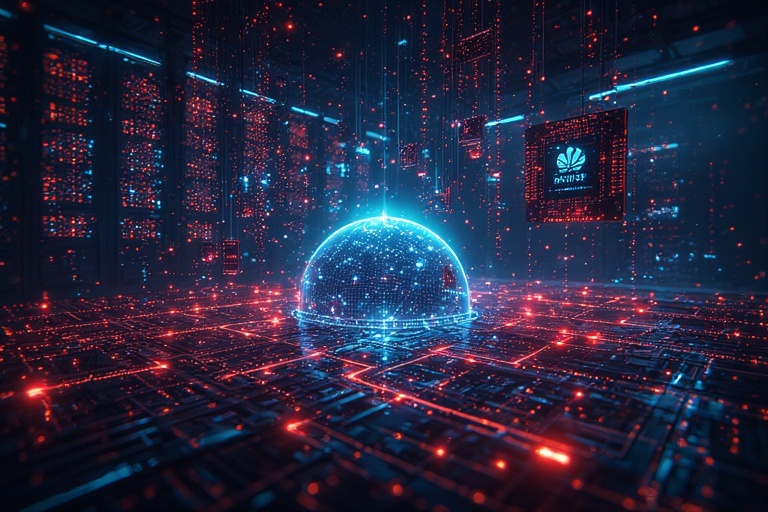
The company’s progress in 2025 reflects a broader transformation. Huawei has evolved from a telecommunications giant into a vertically integrated technology powerhouse, spanning chips, servers, cloud infrastructure, AI frameworks, and intelligent mobility systems. The year’s achievements suggest that Huawei is no longer playing catch-up—it is actively redefining the competitive landscape.
The Strategic Importance of Computing Power in the AI Era
In today’s technology ecosystem, computing power is the new currency. Artificial intelligence, large language models, autonomous driving systems, and industrial automation all depend on massive amounts of compute. Whoever controls scalable, efficient, and sovereign computing infrastructure holds a decisive advantage.
Meng emphasized that Huawei recognized this shift early. Rather than focusing solely on end-user products, the company invested heavily in building foundational computing platforms. These platforms are designed to support everything from cloud data centers and AI training to edge computing and intelligent vehicles.
By the end of 2025, Huawei’s computing strategy has matured into two powerful pillars: the Ascend AI chip ecosystem and the Kunpeng server processor ecosystem. Together, they form the backbone of Huawei’s ambition to deliver full-stack AI and computing solutions.
Ascend AI Chips: Building an Ecosystem, Not Just Silicon
The Ascend AI chip family has become the centerpiece of Huawei’s AI ambitions. Originally launched as an alternative to Western AI accelerators, Ascend has now grown into a comprehensive ecosystem with real-world deployment at scale.
According to Meng, the Ascend ecosystem surpassed 3,000 partners and 4 million developers by the end of 2025. This growth did not happen organically—it was the result of deliberate ecosystem engineering. Huawei invested heavily in developer tools, AI frameworks, software optimization, and industry-specific solutions to ensure that Ascend chips could be adopted across sectors.
One of the most notable developments was Huawei’s aggressive roadmap execution. Just months earlier, the company publicly stated its confidence in narrowing the performance gap with Nvidia. By the end of the year, Ascend processors such as the Ascend 910C were reportedly delivering performance levels comparable to certain Nvidia AI chips in real-world workloads.
This progress carries symbolic weight. For years, Nvidia dominated the global AI accelerator market with little serious competition. Huawei’s advances signal that AI hardware leadership is no longer monopolized by a single company or region.
Matching Nvidia: Performance, Not Imitation
Huawei’s goal is not to replicate Nvidia’s products—it is to offer competitive alternatives optimized for different markets and use cases. Ascend chips are deeply integrated with Huawei’s software stack, including AI frameworks, cloud platforms, and industry solutions.
Meng noted that Huawei’s internal confidence stems from sustained investment rather than short-term breakthroughs. Ascend’s progress reflects years of R&D in chip architecture, memory optimization, interconnects, and AI acceleration techniques.
Interestingly, Nvidia itself has acknowledged Huawei’s potential. The US chipmaker has publicly flagged Huawei as one of the most formidable competitors it has ever faced. This recognition underscores the seriousness of Huawei’s technical capabilities, even amid global restrictions.
Huawei believes it can overcome semiconductor bottlenecks not by relying on external suppliers, but by strengthening internal innovation, supply chain resilience, and ecosystem collaboration.
Kunpeng CPUs: The Silent Engine of Server Computing
While Ascend dominates headlines, the Kunpeng processor line plays an equally critical role in Huawei’s computing strategy. Kunpeng CPUs are designed for general-purpose server workloads, including cloud computing, databases, enterprise applications, and government infrastructure.
By the end of 2025, the Kunpeng ecosystem included nearly 6,800 partners and 3.8 million developers. This scale reflects widespread adoption across industries, particularly in regions seeking greater technological autonomy.
Kunpeng processors power data centers, cloud services, and enterprise systems that form the backbone of modern digital economies. Huawei’s strategy positions Kunpeng as a stable, long-term alternative to traditional x86 server architectures, offering optimized performance for cloud-native and AI-integrated workloads.
Together, Kunpeng and Ascend represent Huawei’s vision of a fully integrated computing stack—one that spans from silicon to software to industry solutions.
The Atlas 900 Supernode: A New Benchmark in AI Training
Perhaps the most striking achievement highlighted by Meng was Huawei’s development of the Atlas 900 Supernode, described as one of the world’s most powerful AI training clusters.
Built entirely around Ascend processors, the Atlas 900 Supernode integrates thousands of AI chips into a unified computing fabric. This architecture enables massive parallel processing, high-speed data exchange, and efficient scaling for large AI models.
The supernode is already serving multiple industries, including internet platforms, financial institutions, telecommunications providers, and power grid operators. Its applications range from natural language processing and computer vision to industrial optimization and scientific research.
Meng emphasized that the Atlas 900 is not a showcase project—it is a practical computing backbone designed to support national AI ambitions. By providing large-scale AI training capacity domestically, Huawei reduces dependence on foreign computing infrastructure.
Democratizing AI Computing Through Clustering Technology
Looking ahead to 2026, Huawei plans to make its clustering and supernode technologies more accessible. Rather than limiting advanced computing to a few large players, the company aims to enable enterprises, research institutions, and governments to deploy scalable AI infrastructure.
Meng described this initiative as the creation of a “solid AI computing backbone.” This backbone will support innovation across sectors, enabling smaller organizations to participate in the AI economy without prohibitive costs.
This approach reflects Huawei’s long-standing philosophy of ecosystem-driven growth. By lowering barriers to entry, Huawei accelerates adoption while strengthening its platform’s relevance.
Advances in Autonomous Driving and Intelligent Mobility
Beyond chips and data centers, Huawei made significant strides in self-driving and intelligent vehicle technologies in 2025. Meng highlighted autonomous driving as a strategic battlefield where quality, reliability, and system integration matter more than hype.
Huawei’s focus lies in providing intelligent driving solutions rather than manufacturing vehicles itself. These solutions include AI computing platforms, perception algorithms, and vehicle-to-infrastructure communication systems.
Meng stated that Huawei’s strategy emphasizes “winning through value and quality.” This reflects a deliberate move away from experimental deployments toward commercially viable, safety-certified systems.
As vehicles become increasingly software-defined, Huawei’s experience in AI, connectivity, and computing positions it as a key enabler of next-generation mobility.
Resilience Through Self-Reliance
One recurring theme in Meng’s remarks was organizational resilience. Over the past several years, Huawei has faced unprecedented external pressure. Rather than retreating, the company doubled down on internal capabilities.
By 2025, this strategy appears to be paying dividends. Huawei’s ability to design chips, build servers, deploy cloud infrastructure, and support large ecosystems demonstrates a level of vertical integration unmatched by most global competitors.
Meng emphasized that success in the AI era requires long-term commitment, organizational discipline, and technological depth. Huawei’s journey, she suggested, offers lessons for the broader industry.
A New Journey in the Age of Intelligence
Meng concluded her address with a forward-looking message: the age of intelligence has truly begun. Computing power is no longer a background resource—it is the foundation upon which future industries will be built.
Huawei enters 2026 with confidence, not because challenges have disappeared, but because the company believes it has developed the tools to face them. With Ascend AI chips, Kunpeng processors, supernode computing clusters, and intelligent mobility platforms, Huawei sees itself as a central architect of the next digital era.
The toast raised at the end of 2025 was not merely symbolic. It marked Huawei’s transition from survival to strategy, from adaptation to leadership, in one of the most consequential technological races of our time.
FAQs
1. What did Huawei celebrate at the end of 2025?
Major achievements in AI chips, computing power, and ecosystem growth.
2. What are Ascend AI chips?
Huawei’s AI accelerators designed for training and inference workloads.
3. How large is the Ascend ecosystem?
Over 3,000 partners and 4 million developers.
4. What is Kunpeng used for?
Server CPUs for cloud computing, enterprise systems, and data centers.
5. What is the Atlas 900 Supernode?
A large-scale AI training cluster built using Ascend processors.
6. How does Huawei compare to Nvidia?
Some Ascend chips now match certain Nvidia products in performance.
7. Why is computing power so important?
AI, automation, and digital services depend on massive compute resources.
8. Does Huawei make cars?
No, Huawei provides intelligent driving and computing solutions.
9. What industries benefit from Huawei’s AI computing?
Telecom, finance, energy, transportation, and internet services.
10. What is Huawei’s focus for the future?
Expanding accessible AI computing and strengthening ecosystem leadership.