

For decades, China struggled with an uncomfortable paradox. It became one of the most economically powerful nations on Earth, yet its cultural influence lagged far behind its financial and industrial reach. Unlike the United States, whose movies, music, and tech brands shaped global imagination, or Japan and South Korea, whose anime and K-pop captivated younger generations worldwide, China’s cultural footprint felt limited, state-driven, and often uninspiring.
That reality has changed — and it has changed in a way few policymakers, analysts, or even Beijing’s own planners fully anticipated.
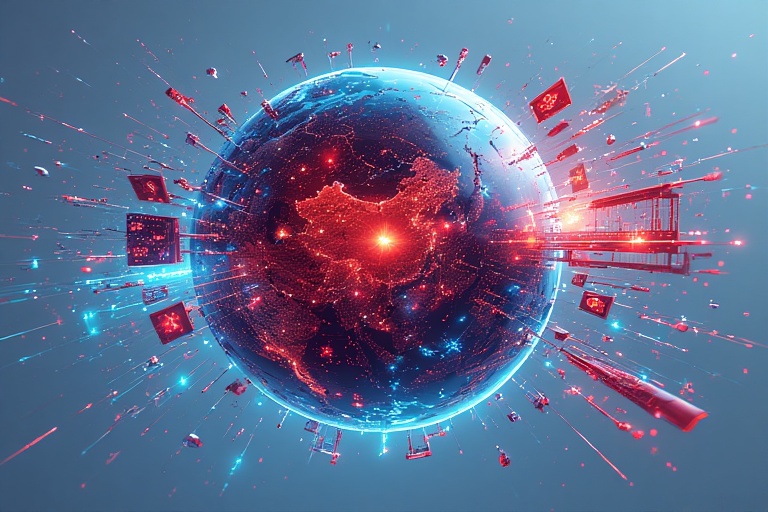
Today, Chinese cultural products are breaking into global mainstream consciousness at a scale and speed unseen before. Designer toys dangle from luxury handbags in Paris and Los Angeles. Chinese video games dominate global sales charts. Short-form dramas produced for domestic mobile audiences are quietly conquering Southeast Asia and Japan. On TikTok, millions of Western users binge-watch videos showcasing China’s futuristic infrastructure, marveling at cities that feel like science fiction brought to life.
This surge is not being driven by propaganda departments or cultural diplomacy initiatives. It is emerging organically from China’s highly controlled, deeply censored internet ecosystem — an irony that lies at the heart of this new soft power moment.
From Cultural Importer to Cultural Exporter
For much of the late 20th and early 21st centuries, China was a voracious consumer of foreign culture rather than a creator of globally resonant content. Hollywood films, Japanese animation, Western pop music, and later Korean dramas shaped Chinese tastes, even as access to them was tightly regulated.
Beijing invested heavily in changing this imbalance. Confucius Institutes were launched worldwide to promote language and culture. State media expanded foreign-language broadcasting. Grand initiatives promised to “tell China’s story well.” Yet these efforts largely failed to spark genuine enthusiasm abroad.
What finally worked did not come from ministries or five-year plans. It came from market forces, digital platforms, and creative entrepreneurs operating inside China’s walled-off internet.
The Pandemic Turning Point
The turning point can be traced to 2020, when the COVID-19 pandemic reshaped global media consumption. Lockdowns pushed millions of people toward short-form video platforms, gaming, and streaming entertainment. TikTok, owned by China-based ByteDance, exploded in popularity across the United States and Europe.
While TikTok positioned itself as a global platform distinct from its Chinese counterpart Douyin, its success normalized Chinese-built digital infrastructure as a foundation for global culture. At the same time, the algorithmic power behind these platforms began surfacing Chinese-origin trends to international audiences — sometimes without viewers even realizing where the content came from.
This was the beginning of a subtle but profound shift: China was no longer merely exporting goods. It was exporting attention.
Labubu, Blind Boxes, and the New Language of Global Cool
Few symbols capture this moment better than Labubu, a mischievous, snaggletoothed designer toy created by a Hong Kong-born artist. Sold through “blind box” packaging — where buyers do not know which character they receive until opening — Labubu toys tapped into a psychology of suspense and collectability.
What began as a niche product in China’s booming designer toy market soon found its way into the hands of global celebrities. When K-pop star Lisa from Blackpink was photographed with a Labubu charm attached to her luxury handbag, the toy crossed an invisible threshold into mainstream global fashion.
The appeal was not explicitly “Chinese.” Its aesthetic drew inspiration from Nordic folklore, its marketing mirrored global streetwear culture, and its distribution relied on social media virality. Yet its commercial engine, manufacturing scale, and initial audience were firmly rooted in China.
This is a defining feature of China’s new soft power: it is indirect, hybrid, and denationalized, making it easier to embrace and harder to resist.
Micro-Dramas and the Reinvention of Storytelling
Another powerful export is China’s rapidly growing micro-drama industry. Designed for mobile-first audiences, these ultra-short episodic stories — often lasting less than a minute per episode — focus on romance, betrayal, ambition, and social mobility.
In China, micro-dramas are a multi-billion-dollar business. Their success relies on cliffhangers, emotional intensity, and algorithmic distribution. What makes them globally significant is their adaptability.
Japanese, Southeast Asian, and Middle Eastern markets have begun adopting the format, sometimes licensing Chinese scripts, sometimes recreating them with local actors and cultural contexts. The storytelling logic — fast, addictive, emotionally charged — travels easily across borders.
This marks a departure from traditional cultural exports. Instead of exporting finished products, China is exporting formats and monetization models, allowing other cultures to localize the content while reinforcing China’s influence over how stories are told in the digital age.
Gaming as a Cultural Trojan Horse
Perhaps the most decisive breakthrough came through gaming.
The release of Black Myth: Wukong, inspired by the 16th-century Chinese literary classic Journey to the West, shattered expectations. The game became one of the fastest-selling titles in history, praised for its visuals, gameplay, and mythological depth.
Unlike previous attempts to globalize Chinese narratives, Black Myth succeeded by meeting international gamers on their own terms. It did not dilute its cultural roots, nor did it explain them excessively. Instead, it trusted global audiences to engage with Chinese mythology as they had with Norse gods or Japanese folklore.
Gaming, more than any other medium, allows China to export culture without translation barriers — and without political messaging. It is entertainment first, identity later.
Infrastructure Porn and the Spectacle of Modernity
On TikTok and other platforms, a curious genre has taken off among Western audiences: videos showcasing China’s infrastructure. Sweeping flyovers in Chongqing, glass bridges suspended over deep valleys, drone deliveries, amphibious electric vehicles, and humanoid robots performing everyday tasks generate millions of views.
Critics dismiss this as “infrastructure porn,” but its impact is undeniable. These visuals challenge deeply entrenched Western narratives about China as opaque, backward, or merely industrial.
When American YouTuber IShowSpeed live-streamed from Shenzhen, marveling at drones delivering fast food and robots dancing beside him, he gained more than a million new followers. His repeated refrain — “China is different!” — echoed across social media.
What viewers rarely see, however, is the full picture: the censorship, surveillance, and restrictions that shape everyday digital life in China. The spectacle reveals modernity, but conceals control.
The Paradox of the Great Firewall
China’s internet is among the most tightly regulated in the world. Platforms are monitored, content is filtered, and political boundaries are strictly enforced. At first glance, this environment seems incompatible with creative freedom and global cultural influence.
Yet paradoxically, the Great Firewall has functioned as an incubator.
Shielded from direct competition with Silicon Valley giants, Chinese companies developed parallel ecosystems: their own social networks, payment systems, video platforms, and gaming industries. Survival inside this environment demanded technological sophistication, regulatory agility, and ruthless commercial discipline.
The result is a generation of entrepreneurs uniquely equipped to compete globally — technologically advanced, culturally flexible, and politically cautious.
Soft Power Without Soft Messaging
Traditional soft power relies on persuasion, values, and ideological appeal. China’s new approach relies on desire, convenience, and fascination.
Cute toys do not argue about governance. Video games do not lecture about political systems. Short videos of futuristic cities do not mention censorship laws. Yet they reshape perception all the same.
Even Chinese state media has begun celebrating this shift, framing it as evidence of a “cool China” moment. While official narratives exaggerate the extent of global admiration, there is no denying that these cultural exports are doing more for China’s image than decades of formal diplomacy.
Sharp Power, Subtle Influence, and Cultural Blind Spots
Not everyone sees this development as benign.
Some analysts argue that China’s influence extends beyond soft power into “sharp power” — the use of economic and cultural leverage to shape discourse and suppress criticism abroad. Examples include Hollywood studios altering scripts for Chinese market access, universities avoiding sensitive research topics, and media outlets publishing state-aligned content.
Others point to generational divides. Older audiences often associate China with historical events like Tiananmen Square, while younger users engage primarily through trends, gadgets, and entertainment, largely detached from political context.
This generational shift may prove decisive in shaping future global attitudes toward China.
Seeing Only What China Allows
The final irony is that global audiences are seeing China through a carefully curated window. The same systems that restrict information domestically also ensure that what flows outward is polished, impressive, and apolitical.
Foreign viewers marvel at China’s modernity without encountering its constraints. In this sense, censorship does not merely suppress — it filters, shaping the image that reaches the world.
China’s soft power surge is real, but it is also partial, selective, and strategically incomplete.
Conclusion: A New Model of Global Influence
China’s rise as a cultural force is not the result of a master plan, but of unintended consequences. A censored internet created resilient innovators. Market competition produced globally appealing products. Algorithms carried those products across borders faster than diplomats ever could.
This is not the soft power of slogans or speeches. It is the soft power of toys, games, videos, and cities that look like the future.
Whether this influence deepens understanding — or merely fascination — remains an open question. But one thing is clear: China’s cultural moment has arrived, and it is being powered by the very system designed to contain it.
FAQs
1. What is meant by China’s “soft power”?
Soft power refers to influence gained through culture, values, and appeal rather than force.
2. Why is China’s censored internet producing global culture?
Isolation fostered innovation, scale, and competitive digital ecosystems.
3. What are examples of China’s cultural exports today?
Designer toys, video games, micro-dramas, short videos, and tech platforms.
4. How did TikTok contribute to this shift?
It normalized Chinese-built platforms as global cultural infrastructure.
5. Is this influence driven by the Chinese government?
Mostly no; it is market-led and creator-driven, not centrally planned.
6. What is “infrastructure porn”?
Viral content showcasing large-scale modern infrastructure projects.
7. Does this improve China’s global image?
It improves fascination, though not necessarily political understanding.
8. What risks does this model carry?
It can obscure censorship and limit full transparency.
9. How does this differ from Korean or Japanese soft power?
China exports formats and platforms more than finished cultural narratives.
10. Will this trend continue?
Yes, as long as digital platforms and gaming remain dominant cultural forces.