

When a legacy franchise attempts to modernize a classic title, the challenge is never merely about updating visuals or adding new features. It is a complex exercise in preserving nostalgia while ensuring the product satisfies the expectations of a new generation of players accustomed to faster pacing, layered systems, and high accessibility standards. Dragon Quest VII Reimagined represents such a pivotal undertaking for Square Enix. Under the direction of Producer Takeshi Ichikawa, the project redefines one of the most structurally unique entries in the Dragon Quest series for the contemporary global gaming market.
Originally released in 2000, Dragon Quest VII has often been remembered as a massive, complex, and slower-paced RPG with a multi-arc narrative spanning countless hours. For years, fans have viewed it as one of the most content-rich but also one of the most demanding entries in the franchise. Square Enix saw its 25th anniversary as more than a celebratory milestone — it was an opportunity to reintroduce a game that had enormous potential but required a modern design philosophy to reach younger audiences and PC gamers.
Ichikawa and his team did not merely attempt a graphical overhaul. Instead, they approached this reimagining as a full structural reinterpretation of pacing, storytelling, UX, and world design. This new edition aims to preserve the emotional depth, narrative identity, and unconventional storytelling that defined the original while addressing long-standing issues that previously discouraged newcomers.
What follows is a detailed exploration of the motivations, decisions, and technological philosophies behind the modern reboot of Dragon Quest VII.
Why Now? Understanding the Timing and Opportunity
The remake emerges at a compelling intersection in the gaming landscape. The RPG genre has undergone a renaissance driven by hybrid systems, narrative-driven design, and user-friendly mechanics that welcome newcomers without sacrificing depth. At the same time, nostalgia-driven remakes have demonstrated powerful market performance when executed with authenticity.
Ichikawa emphasizes that the anniversary represented not just a symbolic date but a strategic timing opportunity. The team recognized that the core structure of Dragon Quest VII — its episodic arcs, darker side-stories, and grounded protagonist — uniquely complements modern preferences for character-driven narratives and flexible pacing.
The original game’s opening famously required several hours before players engaged in their first battle. This was a known barrier among fans, and Ichikawa admits that, as a child, even he had abandoned the game early. For today’s players, who often evaluate engagement within minutes, such a pacing model no longer serves its purpose. This realization became the foundation for the reimagining: maintain narrative richness while dramatically improving tempo.
A More Human Protagonist for a Modern Audience
In an era of larger-than-life heroes, power fantasies, and complex character lore across RPGs, Dragon Quest VII stands apart precisely because its protagonist begins as an ordinary village boy. There are no prophecies, no ancient destinies — just growth, experience, and maturity shaped by adventure. Ichikawa argues that this grounded approach, largely untouched by other Dragon Quest titles, resonates even more deeply today.
Modern players increasingly gravitate toward characters who evolve emotionally rather than simply gain power. With games like Persona, Final Fantasy XVI, and Octopath Traveler influencing narrative expectations, a character who grows from childhood into adulthood creates an intimate connection rarely achieved through conventional hero narratives.
This fundamental identity was preserved and expanded in the reimagined edition through new story episodes, deeper emotional framing, and enhanced interactions with party members.
Restructuring the Narrative: A New Approach to Pacing
One of the most transformative decisions in Dragon Quest VII Reimagined was structural: reworking the story arcs to create a more streamlined narrative. The original game was famously long, with more than a dozen episodic storylines across different eras. While beloved by many, its pacing was often criticized as uneven.
To modernize the experience, the development team made three key adjustments:
1. Introducing Structural Flexibility
Seven major story arcs were carefully analyzed. Four of these have been redesigned as optional paths, allowing players to determine the order in which they explore them. This introduces a level of player freedom similar to modern open-structure RPGs.
2. Removing Three Scenarios for Narrative Density
Although removals in remakes often spark fan apprehension, the intention here was to eliminate redundancy. According to Ichikawa, removing three slower arcs enabled a more cohesive core narrative, amplifying emotional beats and preventing fatigue.
3. Adding New Story Episodes
New content was not an afterthought — it was essential for increasing narrative density and expanding character investment. Examples include:
- A scenario exploring the childhood relationship between the protagonist and Maribel.
- A new arc following Kiefer’s development into adulthood.
These additions enrich character depth and strengthen emotional continuity across the storyline.
A Fresh Opening: Fixing the Game’s Most Criticized Segment
The original opening of Dragon Quest VII had become almost legendary in its difficulty. Players navigated hours of exploration, puzzle-solving, and cutscenes before witnessing any combat. This was perhaps the single most polarizing element of the PlayStation version.
The remake completely reimagines the introduction, shortening onboarding time, improving tutorial transparency, and giving players early access to battles. Ichikawa expresses genuine excitement toward the redesigned opening, calling it one of his favorite parts of the new release.
From a design perspective, this change aligns with modern onboarding strategies used across blockbuster titles: players must feel rewarded within minutes, not hours.
Visual Identity: From Toriyama’s Art to a “Handcrafted” Doll World
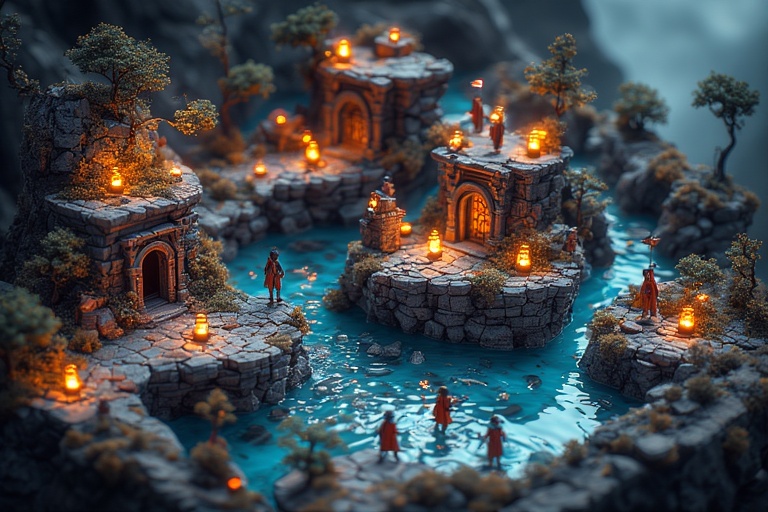
Perhaps the most visually striking decision in the remake is the adoption of doll-inspired character models placed within diorama-style environments. While Akira Toriyama’s art style remains central, Dragon Quest VII has always featured some of the series’ cuter, shorter-proportioned characters.
The team experimented with several art directions — including a more traditional hand-drawn approach — but ultimately found that miniature doll aesthetics aligned perfectly with the game’s atmosphere. Through careful testing, they discovered that crafting physical dolls and scanning them into digital environments produced an authenticity that could not be matched through pure CG modeling.
Why Physical Dolls?
- They allowed more natural shading, texture, and physical imperfections.
- They created a handcrafted warmth suitable for the game’s themes.
- They perfectly complemented the diorama-style top-down exploration camera.
These dolls now reside in a marketing office storage cabinet, though Ichikawa humorously notes he would never dare take one home due to their value.
Exploration Through a Top-Down Diorama Lens
Unlike the Nintendo 3DS version, which adopted a more zoomed-in perspective, the reimagining returns to a wider top-down viewpoint reminiscent of classic RPGs. This is not merely nostalgic — it is strategic.
The diorama-style camera supports the handcrafted visual identity while also improving gameplay pacing. The team observed that close-up exploration slowed traversal significantly. Because Dragon Quest VII features an enormous number of locations and scenarios, maintaining player momentum became a top priority.
The top-down view enables players to understand spatial layout instantly, optimizing pathing and reducing fatigue historically associated with the original’s long runtime.
The Moonlighting System: Redefining Vocations for Modern Players
One of the cornerstone RPG systems in Dragon Quest VII has always been its deep vocation (job) system. However, earlier versions forced players into a dilemma: switching vocations meant resetting progress, temporarily weakening characters. While challenging, this design discouraged experimentation.
To address this, Dragon Quest VII Reimagined introduces the Moonlighting system, which allows characters to maintain a second vocation without losing progress. This offers:
- Lower barriers for experimentation
- More freedom to explore hybrid roles
- A more personalized party composition
- Reduced punishment for switching builds
Each vocation also includes a unique “perk” triggered under certain emotional or battle conditions. Ichikawa shares one example: the Priest perk, which simultaneously heals HP and removes negative status conditions — a powerful safety net for newer or casual players.
This redesign reflects industry trends prioritizing accessibility while retaining strategic depth.
Appealing to Both Traditional Fans and New Audiences
Ichikawa acknowledges the franchise’s differing global popularity — massively dominant in Japan but more niche in Western markets. With this reimagining, the team placed significant effort into making the game more intuitive for Western audiences, especially for PC gamers who may have no prior exposure to the franchise.
Key UX Improvements Include:
- A complete redesign of the traditional window-based menu system into a modern, tab-based UI.
- Faster onboarding and clearer navigational cues.
- Streamlined side-quest and scenario progression.
- Accessibility-oriented pacing adjustments.
Such updates increase accessibility without diluting the core Dragon Quest identity — a critical balance in modernizing legacy titles.
Editions, Early Access, and Specialty Content
Square Enix has released three distinct editions of the game.
Standard Edition
- Full game.
Digital Deluxe Edition
- Base game
- Three DLC Packs
- 48-hour early access
- Exclusive “White Wolf Costume” for Ruff
Collector’s Edition (Square Enix Store Exclusive)
- Smile Slime Plush (medium)
- SteelBook case
- Ship-in-a-Bottle figure
- All DLC sets
This tiered strategy aligns with industry trends in digital content distribution, creating appeal for collectors, digital-only players, and early adopters.
Launch and Final Thoughts
Launching on February 5, 2026, across Nintendo Switch 2, Nintendo Switch, PS5, Xbox Series X|S, and PC (Microsoft Store & Steam), Dragon Quest VII Reimagined stands as a major milestone in revitalizing a beloved RPG for modern players. Its bold artistic direction, restructured narrative, refined systems, and global audience targeting signify Square Enix’s evolving understanding of remake culture.
Ichikawa expresses pride at the overwhelmingly positive reception during its reveal, especially as the title briefly dominated Japanese social media trends despite competing with major first-party Nintendo announcements. For a series that has traditionally been Japan-centric, this enthusiastic early reaction signals strong global potential.
Square Enix’s strategic modernization approach honors the original while crafting an experience that is emotionally richer, structurally stronger, and more accessible than ever before. If successful, Dragon Quest VII Reimagined may serve as a template for how legacy RPGs can be respectfully reinvented for contemporary players.