

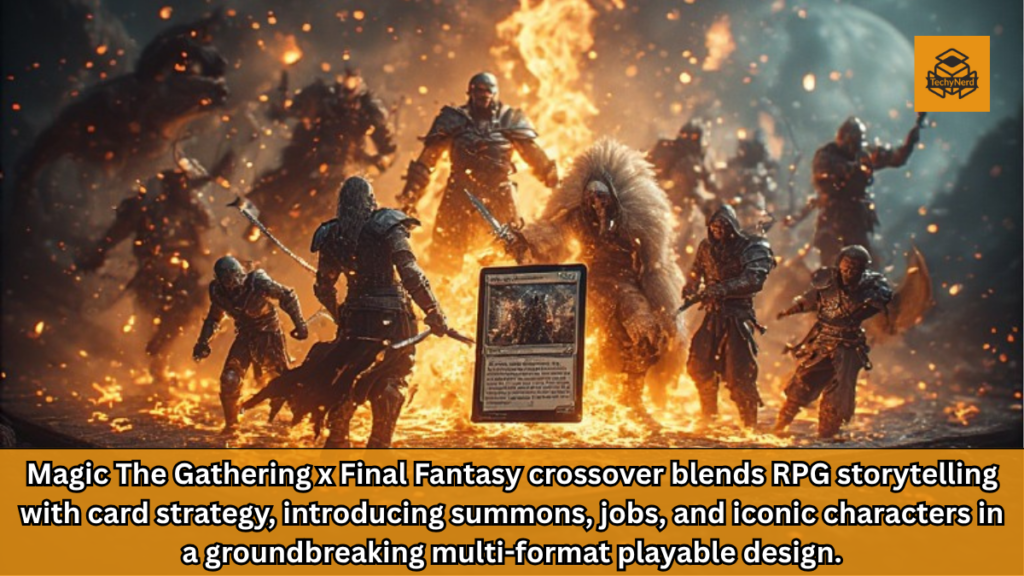
The convergence of two of the most influential gaming franchises in history—Magic: The Gathering and Final Fantasy XIV—represents a defining moment in modern game design. This collaboration is not merely a branding exercise or a surface-level crossover. Instead, it is a deeply engineered integration of mechanics, narrative identity, and player expectations, executed with a level of precision that reflects the evolving sophistication of the gaming industry.
At its core, this initiative demonstrates how intellectual properties from fundamentally different genres can be harmonized into a cohesive gameplay experience. While Magic operates as a strategic trading card game driven by abstract mechanics, Final Fantasy exists as a narrative-rich role-playing universe grounded in character development and world-building. Bridging these two paradigms required a design philosophy that prioritizes both authenticity and playability.
The Challenge of Translating Narrative into Mechanics
One of the most complex aspects of this collaboration lies in translating the narrative depth of Final Fantasy into the rule-based structure of Magic. In a role-playing game, characters are defined by their abilities, story arcs, and emotional resonance. In a card game, however, these elements must be distilled into concise mechanics that can be understood and executed within seconds.
This challenge becomes particularly evident when dealing with iconic characters such as Cloud, Aerith, and Cecil. Each of these characters embodies a distinct identity shaped by their roles within their respective stories. Translating these identities into card mechanics requires a nuanced understanding of both the source material and the target gameplay environment.
For instance, a character known for healing must be represented through mechanics that emphasize life gain, while a warrior defined by raw power must be reflected through combat-focused abilities. This process is not simply about assigning abilities but about capturing the essence of each character in a way that feels authentic to fans while remaining balanced within the game.
Summons as a Design Breakthrough
One of the most innovative aspects of the crossover is the implementation of summons as Saga enchantment creatures. This design choice reflects a deep understanding of how summons function within the Final Fantasy universe.
In traditional gameplay, summons are temporary entities that appear, unleash a powerful attack, and then disappear. Translating this behavior into Magic required a hybrid mechanic that combines the temporal progression of Sagas with the interactivity of creatures.
This approach allows summons to evolve over multiple turns, delivering a sequence of effects that culminate in a final, impactful action. The result is a gameplay experience that mirrors the dramatic presence of summons in the original games while introducing a new layer of strategic depth.
The design of Garuda serves as a compelling example. Rather than relying solely on damage-based effects, the card incorporates alternative mechanics such as granting flying abilities, demonstrating how designers adapted source material to fit the constraints of the card game format.
Balancing Complexity and Accessibility
A recurring theme in the development process is the tension between complexity and accessibility. While it is tempting to create highly detailed cards that replicate every aspect of a character or event, such designs can become unwieldy and difficult for players to understand.
This challenge is exemplified in the design of White Auracite, an artifact inspired by a key narrative element. The initial concept attempted to capture the full complexity of the source material, resulting in a mechanically intricate card. However, this approach was ultimately refined into a simpler design that retained the core concept while improving usability.
This iterative process highlights a fundamental principle of game design: clarity often takes precedence over completeness. By focusing on the most impactful aspects of a concept, designers can create cards that are both flavorful and functional.
The Job System and Player Identity
The inclusion of the job system represents another significant achievement in the crossover. Jobs are a defining feature of the Final Fantasy series, allowing players to customize their characters and adapt to different roles.
In Magic, this concept is translated through the “job select” mechanic, which introduces Equipment cards that generate Hero tokens. This approach not only captures the essence of the job system but also provides players with a tangible representation of character progression.
The diversity of Hero tokens further enhances this experience, reflecting the wide range of character builds available in Final Fantasy XIV. This level of detail reinforces the connection between the two franchises, creating a sense of continuity that resonates with players.
Iterative Design and Playtesting
The development of these cards involved extensive iteration and playtesting, a process that underscores the importance of balancing creativity with practicality. Designs such as Astrologian’s Planisphere underwent multiple revisions to ensure that they aligned with both thematic expectations and gameplay requirements.
These iterations reveal the complexity of designing for multiple formats, including Standard and Commander. Each format has its own dynamics and player expectations, requiring designers to create cards that can function effectively across different contexts.
The final versions of these cards often represent a compromise between competing priorities, demonstrating the collaborative nature of the design process.
Character Adaptation and Narrative Fidelity
Adapting iconic characters such as Emet-Selch required a careful balance between narrative fidelity and gameplay functionality. The use of double-faced cards allows for the representation of character transformations, capturing key moments in the storyline.
This approach enables designers to convey complex character arcs within the constraints of a single card. By incorporating elements such as transformation triggers and thematic abilities, the cards provide a dynamic representation of character development.
The emphasis on storytelling is further reinforced through numerical references and thematic mechanics, which serve as subtle nods to the source material.
Multi-Format Design Strategy
One of the defining features of this crossover is its compatibility with multiple gameplay formats. Unlike previous Universes Beyond sets, this release is designed to be legal across all formats, including competitive environments.
This decision required a comprehensive design strategy that accounts for the diverse needs of different player communities. Cards had to be balanced not only for casual play but also for competitive scenarios, ensuring that they contribute meaningfully to the overall metagame.
The introduction of synergistic card packages, sometimes referred to as “block parties,” reflects an effort to create cohesive strategies that can be developed over time. This approach aligns with broader trends in game design, where long-term engagement is prioritized over short-term novelty.
World-Building Through Mechanics
The integration of locations such as Sharlayan into the card set demonstrates how world-building can be achieved through mechanics. By introducing new land types and associated abilities, designers create opportunities for players to engage with the setting in a meaningful way.
The Wandering Minstrel serves as a focal point for this design, linking multiple elements of the game through a cohesive mechanic. This approach reinforces the interconnected nature of the Final Fantasy universe, translating its expansive world into a structured gameplay experience.
The Role of Iteration in Achieving Balance
The evolution of cards such as Hydaelyn and Zodiark illustrates the importance of iteration in achieving balance. Initial designs often prioritize narrative accuracy, resulting in complex mechanics that may not align with gameplay requirements.
Through successive revisions, these designs are refined to achieve a balance between flavor and functionality. This process involves simplifying mechanics, adjusting costs, and ensuring that cards remain engaging without being overly complicated.
The final versions of these cards reflect a mature design philosophy that prioritizes player experience while maintaining a strong connection to the source material.
Conclusion: A Blueprint for Future Collaborations
The Magic: The Gathering and Final Fantasy crossover represents a milestone in cross-franchise collaboration. By successfully integrating two distinct gaming paradigms, it sets a precedent for future projects in the industry.
This initiative demonstrates that with careful design, it is possible to create experiences that honor the legacy of both franchises while introducing innovative gameplay mechanics. As the gaming industry continues to evolve, such collaborations are likely to become increasingly common, offering new opportunities for creativity and engagement.
FAQs
1. What is the Magic and Final Fantasy crossover?
It is a collaboration integrating Final Fantasy characters and mechanics into Magic: The Gathering cards.
2. How are summons represented in the game?
As Saga enchantment creatures that evolve over turns and deliver powerful effects.
3. What is the job select mechanic?
A system where Equipment creates Hero tokens representing character roles.
4. Are these cards playable in all formats?
Yes, this set is designed to be legal across multiple Magic formats.
5. How are characters adapted into cards?
By translating their abilities and story traits into gameplay mechanics.
6. What challenges did designers face?
Balancing narrative accuracy with gameplay simplicity and clarity.
7. What is the significance of White Auracite?
It represents a story element adapted into a simplified artifact mechanic.
8. How does the set handle complex storytelling?
Through mechanics like transformations and thematic abilities.
9. What role does playtesting play?
It ensures balance and usability across different gameplay formats.
10. Why is this crossover important?
It sets a new standard for integrating storytelling into competitive games.