

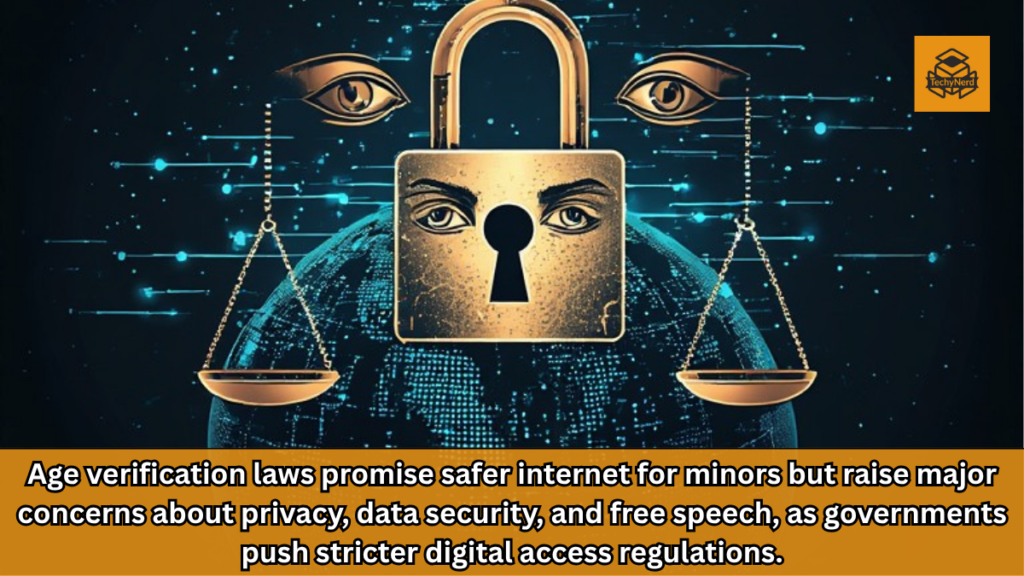
The growing push for age verification mandates across internet platforms marks a pivotal moment in the evolution of digital governance. What is being framed as a necessary step to protect minors online is, in reality, a far more complex and contentious issue that intersects with privacy, cybersecurity, platform accountability, and fundamental rights. As governments introduce legislative proposals such as the App Store Accountability Act and the Parents Decide Act, the debate has intensified among policymakers, technology companies, and digital rights advocates.
At its core, the controversy revolves around whether enforcing identity-based access controls on the internet is a proportional and effective solution to online harms, or whether it introduces new risks that outweigh its intended benefits.
The Policy Push Behind Age Verification
Governments worldwide have increasingly expressed concern over children’s exposure to harmful content online. This concern has translated into legislative proposals that aim to enforce stricter controls over who can access digital platforms.
The logic behind these mandates appears straightforward. By verifying a user’s age, platforms can restrict minors from accessing inappropriate material. However, this seemingly simple solution quickly becomes complicated when examined through a technological and legal lens.
Age verification systems often require users to submit sensitive personal data, including government-issued identification or biometric scans. These processes introduce new layers of risk, particularly in an era where data breaches and cyberattacks are becoming more frequent and sophisticated.
The Rise of AI-Driven Verification Systems
Modern age verification technologies increasingly rely on artificial intelligence to estimate a user’s age. These systems analyze facial features, behavioral patterns, or uploaded documents to determine whether a user meets age requirements.
While AI-driven solutions promise convenience and scalability, they are far from foolproof. Accuracy can vary significantly depending on factors such as lighting conditions, demographic biases, and data quality. Misclassification can lead to legitimate users being denied access or minors bypassing restrictions.
More importantly, these systems often require the collection and storage of biometric data, which is among the most sensitive categories of personal information. Unlike passwords, biometric identifiers cannot be changed if compromised, making breaches particularly damaging.
Privacy Risks and Data Collection Concerns
One of the most significant criticisms of age verification mandates is the potential erosion of user privacy. Requiring individuals to prove their identity before accessing online content fundamentally alters the nature of the internet, which has historically allowed for anonymous participation.
Digital rights advocates argue that such requirements could undermine protections associated with free expression. The ability to engage in anonymous speech has long been considered a cornerstone of open digital discourse. By linking online activity to verified identities, age verification systems risk creating a chilling effect, discouraging users from expressing controversial or sensitive opinions.
The risk is compounded by the reality that many platforms lack robust data protection practices. High-profile breaches have demonstrated that even large technology companies are not immune to cyber threats. Introducing additional repositories of sensitive data only increases the potential attack surface.
Platform Accountability Versus User Responsibility
Legislative proposals such as the App Store Accountability Act shift the responsibility for online safety from platforms to app stores and, indirectly, to users themselves. This approach has been criticized for failing to address the root causes of harmful content and platform design.
Critics argue that placing the burden on users to verify their age does little to incentivize platforms to create safer environments. Instead, it allows companies to offload responsibility while continuing to operate business models that may prioritize engagement over safety.
Similarly, the Parents Decide Act emphasizes parental control as the primary mechanism for protecting minors. While parental involvement is undoubtedly important, relying solely on this approach may not be sufficient in an increasingly complex digital landscape.
The Cybersecurity Implications
From a cybersecurity perspective, age verification mandates introduce new vulnerabilities. Systems that collect and store personal data become attractive targets for hackers. A single breach could expose millions of users’ identities, leading to identity theft, financial fraud, and other forms of exploitation.
Moreover, the integration of verification systems across multiple platforms creates interconnected risks. If one system is compromised, the impact could cascade across the broader digital ecosystem.
The use of third-party verification providers further complicates the situation. These providers may operate under different regulatory frameworks, raising questions about data handling, storage, and accountability.
Legal and Constitutional Considerations
In jurisdictions like the United States, age verification mandates raise significant constitutional questions. The First Amendment protects freedom of speech, including the right to engage in anonymous expression.
Legal experts have argued that mandatory identity verification could conflict with these protections. By requiring users to disclose their identities, such laws may impose undue restrictions on speech, particularly in contexts involving political discourse or sensitive topics.
Courts have historically been cautious about measures that could limit anonymous communication, recognizing its importance in enabling open and democratic dialogue.
Global Perspectives on Age Verification
The debate over age verification is not limited to a single country. Governments around the world are exploring similar measures, each with its own regulatory approach.
In some regions, stricter data protection laws may limit the implementation of intrusive verification systems. In others, less stringent regulations could allow for more aggressive data collection practices.
This fragmented landscape creates challenges for global technology companies, which must navigate varying legal requirements while maintaining consistent user experiences.
The Illusion of a Simple Solution
One of the most critical insights from the ongoing debate is that age verification is not a silver bullet. While it may address certain aspects of online safety, it does not eliminate the underlying issues that contribute to harmful content and behavior.
Effective solutions likely require a multifaceted approach that includes improved platform design, better content moderation, and enhanced digital literacy. Relying solely on age verification risks oversimplifying a complex problem.
Toward a Balanced Regulatory Framework
The challenge for policymakers is to strike a balance between protecting vulnerable users and preserving fundamental rights. This requires a nuanced understanding of both technological capabilities and societal values.
Regulations that prioritize privacy and accountability, rather than shifting responsibility onto users, are more likely to achieve sustainable outcomes. Transparency, oversight, and user consent should be central to any regulatory framework.
Conclusion: A Defining Moment for Internet Governance
The push for age verification mandates represents a critical juncture in the evolution of the internet. Decisions made today will shape the future of digital interaction, influencing how individuals access information, express themselves, and engage with online communities.
As the debate continues, it is essential to consider not only the immediate benefits of such measures but also their long-term implications. The internet has long been a space for innovation, creativity, and free expression. Preserving these qualities while addressing legitimate concerns about safety will require thoughtful and informed policymaking.
FAQs
1. What is age verification in internet platforms?
It is a process requiring users to prove their age before accessing online content.
2. Why are governments proposing these laws?
To protect minors from harmful or inappropriate online content.
3. What data is usually required?
Government IDs, facial scans, or biometric data for age estimation.
4. Are these systems reliable?
They are still evolving and can produce inaccurate results.
5. What are the privacy concerns?
They involve data collection, storage risks, and potential misuse.
6. How do these laws affect free speech?
They may discourage anonymous expression online.
7. What is the App Store Accountability Act?
A proposal shifting responsibility for safety to app stores.
8. What is the Parents Decide Act?
A bill emphasizing parental responsibility for child safety online.
9. What are cybersecurity risks?
Data breaches and identity theft due to stored personal data.
10. What is a better alternative?
Improved platform accountability and safer design practices.