

The wearable technology market is entering a transformative phase, and Google appears ready to redefine expectations once again. With the emergence of the Fitbit Air, the company is signaling a bold shift away from traditional screen-based fitness trackers toward a more ambient, AI-powered health experience.
This is not just another upgrade in the Fitbit ecosystem. It represents a deeper change in how users interact with their personal health data. Instead of constant screen checking, the future may revolve around passive tracking and intelligent insights delivered when needed.
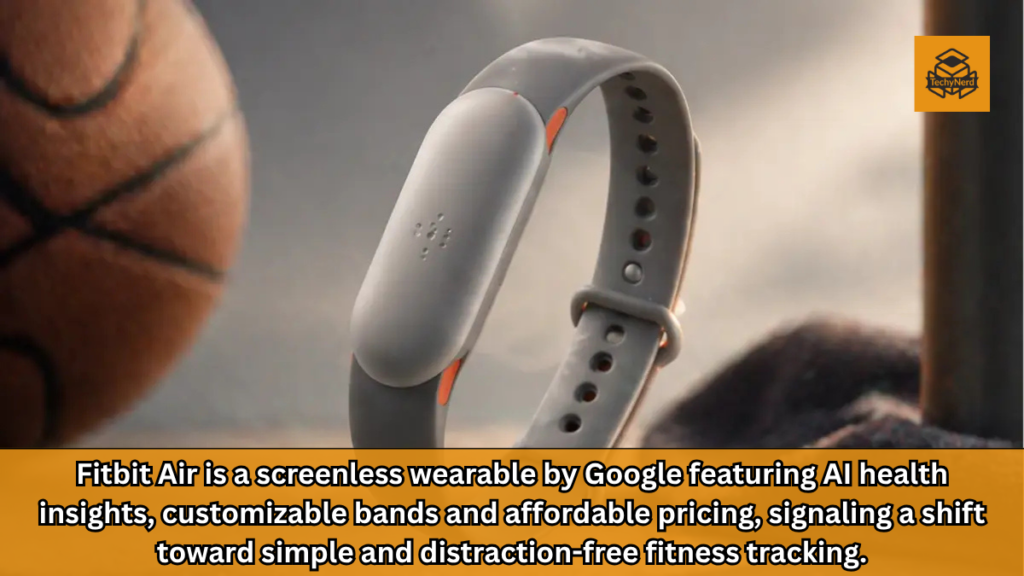
Over the past decade, wearables have evolved from simple step counters into advanced health monitoring systems. However, screens have always been central to that experience. Fitbit Air challenges that assumption completely.
The Rise of Screenless Wearables
The idea of a screenless wearable is not entirely new, but it has rarely been adopted by major tech companies at scale. Most users rely heavily on visual feedback like step counts, heart rate graphs, and notifications. While useful, this constant data exposure can lead to fatigue or distraction.
Google’s approach with Fitbit Air appears to reduce that dependency. Instead of displaying raw data, the device may focus on delivering meaningful insights through connected platforms like smartphones or voice assistants.
This aligns with the broader concept of ambient computing, where technology works quietly in the background. By removing the display, Fitbit Air could also offer better battery life, improved durability, and a more comfortable design for all-day wear.
Design Philosophy and Color Options
Fitbit Air is expected to follow a minimalist and elegant design approach. Early reports suggest it will launch in three color variants: Obsidian, Lavender, and Berry.
These color choices reflect a balance between classic and modern aesthetics. Obsidian offers a sleek and professional look, while Lavender and Berry add a more vibrant and lifestyle-oriented appeal.
Without a screen, the device can achieve a slimmer and lighter form factor. This makes it feel more like an accessory than a gadget, which could significantly increase daily usage and comfort.
The inclusion of a white “Snow” charging cable also indicates attention to detail in the overall product experience.
Band Customization and User Experience
Customization is becoming increasingly important in wearable devices, and Fitbit Air seems to embrace this trend fully. Multiple band options are expected, allowing users to personalize their device based on lifestyle and preferences.
The Performance Loop Band is likely designed for fitness enthusiasts who need breathability during workouts. The Active Band focuses on durability and comfort for everyday use. The SoftFlex Band offers a more premium and soft-touch experience, while the Metal Mesh Band targets users who prefer a stylish, jewelry-like appearance.
This variety ensures that Fitbit Air can adapt to different situations, whether it is a workout session, office environment, or social event.
Pricing Strategy and Accessibility
Fitbit Air is expected to be priced around $99, making it one of the most accessible wearable devices in its category. This pricing strategy allows Google to reach a wider audience, including first-time users and those looking for a simple health tracking solution.
At the same time, the company may introduce subscription-based services, such as a health coaching platform, to generate recurring revenue. This model allows Google to keep hardware costs low while offering advanced features through software.
AI Integration and Health Intelligence
One of the most important aspects of Fitbit Air is its expected reliance on artificial intelligence. Without a screen, the device will depend on smart algorithms to provide value.
AI-driven insights could help users understand their health patterns more effectively. Instead of just tracking steps or heart rate, the system may offer personalized recommendations for sleep, fitness, and overall wellness.
A potential Google Health Coach service could act as a digital assistant, guiding users toward better habits. This represents a shift from passive tracking to active health improvement.
Expected Launch Timeline
Current leaks suggest that Fitbit Air may launch around May 16, although this has not been officially confirmed. If accurate, the timing would allow Google to capture early interest before major tech announcements later in the year.
The launch could also set the stage for a new category of wearable devices, encouraging competitors to explore similar concepts.
Challenges and Concerns
Despite its potential, Fitbit Air faces several challenges. One of the biggest is user adaptation. Many people are привык привык used to screens, and moving away from them may take time.
Another concern is data privacy. Since the device relies heavily on AI and cloud processing, users will want assurance that their personal health data is secure.
Additionally, the success of Fitbit Air will depend on the quality of its software ecosystem. Without strong integration and meaningful insights, the hardware alone may not be enough.
The Future of Wearables
Fitbit Air represents a significant shift in wearable technology. The focus is moving away from constant interaction toward seamless integration.
If successful, this approach could redefine how people use wearable devices. Instead of checking data constantly, users may rely on intelligent systems that deliver insights only when needed.
This could mark the beginning of a new era where technology becomes less visible but more impactful.
Conclusion
Fitbit Air is more than just a new product. It is a bold step toward a future where wearable technology is smarter, simpler, and more intuitive.
By combining minimalist design, customizable options, and AI-driven insights, Google is positioning itself at the forefront of innovation in health technology.
While challenges remain, Fitbit Air has the potential to reshape the wearable market and set new standards for user experience.
FAQs
- What is Fitbit Air?
Fitbit Air is a rumored screenless wearable device focused on health tracking and AI insights. - Why does it not have a screen?
The design aims to reduce distractions and rely on smart insights instead of constant display interaction. - What colors will it come in?
Obsidian, Lavender, and Berry. - What band options are available?
Performance Loop, Active Band, SoftFlex Band, and Metal Mesh Band. - What is the expected price?
Around $99. - When will it launch?
Possibly around May 16. - Will it include AI features?
Yes, AI-powered health insights are expected. - How will users access data?
Through connected apps and devices like smartphones. - Is it suitable for workouts?
Yes, especially with performance-focused band options. - What makes it unique?
Its screenless design and focus on intelligent health insights.