

The gaming industry has always been shaped by cycles of innovation and nostalgia, but few developments capture both as effectively as the recent breakthrough enabling Wii and GameCube emulation on the Nintendo Switch. This advancement is not merely a technical curiosity; it represents a significant evolution in how modern hardware can preserve and extend the legacy of classic gaming ecosystems.
At the center of this transformation is the arrival of the Dolphin Emulator on the Switch platform. Traditionally associated with PC environments, Dolphin has long been regarded as one of the most advanced emulation tools for Nintendo’s sixth- and seventh-generation consoles. Its adaptation to the Switch marks a turning point, effectively transforming the console into a multi-generational gaming hub.
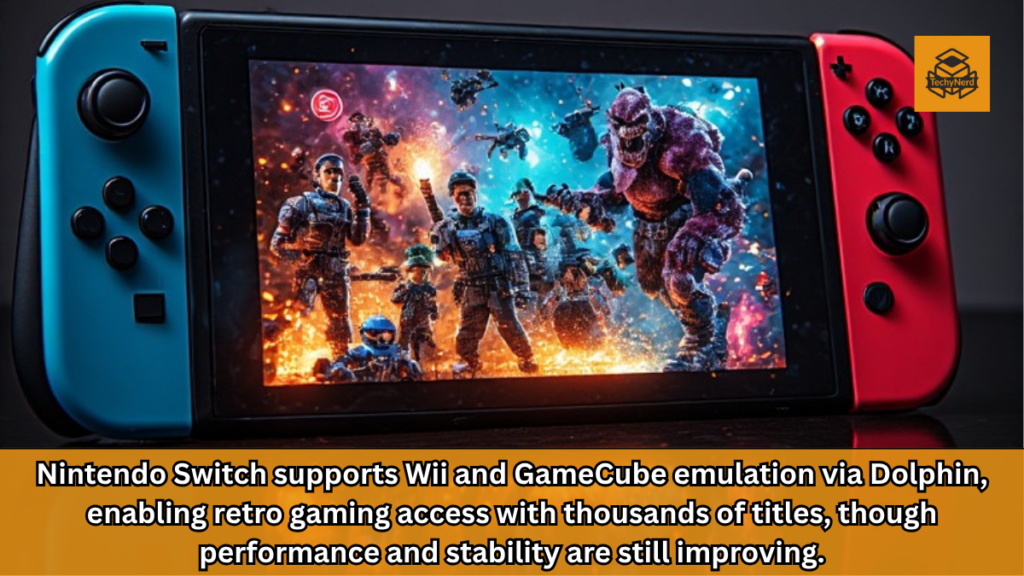
This development is particularly noteworthy because it challenges the conventional boundaries between hardware generations. Instead of relying solely on official ports or subscription-based retro libraries, users now have the potential to access a vast archive of legacy titles directly on their existing hardware.
The Rise of Emulation Beyond the PC Ecosystem
For years, emulation has been predominantly associated with personal computers. PCs offer the flexibility, processing power, and open software environments necessary to replicate older gaming systems. However, recent advancements have demonstrated that modern consumer devices are increasingly capable of handling these workloads.
Devices such as the Steam Deck and even unconventional platforms like streaming sticks have shown that emulation is no longer confined to desktops and laptops. The Nintendo Switch’s entry into this space is particularly significant because it represents a closed ecosystem traditionally resistant to such modifications.
The success of emulation on the Switch highlights a broader trend in the tech industry: the convergence of hardware capabilities. As processors become more efficient and powerful, the distinction between dedicated gaming systems and general-purpose computing devices continues to blur.
Why Wii and GameCube Games Matter in 2026
The enduring appeal of Wii and GameCube titles lies in their design philosophy. Games from these eras often prioritized creativity, gameplay innovation, and accessibility over raw graphical fidelity. As a result, many of these titles remain highly playable and relevant even years after their original release.
Iconic games such as Luigi’s Mansion, The Legend of Zelda: Twilight Princess, and Super Smash Bros. Melee continue to enjoy strong fan followings. Their availability on modern hardware not only preserves gaming history but also introduces these experiences to a new generation of players.
From an industry perspective, the resurgence of these titles underscores the value of intellectual property longevity. Companies are increasingly recognizing that classic games can generate ongoing engagement and revenue when made accessible through modern platforms.
Technical Challenges of Running Dolphin on Switch
While the idea of running Wii and GameCube games on the Switch is exciting, it is important to understand the technical complexities involved. Emulation is inherently resource-intensive, as it requires the host system to replicate the behavior of entirely different hardware architectures.
The Switch, despite its capabilities, was not originally designed for this purpose. Running Dolphin on the system pushes its hardware to the limits, resulting in potential instability and performance inconsistencies. Early reports indicate that while some games run smoothly, others may experience frame rate drops, graphical glitches, or crashes.
Developers have acknowledged these limitations, emphasizing that the current implementation is still in its early stages. A compatibility list is being compiled to track performance across different titles, providing users with guidance on which games are most playable.
Game Compatibility: Early Results and Observations
Initial testing has produced mixed but promising results. On the GameCube side, titles like Luigi’s Mansion and Super Smash Bros. Melee have demonstrated reasonable performance, though not without occasional issues. On the Wii side, games such as Rayman Origins and Rhythm Heaven Fever have also shown potential.
These early successes suggest that the foundation for a fully functional emulation environment is already in place. As optimization efforts continue, it is likely that performance will improve, expanding the range of playable titles.
However, it is important to approach these developments with realistic expectations. Emulation on the Switch is not yet a seamless experience, and users may encounter technical challenges that require troubleshooting and patience.
Legal and Ethical Considerations in Emulation
The discussion surrounding emulation inevitably raises questions about legality and ethics. While emulators themselves are generally legal, the use of game ROMs can be more complex. Users are typically required to own the original copies of the games they wish to emulate.
This distinction is crucial, as unauthorized distribution or downloading of ROMs may violate copyright laws. The growing accessibility of emulation on devices like the Switch underscores the need for greater awareness of these issues among users.
From an industry standpoint, the rise of emulation presents both opportunities and challenges. On one hand, it helps preserve gaming history and keeps older titles relevant. On the other hand, it can impact revenue streams if not managed appropriately.
The Nintendo Switch as a Retro Gaming Hub
The potential transformation of the Switch into a comprehensive retro gaming platform is one of the most exciting implications of this development. With its hybrid design, the console offers a unique combination of portability and versatility, making it well-suited for emulation.
The availability of various wireless controllers further enhances this experience, allowing users to replicate the feel of original hardware setups. Whether playing on a TV or in handheld mode, the Switch provides a flexible environment for enjoying classic games.
This evolution aligns with broader consumer trends, where convenience and accessibility are increasingly prioritized. By consolidating multiple gaming experiences into a single device, the Switch reinforces its position as a central hub for entertainment.
Implications for Nintendo’s Business Strategy
The emergence of unofficial emulation on the Switch raises important questions about Nintendo’s long-term strategy. Historically, the company has maintained strict control over its intellectual property, offering limited access to legacy titles through curated services like Nintendo Switch Online.
The availability of Dolphin on the Switch could challenge this model by providing an alternative pathway for accessing older games. While this may not immediately impact Nintendo’s revenue, it highlights the demand for more comprehensive retro libraries.
In response, Nintendo may choose to expand its official offerings, potentially introducing more GameCube and Wii titles to its subscription services. Such a move would allow the company to retain control while meeting consumer demand.
The Role of the Nintendo Switch 2
As discussions around emulation continue, attention is also turning to the next generation of Nintendo hardware. The anticipated Nintendo Switch 2 is expected to feature improved performance capabilities, which could further enhance emulation potential.
A more powerful system would address many of the current limitations, enabling smoother gameplay and broader compatibility. This raises the possibility that future consoles could officially support legacy titles in ways that are currently only achievable through unofficial means.
Future Outlook: The Evolution of Gaming Accessibility
The ability to play Wii and GameCube games on the Switch represents a significant step forward in gaming accessibility. It demonstrates how modern technology can bridge generational gaps, allowing players to revisit classic experiences without the need for original hardware.
Looking ahead, the continued development of emulation tools and hardware capabilities will likely expand these possibilities even further. As the industry evolves, the integration of legacy content into modern ecosystems will become increasingly important.
This trend is not limited to gaming. Across the tech industry, there is a growing emphasis on preserving digital history and making it accessible to future generations. Emulation plays a key role in this effort, providing a practical solution for maintaining compatibility with older systems.
Conclusion: A New Chapter for Retro Gaming on Switch
The introduction of Wii and GameCube emulation on the Nintendo Switch marks a pivotal moment in the evolution of gaming technology. It highlights the potential of modern hardware to transcend its original limitations, offering users new ways to engage with classic content.
While challenges remain, the progress achieved so far is a testament to the ingenuity of the developer community. As optimization efforts continue, the vision of a fully realized retro gaming hub on the Switch moves closer to reality.
For players, this development represents an opportunity to rediscover beloved titles and explore gaming history in a more accessible and convenient way. For the industry, it serves as a reminder of the enduring value of innovation and creativity.
FAQs
1. Can Nintendo Switch officially run Wii and GameCube games?
No, this functionality is currently achieved through unofficial emulation.
2. What is the Dolphin Emulator?
It is software that allows GameCube and Wii games to run on modern hardware.
3. Is emulation on Switch stable?
Not fully, as performance varies and the system can experience instability.
4. Are all games compatible?
No, compatibility depends on optimization and hardware limitations.
5. Is it legal to use emulators?
Emulators are legal, but using ROMs requires owning the original games.
6. Do you need a powerful system for emulation?
Yes, emulation is resource-intensive, even on modern devices.
7. Can Switch 2 improve emulation performance?
Yes, better hardware could significantly enhance compatibility and stability.
8. What types of games are playable now?
Some GameCube and Wii titles like Luigi’s Mansion and Smash Bros. Melee.
9. Does this replace Nintendo Switch Online?
No, it is an unofficial alternative and not a replacement.
10. Should users try it now?
Only if they are comfortable with experimental software and potential issues.